

The Narcissism of Certainty
Nearly twenty years ago, a good friend — a gifted coder from San Francisco — brought a young man to our house in Big Sur. He was a leader in what would now be called an antifa group, handsome, intelligent and articulate, with a terrific head of hair. He was also a ‘coder’ or ‘web cowboy’ as I called him and others at the time. At first I thought what irritated me was simply his narcissism: the self-confidence, the self-aggrandizement, the slightly amused condescension toward people who did not understand what he understood. (Like me!)

My friend has never wanted to revisit that evening, and I don’t push him, but the visit stayed with me, partly because I recognized something in him that was not entirely foreign to me. (Like I said!)
I grew up in Sweden and came of age in Europe in the late 1960s and early ‘70s, when revolution was in the air, and I wasn’t immune to its romance. I admired conviction. Maybe I even glorified it. There is something deeply seductive about a person who seems to know what life is about, who has found a direction, a purpose, a cause larger than himself. Someone who wakes up in the morning knowing what side he is on, what matters and what must be done. Especially when you are young and still trying to figure out who you are, that kind of certainty can look almost beautiful. It can look like courage, integrity and meaning itself.
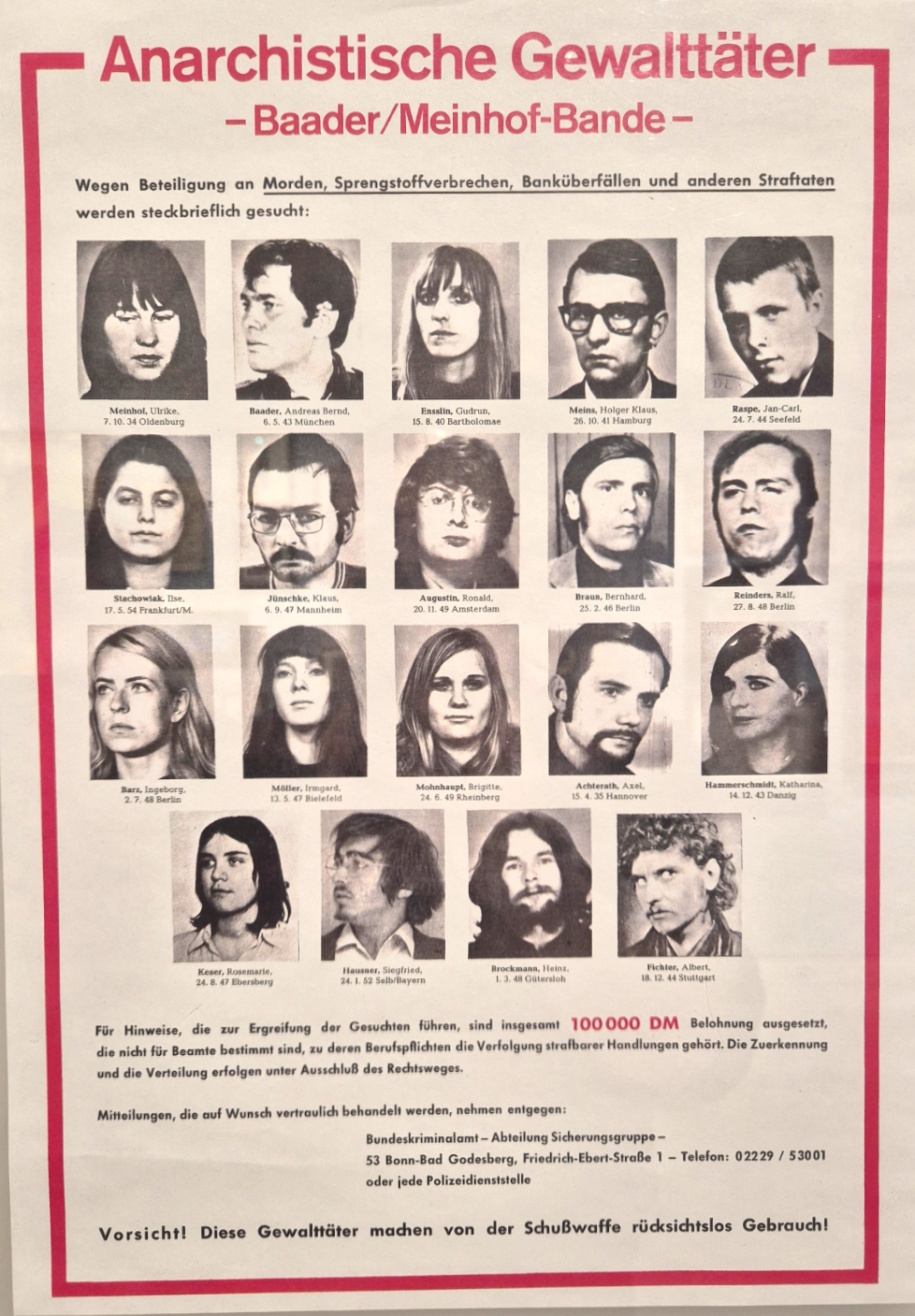
It took me years to understand that certainty and courage are not the same thing.
The young man in my house reminded me of that old seduction: the extraordinary confidence that history has somehow revealed itself to me, that I can see what ordinary people cannot, and that therefore some of the ordinary restraints of morality no longer apply. Same posture, different decade.
And I see versions of it again now.
I’ve spent time in Sderot. I’ve walked through Netiv HaAsara, stood at the Erez crossing, prayed in the Abdel Nasser Mosque in Ramallah. I’ve tried to do some real work trying to understand who said what, when and in what circumstances, and I’ve listened to Israelis and Palestinians speaking from fear, grief, rage and bewilderment. Since October 7, I have also watched some educated and comfortable people — academics, organizers, artists, students — speak about violence against Israelis, and sometimes Jews, with a moral confidence that frightens me. Murder becomes “resistance.” Atrocities acquire quotation marks. Individual human beings begin to disappear into categories.
I am not talking about everyone on the left, or everyone protesting Israel, or everyone horrified by what has happened in Gaza. Of course not. I am talking about something much more specific: a habit of mind in which ideology becomes so complete that the person standing in front of you becomes secondary to the category into which you have placed him.
You encounter it when you object to violent rhetoric and, before the sentence is out of your mouth, the answer comes: Yes, but what about Israel and the Jews?
Well, yes. What about Israel? What about Gaza, settlements, occupation, dead Palestinian children, extremists in the Israeli government, shattered homes and shattered lives? Those questions matter enormously, and I have no interest in waving them away.
But why must they be answered before we can say that murdering a Jew is wrong? Why does one dead human being need a footnote about another dead human being before we are allowed to mourn him?
That reflex troubles me because somewhere inside it is the suggestion that certain people have forfeited the right to uncomplicated human sympathy. Before their suffering can be acknowledged, their history must be examined, their government discussed, their politics entered into evidence. Humanity becomes conditional.
That is what frightens me most now. Not any one ideology — I have lived long enough to watch several rise, harden, fracture and disappear — but what certainty can do to a person. The utterly certain person can begin to mistake doubt for weakness, restraint for cowardice and empathy for betrayal. People cease to be people and become representatives of categories: capitalist, fascist, settler, colonialist, oppressor.
Once you’ve turned someone into a category, remarkably ugly things can begin to sound reasonable.
That is what I think I saw across my kitchen table in Big Sur nearly twenty years ago: not some monster, but a bright young man who had become so certain of his own moral clarity that violence no longer troubled him very much.
By then I was old enough not to admire it.
But I recognized the seduction, because I had seen it before — and because, when I was young, I had felt a little of it myself.