


The Necessity of Humanitarian Intervention in Iran
The World Can No Longer Remain Silent
Imagine a simple scene: a brutal bully and killer has taken your family members captive for some time, abuses them, exploits them, and at a certain moment throws them to the ground, presses his foot on their throat, and no one — not even your friends, relatives, or neighbors — has the power to stand up to that armed bully and murderous oppressor. And of course, most of those who could do something merely stand by and watch. Now, if someone who shares common interests with this family, and who himself has repeatedly been harmed by the same armed bully and killer, steps in to avert the danger, would the collective reason and conscience of humanity regard such an action as irrational or unwarranted interference?
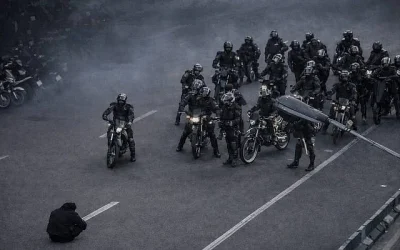
This analogy — arising from discussions among Iranian protesters and global observers — vividly depicts the situation of protesters in Iran under the rule of the repressive clerical regime. For more than four decades, the people of Iran have faced successive waves of brutal repression; peaceful demonstrations are met not with dialogue, but with live bullets.
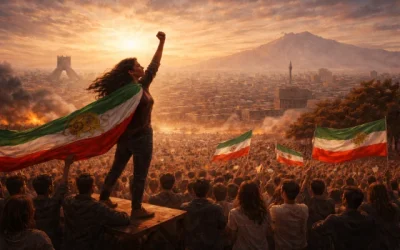
The recent uprisings — from economic grievances and women’s rights to demands for freedom — have led to countless deaths and disappearances. Reports from the current protests indicate that regime forces attack hospitals with military weapons, grenades, and even homemade bombs to abduct injured protesters. In horrific instances, families are forced to pay for the bullets used to kill their loved ones, or to accept the false label of “martyr” so that the narrative will be reflected to the benefit of the repressive regime.
These accounts raise a fundamental moral question: if Western powers — the United States, Israel, or European governments — intervene militarily to prevent the slaughter of the Iranian people under this “evil regime,” would such an action be illegitimate or irrational? Supporters of this view answer firmly in the negative and point to the regime’s broader threats to global security. Everyone knows that Iran’s religious dictatorship supports a worldwide network of terrorism that endangers global peace; and if it acquires nuclear weapons, it is unlikely to hesitate in using them against its enemies.
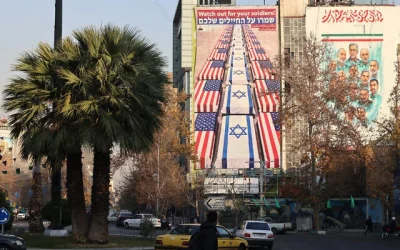
The main argument is that when a government turns its weapons against its own people, foreign intervention is not only permissible, but is regarded as a moral duty. Iran’s history is filled with such repressions: from the 1979 revolution to the student protests and the 2009 Green Movement, the bloody uprising of 2019 during Hassan Rouhani’s presidency which led to the massacre of nearly 1,500 protesters, then the protests over the killing of Mahsa Amini in 2022, and this time the protests over the dire economic situation in 2026 — where every time the response has been bullets, and the leader of Iran has openly and officially said that the protesters must be “put in their place.”
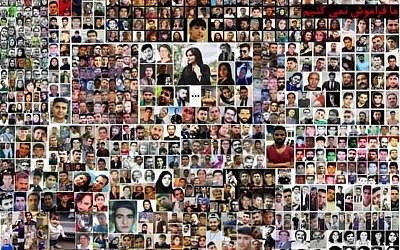
Under these circumstances, in the view of many political activists, foreign assistance for the liberation of the people can be considered entirely legitimate and humanitarian — although some other political and media activists inside Iran, who benefit from privileges such as unfiltered internet to whitewash the regime’s crimes, and who sometimes, as secret agents of the regime, play the role of opposition, naturally consider such intervention illegitimate.
A few historical examples
Historical precedents reinforce this argument. In the past century, humanitarian interventions — whether authorized by the international community or unilateral — have prevented major catastrophes. Without NATO’s U.S.-led bombing campaign in the Balkans (1999), Serbian forces under Slobodan Milosevic might have massacred millions in Kosovo. NATO’s intervention in Libya (2011), backed by the United States, stopped Muammar Qaddafi brutal slaughter of the people and prevented a broader massacre. In Iraq, U.S. no-fly zones in the 1990s saved thousands of Kurds from Saddam Hussein’s genocide. In Syria, U.S. strikes against Bashar al-Assad’s chemical weapons halted the regime’s use of toxic gas against its citizens.
Even the interventions in Afghanistan (2001) and Iraq (2003), which aimed to dismantle terrorist havens and remove dictatorships, were later undermined by the financial and military support of Iran’s Islamic Republic and the Quds Force — including under the command of Qassem Soleimani — in order to sabotage the achievements of freedom.
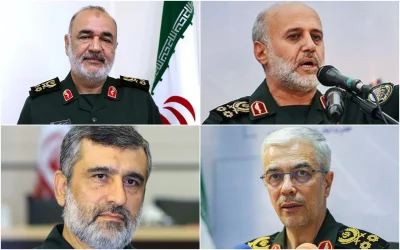
Nevertheless, recent events in Iran have doubled the urgency of humanitarian intervention. In the 12-day war of 2025, Israel targeted senior IRGC commanders such as Hossein Salami and Mohammad Reza Zahedi (known as Rashid) — individuals whose hands were stained not only with the blood of people in the region, but also with the repression of Iranian protesters. Israel also, in its strikes on the Evin Prison court complex, eliminated figures such as Ali Qenaatkar — a harsh prosecutor’s deputy with a key role in suppressing freedom seekers.
In the presence of such criminals, can the conscience of the world accept remaining idle? Has mere passive observation — issuing sorrowful statements and offering moral advice to “consider” the protesters — ever brought any results for the free world? Is ignoring the people-supported alternative — the one shouted in street slogans — a wise and courageous policy on the part of today’s free and civilized societies?
The conscience of justice-seekers around the world certainly does not tolerate silence. Therefore, non-intervention cannot be considered humane or right.
Yet in an era when the clerical regime in Tehran has intertwined nuclear and missile ambitions with domestic repression, has taken part in Russia’s killing in Ukraine, has carried out terrorist activities in the West,
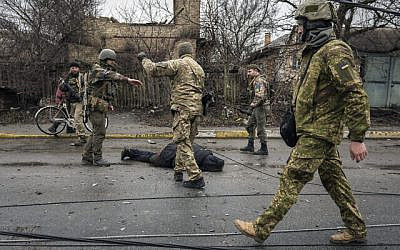
and whose proxies have plunged the region into instability and bloodshed, the debate over humanitarian intervention by the United States or Israel is no longer abstract. For millions of oppressed Iranians, it is a matter of survival and human dignity in the 21st century.
With the start of 2026 and the ongoing tensions in Iran, decision-makers in Washington, London, and Jerusalem face a difficult choice: respond to the call for bold action, or consign yet another generation to darkness? The judgment of history and of conscience awaits.