


The New Cold War: A Wolf in Sheep’s Clothing
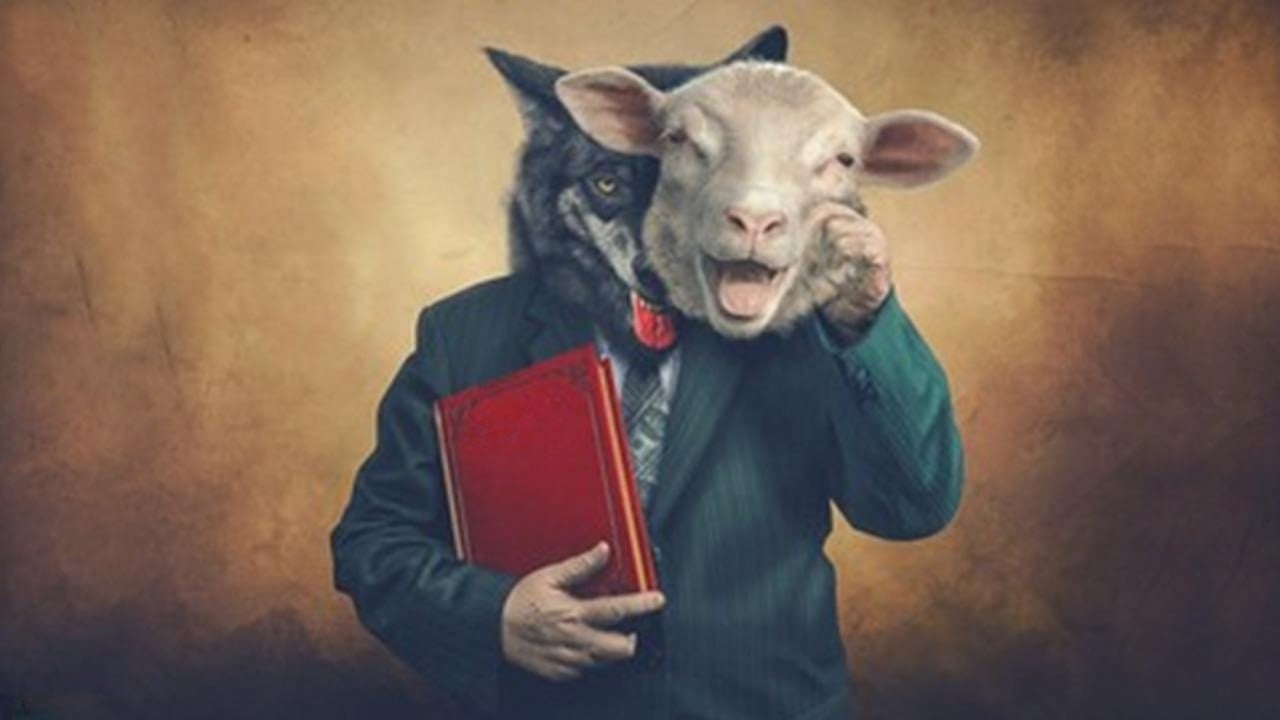
In the shadowed corridors of 21st-century geopolitics, a new Cold War has dawned not with the iron curtain of old, but with the silent, pervasive tentacles of economic leverage, information warfare, and hybrid aggression. At its heart stands the People’s Republic of China, a regime that has masterfully exploited the openness of Western societies, the rules-based international order, and the very technologies and capital flows granted to it through decades of engagement. What began as an invitation to join the global economy has morphed into a systematic campaign to undermine the West, erode American superiority, and reshape the world in Beijing’s authoritarian image. Far from a passive rise, China’s actions constitute a deliberate assault on Western civilisation, particularly targeting the United States as the cornerstone of democratic prosperity and security.
China’s behavioural pattern is multi-layered and devious. It begins with support for terrorist proxies and the stimulating of domestic chaos in the West. Beijing has cultivated ties with Hamas and other Iranian-backed proxies, refusing to designate Hamas as a terrorist organisation and instead framing it within “resistance” narratives. Following the October 7, 2023, massacre, Chinese state media and affiliated networks amplified anti-Israel propaganda, conspiracy theories about Jewish control of finance and politics, and antisemitic tropes comparing Israel to Nazi Germany. This was no accident. Through funding channels linked to figures based in Shanghai, Beijing has bankrolled American activist networks which orchestrated “Shut It Down for Palestine” protests. These efforts, often masked as grassroots activism, have fuelled campus unrest, violent demonstrations, and divisions that weaken U.S. alliances and societal cohesion. China positions itself as a champion of the “Global South” while quietly enabling chaos that distracts and divides the West.
This extends seamlessly into the digital realm, where millions of bots and state-directed accounts wage unrelenting propaganda war. China’s “50-cent army” and advanced AI-driven operations flood platforms like TikTok, X, and Facebook with anti-American content. These campaigns mock U.S. domestic failures, stoke racial and ideological divisions, and portray America as a declining bully. Networks pose as ordinary American voters or soldiers to exacerbate debates on abortion, Ukraine, Israel, and more, simulating grassroots outrage to erode trust in institutions. State media matrices push narratives that cast China as a peaceful alternative while denigrating Western values. The result is a cognitive battlefield where truth is blurred, alliances strained, and public will fragment.
Hypocrisy runs deep in these operations. Left-leaning activist groups in the West rail against “capitalist” institutions like BlackRock and Vanguard, filing complaints or protests over perceived complicity in global unfairness or climate issues. Yet these same voices often remain silent or defensive about China’s dominance in global finance: four of the world’s five largest banks by assets are Chinese state-controlled giants—Industrial and Commercial Bank of China (ICBC), Agricultural Bank of China, China Construction Bank, and Bank of China—holding trillions in assets and serving as instruments of Beijing’s economic statecraft. This selective outrage reveals a deeper alignment: criticism of Western finance serves to weaken it, while Chinese financial power expands unchecked.
China’s territorial and economic greediness knows few bounds, often described as “wolf warrior” expansionism. Under the Belt and Road Initiative (BRI) and its Maritime Silk Road component, Beijing has extended its reach across the Indian Ocean, South China Sea, and even probing the Atlantic via African ports. It builds “string of pearls” infrastructure, ports in Pakistan (Gwadar), Sri Lanka (Hambantota, leased after debt default), Djibouti (home to China’s first overseas military base), and beyond that doubles as dual-use facilities for naval projection. Island-building and militarisation in the South China Sea have created fortified outposts threatening vital sea lanes carrying trillions in trade. Debt-trap diplomacy ensnares nations, granting China leverage over strategic chokepoints. This is not benign development; it is a calculated swallowing of influence, aimed at bypassing U.S. alliances and securing resources for Beijing’s military modernisation.
Nowhere is this predation more evident than in China’s dealings with the Iranian regime. By purchasing discounted Iranian Blood oil, often at a fraction of market value, paid in yuan with significant delays, Beijing props up a terrorist-sponsoring theocracy while undermining Western sanctions and will of Iranian people. Iran funnels the proceeds (or what trickles through) into its proxy wars, including support for Hamas and Hezbollah. China gets cheap energy to fuel its economy and military, all while advancing de-dollarisation efforts. This axis of convenience: China, Russia, Iran, fuels global instability, from Red Sea disruptions and Ukraine to Middle East conflicts, directly harming Western energy security and economies.
Compounding the threat is China’s infiltration of Western institutions. Thousands of Chinese nationals, including those with People’s Liberation Army (PLA) ties, enrol in U.S. and European universities under the guise of “students.” Many pursue STEM fields, transferring sensitive technologies, research, and know-how back to China via talent programs and mandatory reporting to Beijing. State media influence extends to global outlets, shaping narratives through ownership stakes, advertising leverage, or self-censorship pressures. Confucius Institutes and united front operations further embed propaganda and espionage. The goal: hollow out Western innovation while accelerating China’s military-civil fusion.
The cumulative effect is a hybrid war, below the threshold of direct conflict, designed to fatigue, divide, and displace the West. Protests fuelled by antisemitism and anti-Americanism destabilise societies; bot armies poison discourse; economic dependencies create vulnerabilities; and proxy support sustains conflicts that drain Western resources.
In this darkening landscape, the doctrine articulated by Donald Trump emerges as a decisive counterforce. His approach, maximum pressure on adversaries, decoupling from risky dependencies, and prioritising American strength, represents not mere policy, but a winner’s framework for the century ahead. Trump’s actions targeting Hamas, former Syrian regime, Venezuela and the Iranian regime, including decisive measures against its nuclear ambitions and terror sponsorship, are exemplary. By confronting the Mullahs head-on, he disrupts the China-Iran lifeline that funds chaos. A regime-change in Tehran, paving the way for a free Iran under principles of secular governance and human rights, would starve proxies like Hamas, stabilise energy markets, and realign the Middle East toward peace and prosperity.
Prince Reza Pahlavi, with his vision of a democratic, tolerant Iran rooted in its proud nation-state patriotism heritage, offers the legitimate alternative. His return could unify Iranians yearning for freedom, end the export of revolution, and transform Iran into a constructive regional power as it used to be prior 1979 chaos. European nations, if wise, must support this process rather than cling to failed appeasement. Europe’s own crises, migration strains, energy security, rising antisemitism, and hybrid threats from China-Russia alignment, trace back to the same authoritarian axis. A liberated Iran would deprive Beijing and Moscow of a key partner, bolster global security and allowing Europe to focus on genuine threats without subsidising instability.
As Crown Prince said in his remarks in Swedish Parliament: “The Iranian people are not asking you to just watch; they are asking you to delegitimize their oppressors, not empower those who assassinate them, protect those who have sought refuge among you, and to be ready for the day when Iran will be free. There are moments in history when neutrality is not a position, it is a decision. When caution is not prudence, it is complicity. When history quietly presents a question and waits with terrible patience for an answer.”
Trump’s doctrine, firm deterrence, economic realism, and alliance-building on strength, sets the trajectory for the next hundred years. It rejects the naive engagement that empowered China, insisting instead on reciprocity, border security, and technological sovereignty. In a world where hybrid aggression blurs peace and war, only resolute leadership that names the adversary and acts decisively can preserve Western civilisation. The alternative is gradual surrender: divided societies, hollowed economies, and a multipolar order dominated by authoritarian giants.
The new Cold War demands clarity and courage. China’s comprehensive campaign has exploited Western goodwill long enough. By supporting democratic transitions where tyranny festers, starting with Iran and confronting Beijing’s hybrid arsenal, the West can reclaim the initiative. History will judge this era not by accommodation, but by who recognised the stakes and prevailed. Trump’s path points to victory; the free world must follow. As Prince Reza Pahlavi pointed out; “Churchill faced such a moment in 1940, Vaclav Havel faced it in 1989, Zelensky faces it today, but each in their own way.”