
Where Objectivity Meets Reality
The new pogroms: How Europe masks old hatred
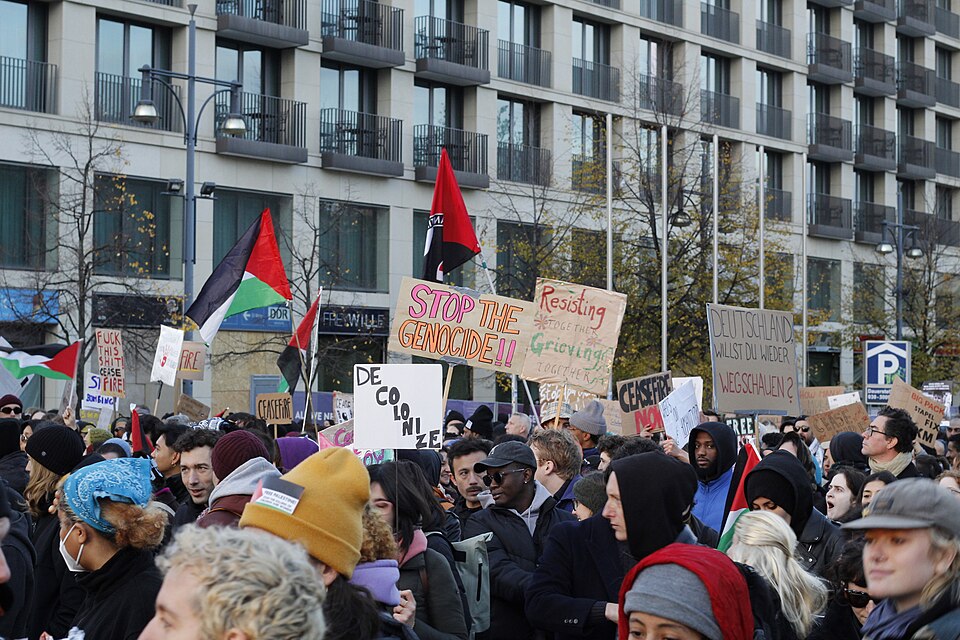
Demonstration in Berlin, 4 November 2023
(CC Attribution-ShareAlike 2.0 Generic)
From sports protests to street violence: The return of an old demon
The war in Gaza seeps into the streets of Europe. Into our sporting events, our media, our parliaments. Israel is being boycotted more and more. During the Vuelta in Spain, protests lined the course. Supposedly an act of solidarity with the Palestinians, but in reality just another symptom of a deeper problem: the ease with which an entire people is collectively stigmatized.
Because it doesn’t stop at banning Israeli artists, academics, or athletes. In Europe, antisemitism is rising at a pace we have not seen since the 1940s. Jewish communities once again feel the threat we thought had been left behind in the history books. Jewish children who better not say they are Jewish on their school bus. Shops being targeted. Synagogues needing police protection.
And worse still: The distinction is no longer made. For the masses in the streets and the editors in the newsrooms, “Jew” and “Israeli” are one and the same. But that is pure ignorance—or worse: deliberate blindness. Not every Jew is Israeli, and not every Israeli is a Jew—far from it. Israel is home to millions of Arabs. And worldwide, Jews come in every color and nationality: Black Jews in Ethiopia, Arab Jews from Yemen, Jews from Poland, Spain, Russia, Morocco, Argentina, France, America… the list goes on.
By branding Jews as one ethnic group, you are guilty of the exact same ethnic crime that turned Europe into a moral graveyard in the 1930s and 40s. Back then, Jews were not seen as ordinary citizens with a religion or cultural background, but as a monolithic threat to be isolated, branded, eliminated. The same principle that fueled centuries of pogroms.
Those who chant today that “Jews are genocidal monsters” are using the same logic as someone saying: “All Muslims are Syrians and therefore ISIS supporters.” Everyone recognizes that the latter is absurd and dangerous. Why should the first be acceptable?
Pro-Palestinian demonstrators, opinion makers, even parliamentarians who refuse to make this distinction are playing with fire. They think they are criticizing Israel, but in reality they are fanning the flames of antisemitism. And that fire spreads faster than they realize.
The irony? Those who claim to be fighting oppression are reproducing Europe’s oldest, dirtiest mechanism of oppression: reducing the Jew to a collective enemy.
We know how this story ends. We have seen the photos. We have read the names. The numbers are etched into our collective memory. And yet we are making the exact same mistake again.
Whoever erases the distinction between Jew and Israeli, whoever refuses to see Jews as a diverse, global community but instead as one dangerous race, is not engaging in activism. They are engaging in hate. And they are writing themselves into the same tradition that once dragged Europe into its deepest moral abyss.
Related Topics