The new Tisha b’Av Jews
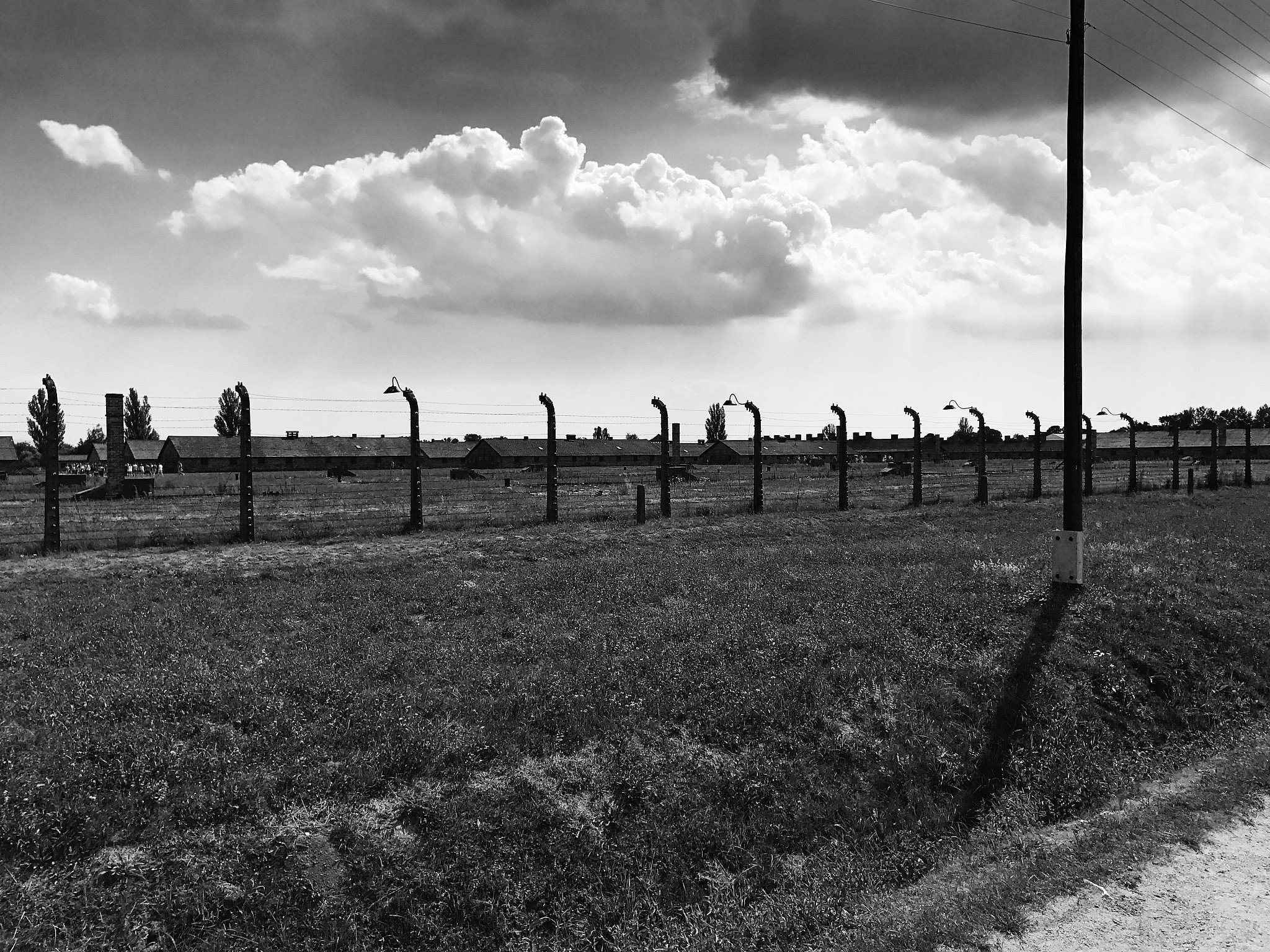
The summer before my senior year of high school, I joined a group mission to Poland. At one stop, we got off the bus and a few began posing for silly photos, as teenagers do. I remember feeling uneasy. Then our guide informed us we were standing beside a mass grave. The group fell silent. Haunted and shaken, I barely spoke the rest of the week.
Something shifted inside me that day. Before then, I had already known about Jewish suffering. My maternal grandmother’s entire family was murdered in the Holocaust. I devoured Jewish history books as a kid and read Maus at least a dozen times. But this was the first time I truly felt it—like a weight on my shoulders that never really lifted.
I grew up in the Golden Age of American Jewry. In the 1990s, being Jewish seemed low-risk, maybe even a little cool. Jewishness was cultural, quirky—a boutique identity you could wear lightly, on your own terms, without having to defend yourself. The Holocaust was something our grandparents had survived. Israel was strong. Antisemitism was over. Perhaps history itself was over.
American Judaism, in those years, tried to meet people where they were without rocking the boat too much. In the process, it usually offered a version of Jewishness that was tastefully curated, emotionally safe, and unburdened by painful memories.
Tisha b’Av, the Jewish holiday of mourning and national catastrophe, didn’t fit that narrative. We tried to salvage it, to make it “meaningful” with camp programs, slow songs by candlelight, and videos in the shul social hall. The tragedies were tragic, to be sure—but they weren’t ours. They were in the rearview mirror.
Fast forward a quarter century, and I’m not sure we need extra help making Tisha b’Av “meaningful.”
****
People tend to gravitate toward the uplifting aspects of identity: ritual, culture, connection, pride. Those are real and important. But they are not the full story.
Jewish identity, in particular, has always involved something heavier. Vicarious memory. Responsibility. A stubborn refusal to turn away from the past. And given what most of that past has looked like, we must be not only the people which celebrates, but the people which mourns.
Tisha b’Av is the day our tradition forces us to stop avoiding the traumatic parts of our story. We go all in; fasting, mourning, asking God questions that go unanswered. We strip away the comforts—the food, the ruach, even the schmoozing—that usually make Judaism beautiful and let ourselves experience something raw and brutal.
Long before there were “October 8 Jews,” there was the “Tisha b’Av Jew.” I don’t mean the one who muttered shver tzu zayn a Yid [“it is difficult to be a Jew”] with resignation. I mean the one who knew how to carry thousands of years of Jewish pain inside of them, willingly and lovingly, without being crushed in the process.
In truth, there is no alternative. To attempt to escape Jewish suffering is to forfeit one’s very spiritual identity. Maimonides writes that someone who “separates himself from the community”—not by denying God or violating the commandments, but simply by “not joining in their suffering and not fasting their fasts”—has no share in the World to Come (Hilchot Teshuvah 3:11).
The Talmud (Yevamot 47a) says that the very first thing a court must tell a prospective convert is this: “Do you not know that Israel is afflicted, oppressed, despised, and harassed?” That’s not a disclaimer. It’s the opening pitch. Whoever wants to join our Tribe will need to learn how to be a Tisha b’Av Jew. Just like I did that day in Poland.
****
I serve as a rabbi for thousands of graduate students across North America, and I’ve had a front row seat to the painful reckoning this generation of young Jews has faced since October 7. Many had long understood their Jewishness to be a benign, private matter. Suddenly, against their will, it became noticed—and a liability. Some of my students became too fearful to go to class. Others quietly removed their mezuzot. More simply stopped speaking.
But then I saw something else. Young Jews, for the first time, drawn not only to Jewish pride, but to Jewish pain. To Jewish peoplehood. To the whole sweep of Jewish destiny, the beauty and the burden alike.
Some call them the October 8 Jews. But maybe, just maybe, they are the Tisha b’Av Jews. They didn’t become more Jewish when it was safer. They became more Jewish precisely when it wasn’t.
When it comes to Jewish history and identity, we can run, but we can’t hide. It’s the new generation of Tisha b’Av Jews, the ones who’ve stopped hiding, who will carry our people forward—even when the burden feels too heavy to bear.