A Midwestern Jewish Politico
Featured Post
The night a Midwestern kid felt something stir
I wasn’t Jewish when Rabin was shot. I didn’t know any Jews. But I was a teen trying to make sense of the world and my path to Judaism began with his loss
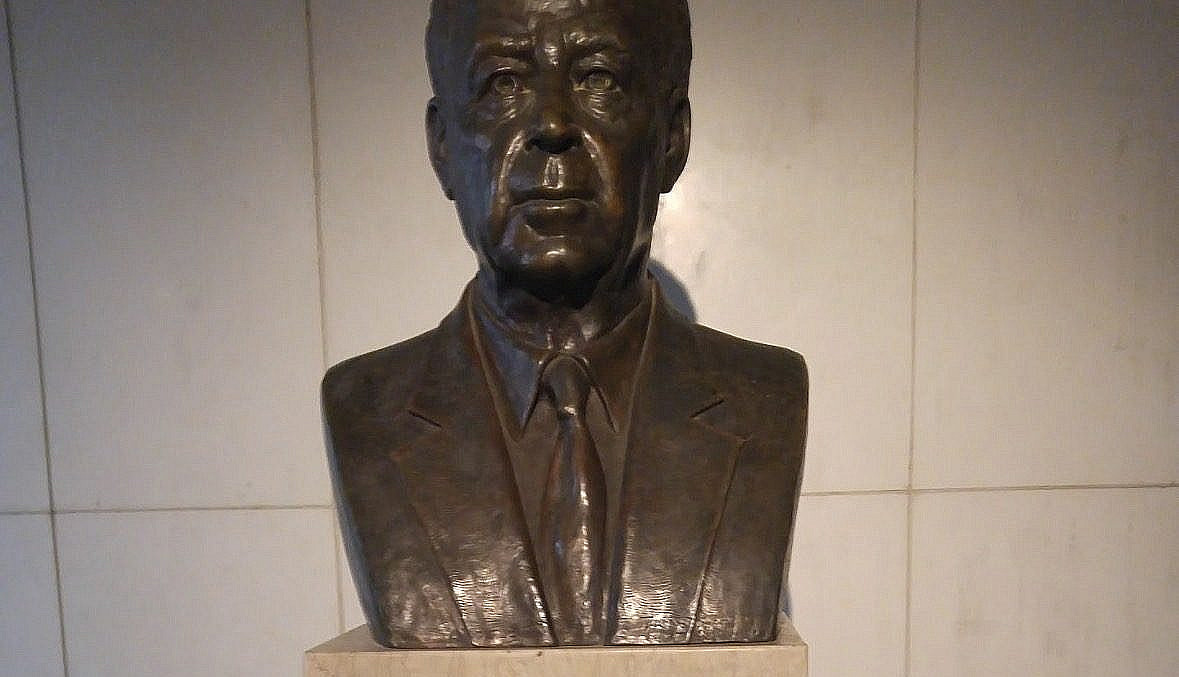
Photo by Author - 2016
Thirty years ago, on a Saturday night in early November 1995, I was a 14-year-old kid in the American Midwest. The TV was on in my bedroom — a boxy 19-inch Sharp brand television. The news cut in with a bulletin: Israeli Prime Minister Yitzhak Rabin had been shot.
At that age, I didn’t really understand geopolitics or the Israeli-Palestinian conflict. Israel was just a faraway place I occasionally heard about on the news… But when the anchor’s voice wavered and the footage shifted to candlelight vigils in Tel Aviv, I felt something strange and heavy — sadness, yes, but also something I couldn’t name.
It wasn’t like when an American politician died, or when there was a tragedy closer to home. This felt different — as if the world had lost something more than a person. Even as a 14-year-old who didn’t know the first thing about Israeli politics, I could sense that something sacred had been broken.
In the days that followed, I remember the images that looped on the news — the crowds singing Shir LaShalom at the peace rally, the handwritten signs calling for an end to hatred, the disbelief etched on people’s faces. I didn’t speak Hebrew, but somehow I understood the emotion. I didn’t know it then, but that moment planted something deep in me.
Back then, I wasn’t Jewish. I didn’t even know any Jews personally, other than one kid in my middle school. I was just a Midwestern teenager trying to make sense of a world that suddenly seemed smaller and sadder. Looking back now, I think that feeling — that empathy for a distant people mourning their leader — may have been the first flicker of something spiritual. Maybe even an early hint that my soul was Jewish long before I knew it.
It would take me almost two decades to realize that. In my early thirties, I began the long, humbling process of converting to Judaism. Studying, questioning, wrestling with theology — and ultimately finding a sense of home that felt both new and strangely familiar. I’ve often thought back to that night in 1995 and wondered if that spark I felt in front of the TV was the first sign of the path I was meant to follow.
When I think about Yitzhak Rabin today, three decades later, I see more than a statesman. He represented something deeply Jewish: the belief that peace is not a fantasy, but a moral obligation. He was a soldier who had fought in Israel’s wars and yet believed that true strength came from the courage to pursue reconciliation.
Rabin knew that peace would be messy, imperfect, and unpopular. He knew he was taking risks. But he also knew — as too few leaders do — that moral vision sometimes means walking forward even when your own people aren’t ready to follow.
That conviction still moves me today.
As a liberal Jew by choice, I believe that hope is one of Judaism’s most radical acts. Hope, in the face of history. Hope, in the face of heartbreak. Even now — amid division, fear, and uncertainty — I believe that peace is still possible. Not because it’s easy or likely, but because giving up on it would mean giving up on something essential to who we are as Jews.
We are a people who have carried hope through exile and persecution, through the loss of temples and the rebuilding of lives. Our story itself is an argument for the possibility of redemption — for the belief that tomorrow can be better than today.
I sometimes imagine what Rabin might say if he could see the world now — the polarization, the grief, the deepening divides within and beyond Israel. I think he’d remind us that peace doesn’t begin with treaties or handshakes. It begins with empathy. It begins with recognizing the humanity in the person across from us, even when it’s hardest.
For me, this anniversary is both historical and deeply personal. The night Rabin was killed, I felt a sadness that didn’t make sense for a kid with no connection to Israel. Now I understand: it was the first pull of a bond I hadn’t yet discovered — a whisper from a part of my soul that already belonged to the Jewish people.
Thirty years later, I carry that memory with me as a reminder that even the smallest stirrings of compassion or connection can be holy. That the feeling I had as a 14-year-old — that something precious had been lost — was also, in a quiet way, the beginning of finding who I really was.
Rabin once said, “Peace is not made with friends. Peace is made with enemies.”
I still believe in that kind of peace. The hard, hopeful, deeply Jewish kind.
Related Topics
Related Posts