


The night the words ran out: Sephora just reminded us it wasn’t the last time
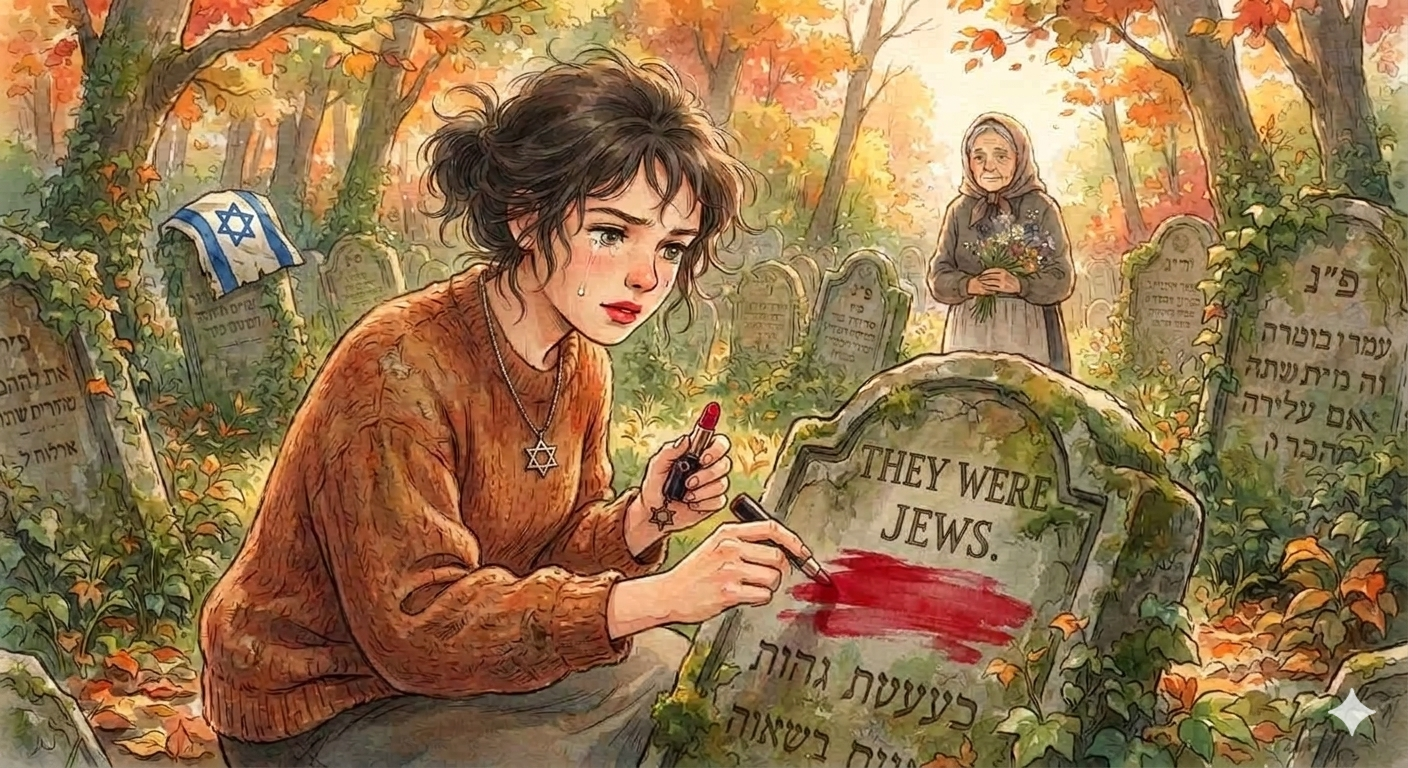
Seventy-four years ago, on August 12, 1952, thirteen Jews were executed by firing squad in the cellars of Moscow’s Lubyanka prison. They were poets, writers, cultural figures – people who had given the Soviet regime almost everything they had to give: loyalty, talent, and the naïve belief that if they assimilated deeply enough into the great “family of Soviet peoples,” they would be left alone. They were not Zionists. They were not enemies of the regime. They were Jews. And at some point, even the Soviet state stopped being willing to say that word out loud.
That is the part worth remembering: the killing began long before the bullets. It began with language.
Soviet authorities did not like memorials at sites of mass murder to say, “Jews were murdered here.” The preferred formulation was something like: “Soviet citizens were murdered here.”
Technically accurate. Politically convenient. And a remarkably efficient way of making Jewish victims disappear into a larger, less uncomfortable category.
Because once you erase the word “Jewish,” you no longer have to confront what happened to Jews.
Sanitized language is rarely neutral. Sometimes it’s simply the most elegant way of avoiding the sentence nobody wants to say.
Which brings us – carefully – to Sephora.
Let me make the disclaimer absolutely explicit, before anyone decides to manufacture a controversy: I am not comparing the murder of thirteen people to a corporate press release. I am not comparing the Soviet regime to LVMH, and I am certainly not suggesting a cautious marketing statement is remotely comparable, in moral gravity, to state-sponsored murder. That would be a ridiculous comparison, and an obscene one. What I want to point at is narrower: a mechanism. What happens when people become so uncomfortable with a word that they start building elaborate linguistic escape routes around it.
‘A one-time resale deal’
This week, Sephora announced that its house brand, Sephora Collection, will begin being sold in Israel through a local distributor, initially via pop-ups at Azrieli malls and the distributor’s own stores.
Good news, right?
Well, sort of.
Just don’t call it what it obviously is.
It is not, apparently, “Sephora entering Israel.” Heaven forbid. It is a “one-time resale deal.” A limited, carefully circumscribed commercial arrangement. LVMH was quick to clarify that Sephora itself has no plans to open stores in Israel. The distributor was equally quick to clarify, “for the avoidance of doubt,” that the products are genuine – not excess inventory, not outlet merchandise.
Everyone is very eager to explain what this is not.
It’s a bit like being invited to dinner and having the invitation open with a clause specifying that the meal should not be construed as evidence of affection, commitment, or any intention of ever seeing you again. Commercially, there’s nothing unusual here. Linguistically, it’s fascinating. Because what exactly is so dangerous about the sentence “we sell our products in Israel”?
Apparently, quite a lot.
This kind of corporate choreography didn’t emerge from nowhere. For years, international companies have learned that the word “Israel” can turn into a liability very quickly – boycott campaigns, online outrage, activist pressure, threats to the brand. So the vocabulary evolves. You find the formulation that lets you do business in Israel without appearing to do business with Israel.
That’s more than ordinary risk management. It’s the moment external pressure starts shaping the language a company uses to describe reality. Again – no one at LVMH is Stalin. A communications executive choosing careful wording is not a Soviet interrogator. A Sephora press statement is not an execution order. But the mechanism is worth noticing, because erasure doesn’t always begin with a ban. Sometimes it begins with the quiet decision that a word is better left unsaid. And when it comes to Israel, the word increasingly seems to require a lawyer standing nearby. That’s especially striking given how comfortable these same global corporations are being bold, provocative, “fearless” on virtually every other fashionable cause imaginable.
Then Israel comes up.
Suddenly everyone rediscovers the beauty of ambiguity.
Not afraid then, not afraid now
So no – I’m not going to demand an apology from Sephora. I’m not holding up a sign that says “Shame.” I don’t need a multinational beauty company to publicly validate Israel’s existence in order to feel secure about my own. The Jewish people did not disappear when the Soviets erased the word “Jewish” from memorial language. We are not going to disappear because someone in a Paris boardroom prefers the phrase “limited commercial agreement.”
And there’s something almost comical about the whole exercise. After all the disclaimers, the qualifications, the carefully placed asterisks – the product is still coming to Israel. Israeli customers will buy it. Sephora will get paid. The only thing being kept outside the store is the word “Israel.”
Israel has plenty of excellent beauty and skincare brands of its own, as it happens. Some are every bit as good – occasionally better – than whatever’s sitting on a Sephora shelf.
So whether we buy Sephora or not, there’s something worth remembering: we don’t need anyone’s permission to say the word.
Israel.
Jews.
Us.
And when it comes to lipstick, there’s always enough of it to go around – even for people trying very hard to gloss over the obvious.