


The “no partner” lie reveals an unwillingness to make progress toward an agreement.
On my first assignment as a diplomat, I attended an event at a think tank in Washington, where attorney Yoel Singer, who was the negotiator on behalf of Prime Minister Yitzhak Rabin in the Oslo Accords, was asked what the difference was between Rabin’s demand that there be no political progress without ensuring the security of Israelis and the similar demand presented by Benjamin Netanyahu.
Singer replied with a simple parable: your son asks for the car keys, and you tell him he will get them on the condition that he does his homework. Rabin, Singer explained, genuinely wanted the son to do his homework, while Netanyahu is interested in setting up an obstacle to avoid giving the car. The allegory was clear: Rabin was willing to help create the conditions that would allow the Palestinians to provide security for Israel, while Netanyahu specializes in setting demands but is not interested in helping create the conditions that would allow their fulfillment.
In other words, for Rabin, security was a condition for progress. With Netanyahu, security has become an excuse for a lack of progress. Since then, I have seen countless examples of how Netanyahu sabotages any diplomatic progress.
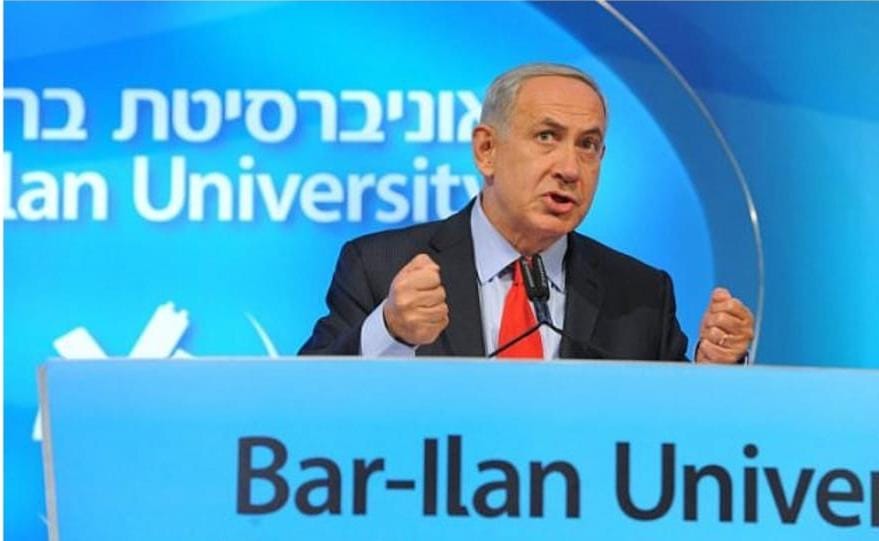
Years later, I read in Nahum Barnea’s weekly column an interview with Dan Meridor after he failed in the Likud primaries. Barnea asked him why he failed. Meridor recounted that during his visits to Likud chapters, people accused him of supporting the two-state solution. He replied to them that this is also Netanyahu’s position, as he declared in the Bar-Ilan speech. His answer was astonishing in its simplicity: “But you really mean it.”
Recently, I heard a briefing from former colleagues at the Foreign Ministry. They were asked what Israel’s vision is regarding the Palestinian issue. The answer was that Israel accepted President Trump’s 20-point plan, which also includes a political horizon for the Palestinians. But the problem of fulfilling the commitment lies with the Palestinians, who do not disarm Hamas.
As is known, agreeing on a plan is not enough. It must also be implemented. Here the gap between propaganda and reality is revealed. Israel can tell the world that it accepts a plan that includes a political horizon for the Palestinians, while at the same time acting in such a way that this horizon will always remain distant. As Nikolai Mladenov has already understood, the real test is not the text that the parties signed, but what happens afterward on the ground.
Israel’s demand that Hamas surrender and hand over its weapons before any other step, while at the same time continuing the daily killing of Hamas members and, as a result, many civilians, and arming militias that thwart any such possibility, effectively means the perpetuation of Hamas’s rule and the failure of the plan. This is the true policy of Netanyahu and the right-wing parties, which, to our horror, has not changed even after 7.10, according to which “Hamas is an asset” – a sustainable asset for Netanyahu to use as a barrier to any political progress.
A similar pattern also appeared in the agreements Israel itself approved with Lebanon. The demand that Hezbollah disarm before any progress is made is completely at odds with the proven experience in international diplomacy regarding the disarmament of terrorist organizations, thus justifying the IDF’s continued presence in Lebanon. The Israeli agreement is given only after ensuring that there are “poison pills” that will prevent its implementation. That’s the method.
Meanwhile, Netanyahu and his entourage continue to act in a way that endangers stability in the West Bank by not preventing Jewish terrorism. When the flare-up, which the government yearns for and pushes toward with all its might, also comes from the Palestinian side, it will be possible to argue that “there is no partner” and that one cannot rely on the Palestinians.
Thus, a vicious cycle is created: the policy aims to thwart progress and generates distrust; the distrust justifies the policy, and the process’s failure seemingly proves the policy was correct from the beginning. This is the public relations strategy Netanyahu has provided to Israeli diplomacy for years: We want an agreement, but there is no partner. But the partner must always fail the next test, and so on, with no way out of the loop and no political hope.
When the PLO recognized Israel and stated that it was satisfied with a state within the 1967 borders, the claim was that the Palestinians were not fighting terrorism enough. When the Palestinian Authority cooperated with Israel against Hamas’ terrorism, it was claimed that it was essentially no different from Hamas, among other reasons, due to its policy of payments to the families of prisoners – while Israel itself had allowed the flow of funds to Hamas for years. And there is no doubt that if the issue of payments is resolved, a new test will come: textbooks. And if the textbooks also change, another test will be found. There will always be another condition, another reservation, another reason why “now is not the time.” This way, negotiations can go on forever – never reaching an agreement, and even if there is an agreement, there will always be a way to avoid fulfilling it. The loss of credibility, the loss of legitimacy, and the loss of any viable political path.
This scenario also explains why the debate over the very word “Palestinian state” has become a kind of loyalty test in Israel. For example, Hasbara expert Ben-Dror Yemini accused Gadi Eisenkot of not stating that he supports a Palestinian state, not because this is the way to save Israel from a bi-national catastrophe, but because it is necessary for Hasbara reasons: that is, the Palestinians should be the ones who refuse the state so that Israel is not blamed for the failure.
This is precisely the dangerous reversal. Instead of PR serving the policy, the policy is turned into a tool for PR. Instead of asking how we can reach an arrangement that will ensure Israel’s security and future, we ask how we can reach a situation where the other side looks more guilty than us. But a state cannot base its future on success in PR, especially since no one in the world, apart from parts of the Israeli public and the Trump administration, buys these transparent tricks anymore.
This pattern has been repeating for decades. Every time an opportunity for progress arises, a new condition appears. Every time the Palestinian side meets some of these conditions, the threshold of demands rises. Perhaps it is time to cease asking whether there is a partner and instead pose a different question: Is Israel prepared to be a partner?
A partner is not a finished product we wait to discover It is the result of policy. If Israel wants a moderate, legitimate, and capable Palestinian leadership, it must help create the conditions for that. If it wants security, it must create a political framework that allows the Palestinians to be partners in providing it. And if it accepts a plan that includes a political horizon, it must act to ensure that this horizon does not remain just a promise.
It’s time to stop this charade. Anyone who wants a better future here needs to expose Netanyahu’s lies, even though they provide a rationalization that we all so desperately want to believe in: that the problem is not with us.
Because after all the tricks and gimmicks, a simple truth remains: the solution to the problem with the Palestinians lies in the soul of Israel, and as long as our government is fleeing from its solution, sabotaging every progress and looking for someone to blame, except for itself, of course. We will not achieve security, peace, or a democratic homeland for the Jewish people.