Russian-American-Israeli Palestinian. Palestine is Israel.
The Nobel Piss Prize, Part II
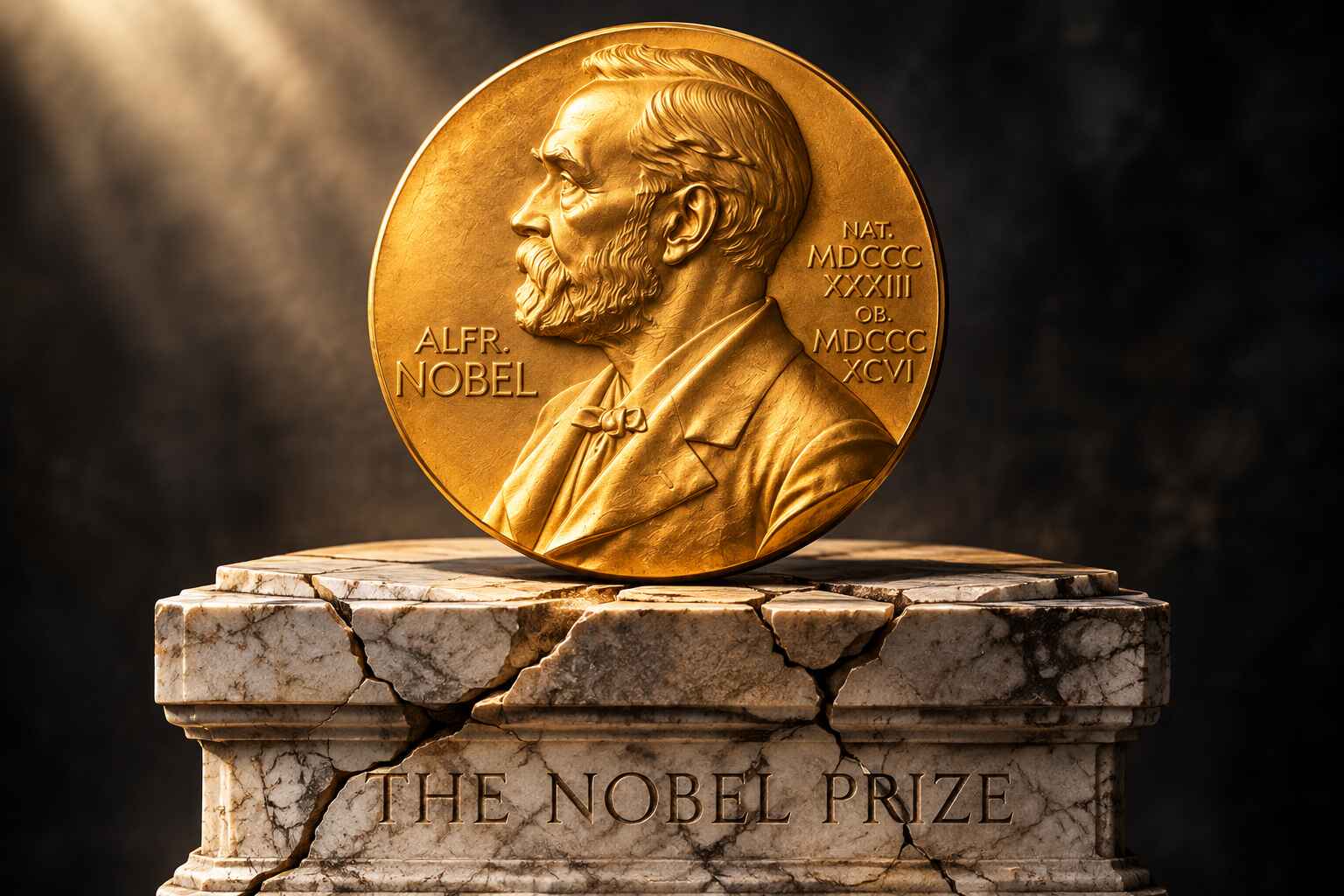
When borrowed prestige begins to crumble. The Nobel name cannot guarantee the integrity of the institutions behind it. Image © Ivan Bassov, 2026. Licensed under CC BY 4.0.
Not All Nobel Prizes Are Created Equal — And Some Should Never Have Existed
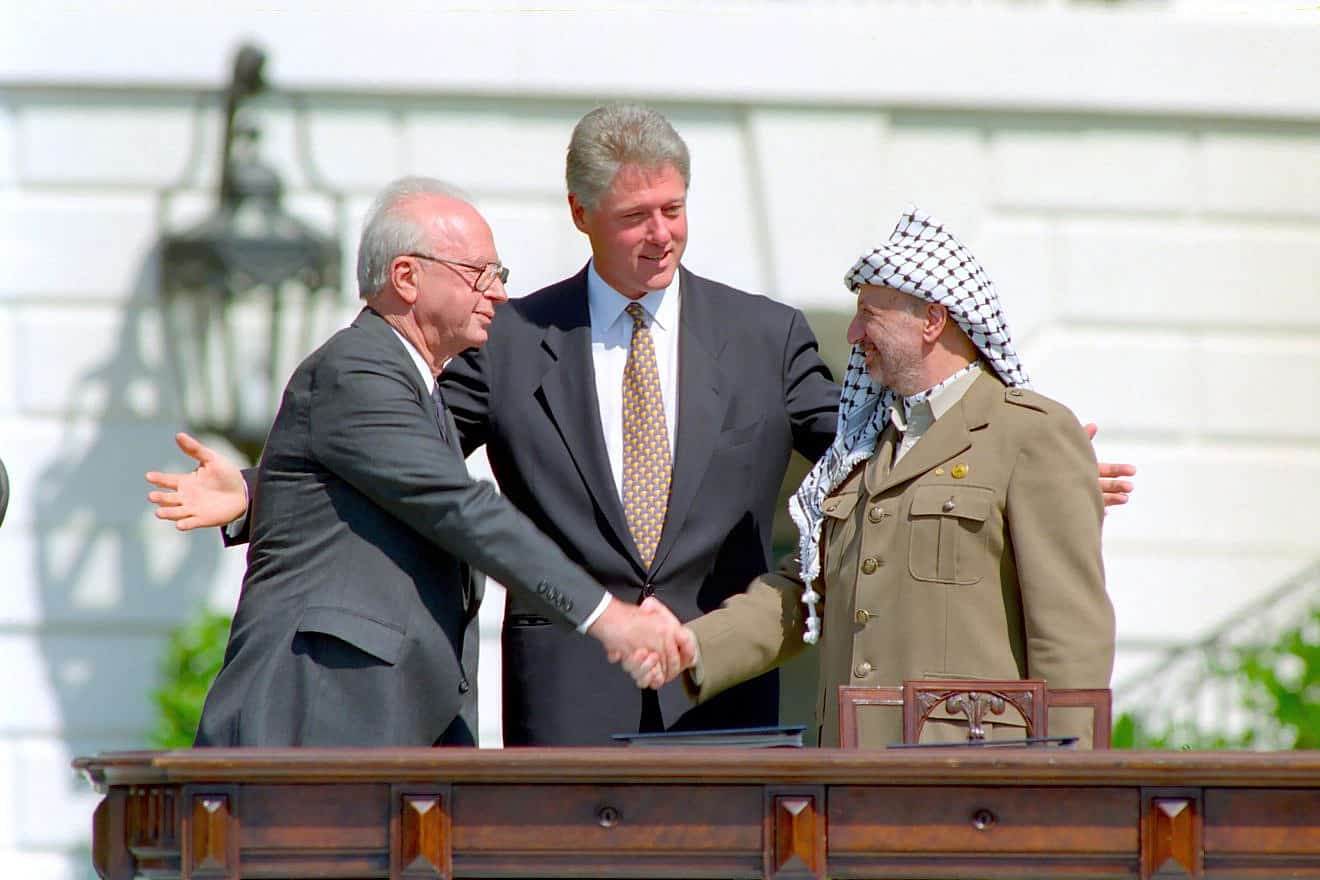
In my previous article, The Nobel Piss Prize, I explained why I lost respect for the Nobel Peace Prize when, in 1994, the Norwegian Nobel Committee decided that Yasser Arafat deserved to stand among the world’s champions of peace.
But the problem goes deeper than individual laureates. There is a fundamental difference between recognizing scientific achievement and awarding prizes based on political or subjective judgments.
Not all Nobel Prizes are created equal. And some should never have been Nobel Prizes in the first place.
Five Original Prizes, Two Very Different Worlds
Alfred Nobel’s will, signed in 1895, established five prizes: Physics, Chemistry, Physiology or Medicine, Literature, and Peace.
Nobel assigned the scientific and Literature prizes to Swedish academic and cultural institutions. The Peace Prize went to an entirely different body: a five-member committee appointed by the Norwegian Parliament.
The distinction was not merely administrative. Sweden and Norway were still united under a common monarch when Nobel signed his will, although Norway became independent in 1905. Nobel left no explanation for his choice.
The first prizes were awarded in 1901. The Norwegian Nobel Committee has remained responsible for the Peace Prize ever since. Its members are appointed by the Norwegian Parliament, with the committee’s makeup reflecting the political strength of the parliamentary parties.
Imagine the reaction if the Nobel Peace Prize Committee were appointed solely by the Ukrainian Rada, the Russian Duma, or even the Israeli Knesset. Wouldn’t its political independence immediately become a subject of scrutiny? Norway is no different from any other country and should be subject to the same scrutiny.
There is also a sixth prize worth mentioning. It was not established by Alfred Nobel. The Economics Prize was created in 1968 by Sweden’s central bank, with the first award following in 1969. Its formal name is the Sveriges Riksbank Prize in Economic Sciences in Memory of Alfred Nobel.
It was a later addition, created by a different institution, borrowing the Nobel name and the authority associated with it.
The Problem With Defining Peace
Scientific Nobel Prizes recognize achievements in relatively defined fields. Discoveries can be examined, tested, challenged, and evaluated against evidence. Scientific awards are not immune to controversy or institutional politics, but their underlying achievements can, at least in principle, be assessed objectively.
The Peace Prize is fundamentally different.
What exactly constitutes peace? Signing a treaty? Ending hostilities? Disarmament? Promoting international cooperation? Advancing human rights? Or promoting a particular political vision of the world?
Nobel’s original mandate referred to fraternity between nations, the abolition or reduction of standing armies, and the promotion of peace congresses. The committee later expanded it to diplomacy, human rights, democracy, humanitarian work, environmental activism, and other causes.
Who decides which activities deserve recognition, and according to what objective standard?
No scientific experiment can establish whether a political leader deserves a Peace Prize. The committee must make judgments reflecting its members’ values, political outlook, and interpretation of international affairs.
The Peace Prize has consequently become thoroughly politicized, influenced by the prevailing political climate and what the committee considers desirable at a particular moment.
Hitler: A Nobel Peace Prize Nominee
In 1939, Adolf Hitler was nominated for the Nobel Peace Prize.
Let that sink in.
The nomination was submitted by Swedish parliamentarian Erik Brandt as a satirical protest against British Prime Minister Neville Chamberlain’s nomination for the Munich Agreement. Brandt sought to expose the absurdity of treating appeasement of Hitler as a contribution to peace, and subsequently withdrew the nomination.
Imagine someone nominating a physicist for the Nobel Prize in Physics as a satirical protest against another candidate. Would anyone take such a nomination seriously, or would it be dismissed as an abuse of the process? Yet the Peace Prize has become so entangled with politics that even its nominations can serve as political theater.
And there is another historical irony: Joseph Stalin was nominated for the Nobel Peace Prize twice, in 1945 and 1948.
An Award in Anticipation of Achievement
Consider Barack Obama.
In 2009, less than nine months after taking office as president of the United States, Obama received the Nobel Peace Prize.
The committee praised his efforts to strengthen international diplomacy and expressed hope that he would contribute to a new international climate. Hope.
A prize should recognize achievement, not expectation. Awarding it in anticipation of what someone might accomplish is not recognition; it is an endorsement of a political promise.
Imagine awarding a Nobel Prize in Chemistry to a scientist because the committee likes the direction of his research and anticipates a breakthrough.
Absurd? Apparently, not in the world of the Peace Prize.
The Nobel Prize in Literature: Ideology Between the Lines
The Nobel Prize in Literature belongs in a somewhat similar category.
Literary judgment is inherently subjective. It depends on taste, cultural background, aesthetic preferences, and interpretation. There is no formula for determining the world’s greatest writer.
Nobel’s will did not simply call for the best literature. He specified works demonstrating an “idealistic tendency.” That qualification alone invites interpretation.
The political dimension becomes clear when we consider writers recognized as dissidents against authoritarian regimes.
Boris Pasternak, Aleksandr Solzhenitsyn, and Joseph Brodsky received Nobel Literature Prizes in 1958, 1970, and 1987, respectively. Their literary achievements were real, but their persecution by Soviet authorities and opposition to the regime made them powerful international political symbols.
Would the Swedish Academy have paid the same attention to these writers had they been obedient Soviet literary figures, producing works approved by the Communist Party? Or had they lived in non-totalitarian countries, without the profile of political dissidents? I seriously doubt it.
Gao Xingjian, a Chinese-born writer who left the Communist Party and settled in France, received the Literature Prize in 2000. Was he a great writer, irrespective of politics? I don’t know.
I am not disputing these writers’ literary talent. I like Pasternak’s poetry, though Brodsky’s appeals to me much less. I have read Solzhenitsyn, but prefer other writers. I have never read Gao Xingjian.
My question is how much their political dissidence contributed to their international recognition. When literary merit and political symbolism become inseparable, the Academy’s insistence that its decisions are purely literary starts looking rather convenient.
And What About Ziophobia?
José Saramago received the prize in 1998. In 2002, after visiting Ramallah, he compared Israel’s actions there to Auschwitz and subsequently defended the comparison.
Günter Grass received the prize in 1999. In 2012, he published What Must Be Said, portraying Israel as a threat to world peace because of its nuclear capabilities and criticizing German arms sales to Israel.
These were not obscure commentators. They were Nobel laureates whose literary achievements had earned them immense international prestige.
A Nobel medal does not turn a writer into a historian, geopolitical expert, or authority on Jewish history. It certainly does not make Holocaust comparisons any more intellectually respectable.
When prominent literary figures use their cultural prestige to promote Ziophobia, their statements should not be shielded from scrutiny by the authority of their Nobel awards.
The Literature Prize, too, is vulnerable to ideological fashions.
And Then Came Economics
Economics is a more complicated case.
Unlike the Peace Prize and Literature Prize, economics has substantial scientific foundations: mathematical models, statistical analysis, empirical research, and testable hypotheses.
But it also deals with human behavior, political institutions, and competing theories about how societies should function.
Economic theories have profound political implications. Different schools of thought reach different conclusions about markets, government intervention, redistribution, and economic organization.
Selecting the discipline’s most deserving contributions inevitably involves judgments about its direction and significance.
Economics is a serious academic field. But it is not Physics or Chemistry, and its awards are not immune to ideological controversy.
There is another issue: imagine the Qatar Central Bank, the Bank of Mongolia, or the National Bank of Rwanda creating its own economics prize. Would that automatically make it a Nobel-level distinction? Yet Sweden’s central bank did essentially that—and its prize acquired the Nobel name and prestige.
The Other Nobel Prize
And that brings me back to Russia.
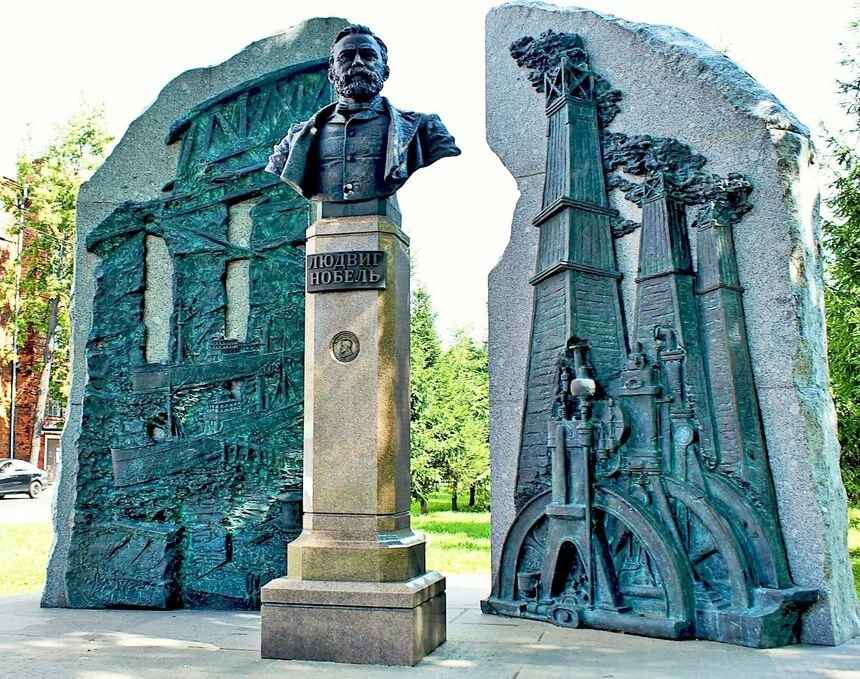
Russia has its own Nobel Prize—or, more precisely, the Ludvig Nobel Prize, named after Alfred Nobel’s older brother. The distinction matters. Ludvig was a prominent industrialist who built much of his business career in Russia, and the Nobel family has a genuine historical connection to my hometown of Rybinsk. I wrote about that connection in The Nobel Piss Prize.
The Ludvig Nobel Prize has its own history, dating back to the late nineteenth century. It was discontinued after the 1917 Revolution and revived in 2005. But it is not one of Alfred Nobel’s prizes, and it has no institutional connection to the Nobel Foundation.
In 2008, Russian headlines announced that “Vladimir Putin has won a Nobel Prize.”
In August 2024, the same award was presented to Chechen leader Ramzan Kadyrov. The award was given, among other reasons, for his support of “Russia’s military operation in Ukraine.”
Of course, neither clown received an Alfred Nobel Prize. They received Russia’s own imitation: the “Ludvig Nobel Prize.” But how many people actually pay attention to whether it’s Alfred or Ludvig?
Russia effectively usurped the prestige of the Nobel name, much as Sweden’s central bank did when it established its economics prize.
The comparison raises an interesting question: how much prestige can a prize borrow simply by attaching the Nobel name to it?
Three Prizes Too Many
I would eliminate the Nobel Peace Prize, the Nobel Prize in Literature, and the Economics Prize altogether.
Not reform them, introduce a longer waiting period, or appoint a supposedly more balanced committee. Eliminate them.
Under the “right” political conditions, the Nobel Peace Prize could conceivably be awarded to Adolf Hitler or Vladimir Putin, the Nobel Prize in Literature to Joseph Goebbels or Sergei Lavrov—both of whom have written “poetry”—and the Economics Prize to Karl Marx or Thomas Piketty.
Consider Knut Hamsun, the 1920 laureate. He subsequently became an enthusiastic supporter of Hitler and Nazi Germany. After Hitler’s death, he published an obituary praising him. He even handed his Nobel medal to Joseph Goebbels.
As for the propagandist and the revolutionary theorist, one can debate their respective intellectual contributions. That is precisely the problem: such judgments can become entangled with political and ideological preferences.
It is much harder to imagine the same ideological exercise succeeding with a Nobel Prize in Physics or Chemistry.
Nature does not vote. Experiments do not care about ideology. Equations do not bend to accommodate the prevailing political climate.
Discoveries may be controversial and recognition delayed, but eventually the evidence matters.
Keep the Science. Drop the Pretension.
I have enormous respect for the scientific Nobel Prizes. Physics is physics. Chemistry is chemistry. Physiology is physiology. Medicine is medicine.
Their prestige rests on the achievements they recognize, not on the moral authority of the institutions handing out the medals. The Nobel name should not serve as a universal stamp of excellence, virtue, or historical importance.
The Peace Prize is not a scientific assessment of peace. The Literature Prize is not an objective measurement of literary greatness. The Economics Prize is not a definitive verdict on economic thought.
They are institutional judgments, made by people under the influence of their time, values, and political and intellectual environments.
They parasitize the prestige of the scientific Nobel Prizes.
I would rather have three fewer Nobel Prizes and preserve the credibility of the ones that remain.
The Nobel name deserves better than to be used as a certificate of political and ideological approval.
—
See Also
Related Topics
Related Posts