The October 8 Jew: Identity Reclaimed
On October 6, contemporary Jewish identity rested on two seemingly rock-solid pillars. The first was the core promise of the post-Holocaust era: a sovereign Jewish state, backed by a military, that would guarantee physical security. The second was the unwritten pact of the diaspora: liberal democracies would ensure freedom and full, permanent civic integration.
The next morning, both certainties evaporated.
In the United States, 87% of Jews feel that antisemitism has skyrocketed. Six in ten have felt unsafe doing basic things like wearing a Star of David on the street, walking into a synagogue, or simply expressing an opinion on social media. The shockwave also penetrated their private lives: 64% have seen personal or professional relationships suffer, with many cutting ties with friends or entirely cutting off acquaintances. The illusion that Western integration and progress offered an impenetrable shield was shattered.
Theodor Herzl warned about this over a century ago. In his diaries and letters, he wrote bitterly: “In our native lands where we have lived for centuries we are still decried as aliens… If they would only leave us in peace… But I think we shall not be left in peace.”
Yet, paradoxically, the collective response wasn’t flight or mass migration to Israel. It was a return.
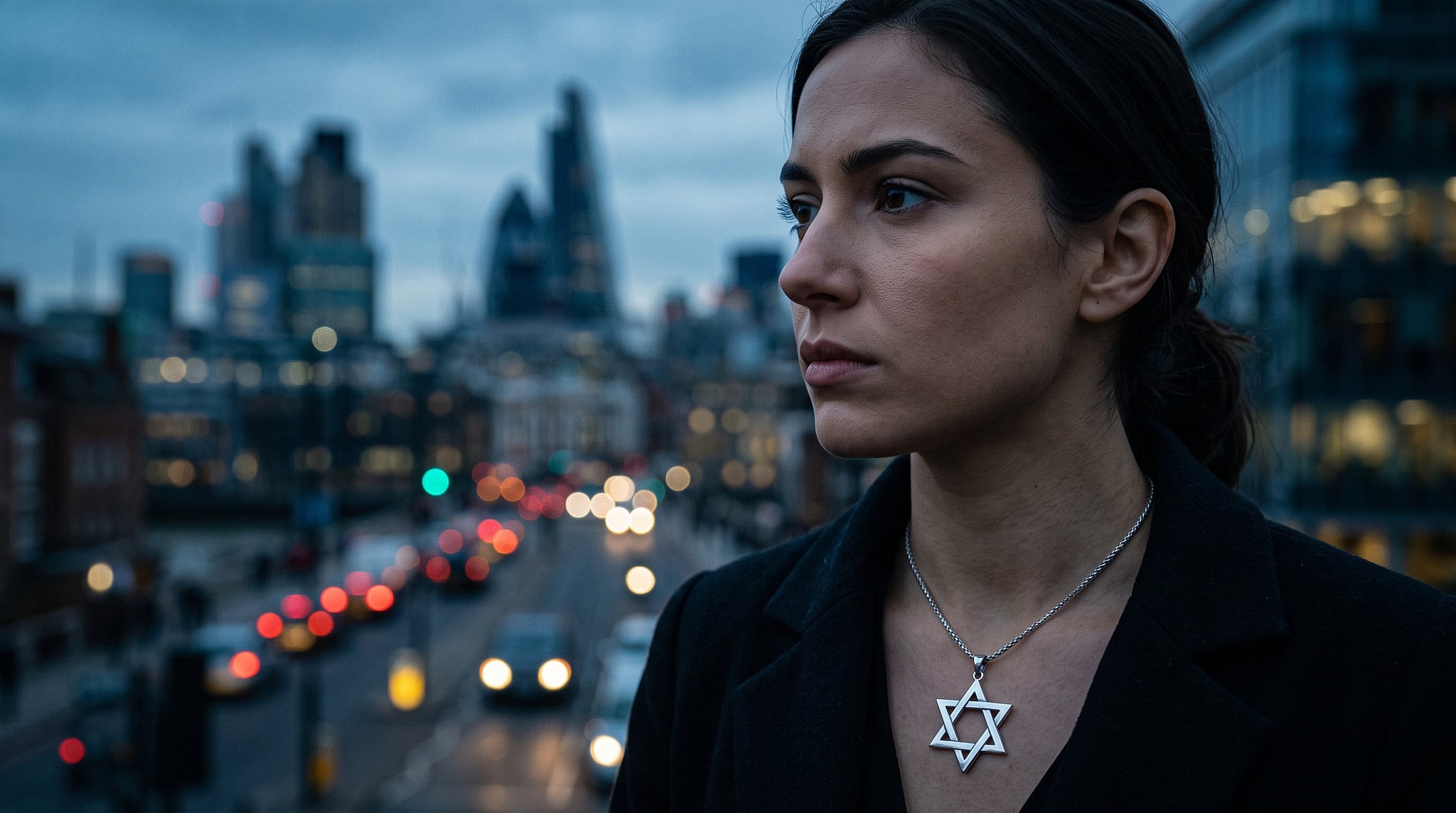
This has sparked the emergence of what some are already defining as the “October 8 Jew.” These are people who, faced with open hostility on college campuses and streets worldwide, decided to stop hiding their identity. Polls show a profound shift: 57% of American Jews now feel more connected to Israel or their heritage. This isn’t an abstract phenomenon. It shows up in young adults attending Shabbat dinners for the first time, families re-enrolling their kids in community schools, and people who, ironically, have started wearing Jewish symbols much more publicly.
57% of American Jews now feel more connected to Israel or their heritage.
However, this identity earthquake also triggered an aftershock in the opposite direction.
For a deeply assimilated minority, the crisis wasn’t a call to return, but an opportunity to definitively break away. By waving the “not in my name” flag and distancing themselves from the Israeli state’s response, they found a free pass to preserve their status and acceptance in Western progressive circles. This is the dynamic of the “good Jew”: the one who, in exchange for fracturing community solidarity at a time of maximum vulnerability, buys the temporary tolerance of a political and intellectual elite that now demands anti-Zionism as an essential proof of moral and civic purity.
Our tradition offers an interesting theoretical framework to explain this phenomenon. The Book of Genesis (Bereshit) focuses almost entirely on individuals—the patriarchs, matriarchs, and their immediate families. The Book of Exodus (Shemot) leaves these family sagas behind to focus on building a structured, collective nation united by a mission.
When a crisis hits, it forcefully activates the “Genesis” identity, reminding every Jew of their shared vulnerability. The community’s subsequent response—the outpouring of solidarity, the rebuilding of institutions, and a deeper bond with their legacy—is the active transformation of that random fate into a destiny with purpose, much like “Exodus.”
For large secular segments, Judaism stopped being an optional identity or a folkloric heritage. It reasserted itself as an inescapable fate, dictated by external circumstances, leveling the secular and the observant in the exact same vulnerability.
Naturally, this earthquake didn’t shake every community the same way. In Religious Zionism and Modern Orthodoxy, the trauma was channeled into liturgy, with the addition of new Kinot (lamentations) for Tisha B’Av, and into a deeper military commitment that now merges the survival of the state with a supreme religious imperative.
In Haredi (ultra-Orthodox) society, we saw an initial burst of solidarity and volunteering. However powerful, it proved temporary against the backdrop of unresolved, structural frictions over the military draft.
Major American Haredi organizations, like Agudath Israel of America, have shown unprecedented solidarity with Israel following the security crises, even encouraging members to join massive pro-Israel rallies. By contrast, figures in the Israeli rabbinic leadership, such as Sephardic Chief Rabbi Yitzhak Yosef, went as far as threatening that the community would leave the country en masse if forced to enlist.
For many diaspora Orthodox Jews, who generously fund Israeli institutions, it’s hard to digest the Israeli ultra-Orthodox leadership taking such belligerent stances against the very defense institutions of the Jewish State.
October 7 stripped away the illusion of immunity. It forced us to remember that security requires constant vigilance, and that the community was never just a social framework, but the very core of the Jewish people’s survival.
The main question now isn’t what was done to us, but what we are becoming. The paradigm of absolute comfort has been broken. All that’s left is deciding what identity we will build on the rubble.