The Official Kanaani Instagram Account Was Taken Down After a Coordinated Hacker Attack
I recently wrote an article about the lion as a sacred Jewish symbol—the emblem of the Tribe of Judah, the tribe from which the Messiah will descend according to Jewish tradition. The lion is also a symbol of Jerusalem and an expression of Malchut, or kingship.
I translated the article into Russian and shared it in a Russian-speaking Facebook group created for Jewish discussion. What happened afterward should concern not only me, but everyone who relies on social media to preserve cultural memory, conduct public work, and participate in community life.
After the translation appeared, individuals using apparently non-Jewish identities entered the discussion and began posting antisemitic provocations in Russian. They ridiculed Jewish symbols, claimed that the Jewish people had stolen their history and culture from Egypt, and made other degrading statements about Jews and Judaism.
I responded firmly but respectfully. I defended Jewish history and tradition by referring to the Torah, the Talmud, and other Jewish sources. I did not threaten anyone, advocate violence, or engage in extremist activity. I was a Jewish writer responding to antisemitic abuse inside a group intended for Jewish conversation.
I documented the exchanges and preserved screenshots.
Soon afterward, suspicious attempts were made to access my Facebook and Instagram accounts from several geographical locations. The security notifications included Thailand and cities in the United States where I was not present. I live in Brooklyn, New York.
Facebook itself alerted me to the unfamiliar activity and asked whether the logins belonged to me. I answered that they did not. I removed unfamiliar sessions and took steps to secure my accounts.
The next day, instead of receiving protection, I learned that Facebook had disabled my account for alleged violations of its Community Standards. My connected Instagram accounts were suspended as well.
I was never given a clear and specific explanation of what I had supposedly done. I was not told which publication allegedly violated the rules, whether prohibited activity had occurred during the unauthorized access, or whether coordinated complaints had been submitted against me. I repeatedly sought a genuine human review, but I encountered only automated procedures, error messages, and recovery paths that led nowhere.
The chronology is too troubling to ignore. First came Russian-language antisemitic provocation in a Jewish Facebook group. After I defended Jewish history, suspicious access attempts followed from multiple geographical locations. Facebook acknowledged that the activity was unfamiliar by asking whether it was mine. After I confirmed that it was not, my Facebook and Instagram accounts were disabled.
Based on the timing, apparent coordination, international infrastructure, and the attackers’ seeming understanding of Meta’s automated enforcement system, I do not believe this was merely the work of a few isolated trolls. In my view, the attack may have involved professional actors connected to the security or influence structures of one or more hostile states.
That is my reasoned conclusion based on the evidence available to me, not a substitute for a forensic investigation. I cannot responsibly identify a particular government without access to Meta’s technical records. Meta, however, possesses the IP logs, device information, session history, account connections, reporting patterns, and other evidence necessary to determine what happened. Those records must be preserved and properly examined.
Professional cyber operatives do not necessarily expose their true locations. They can route their activity through compromised devices, proxies, virtual private networks, and infrastructure in unrelated countries. A login appearing to originate in Thailand or an American city does not prove that the attacker was physically present there. It may instead demonstrate an effort to conceal the operation’s true origin.
Those familiar with Russian-language cyberwarfare and organized influence campaigns will understand why the possibility of state involvement deserves serious investigation. I will not publicly accuse a specific country without forensic proof. At the same time, possible state involvement should not be dismissed merely because professional attackers may have hidden behind accounts and infrastructure located elsewhere.
Facebook and Instagram are Western social-media platforms, yet their automated systems produced precisely the result the apparent attackers wanted. The people posting antisemitic provocations succeeded in silencing the Jewish person who answered them. The person who reported unauthorized access lost his accounts, while the apparent provocateurs remained online.
I am not claiming that Meta intentionally cooperated with hackers or foreign intelligence services. I am saying that, whatever Meta’s intentions, its system appears to have rewarded the attackers and punished their target.
Professional adversaries understand the weaknesses of these platforms. They know that ordinary users are sent through automated forms, circular recovery procedures, unexplained errors, and decisions issued without meaningful human review. They exploit the enormous distance between Meta’s power and its inaccessibility to the individuals whose identities, archives, and livelihoods exist on its platforms.
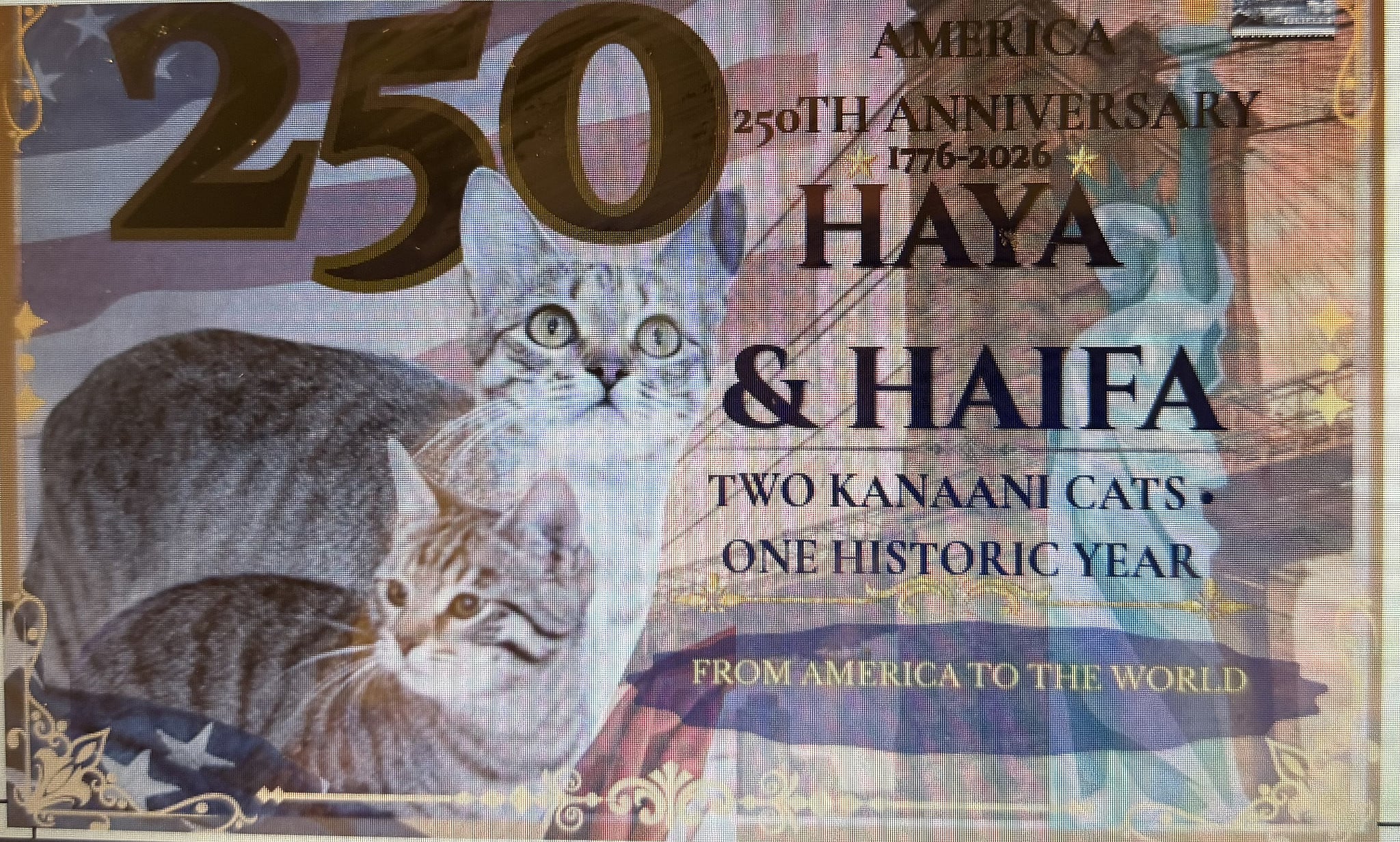
This is not merely a dispute over my personal Facebook profile. I am a rabbi, writer, poet, animal chaplain, American citizen, and public advocate for the preservation of the Kanaani—an exceptionally rare Israeli cat breed created in Jerusalem and now at risk of disappearing. I have devoted years of unpaid work, travel, writing, photography, documentation, registration, and public advocacy to preserving this breed.
My official Instagram account, @kanaanicats_official, contained approximately two years of original documentation of the Kanaani. It included unique photographs and videos beginning when some of the cats were kittens. The archive recorded their appearance, behavior, development, exhibitions, and the international effort to preserve the breed and secure its recognition.
After the cyberattack and Meta’s subsequent enforcement, this official Kanaani archive was taken offline.
The consequences extend far beyond the temporary loss of a social-media page. The Kanaani represents part of Israel’s living natural and cultural heritage. Its preservation matters to Jewish history, felinology, animal science, and anyone concerned with protecting rare breeds. By disabling the account without first determining who controlled it during the suspicious activity, Meta removed a unique archive devoted to a breed whose survival I have worked to secure.
My personal Facebook account also contained family photographs, original literary materials, research, videos, creative work, and records accumulated over many years. Among them were photographs connected to my brother, Dmitriy Salita, a former professional boxer and world-title holder who is now a boxing promoter. His life and career are also part of the contemporary Jewish story.
These materials were not disposable posts. Together, they formed an archive of family history, Jewish life, creative work, and cultural preservation. Some of the original documents and photographs may be impossible to reconstruct.
I live in the United States. I am an American citizen and a public writer who has written proudly about Israel, Judaism, Jewish history, and the defense of the Jewish people. I have also publicly supported Ukraine. Nevertheless, when I was targeted, I discovered how little meaningful protection an individual receives from the world’s largest social-media platforms.
Meta’s systems made a decision affecting years of my life and work, yet I could not reach a qualified person capable of examining the evidence. I contacted attorneys, but some requested approximately $4,000, $5,000, or $6,000 merely to attempt to recover the accounts. I do not have that kind of money to spend simply to regain access to my own writings, photographs, family history, and documentation.
If this were only a private inconvenience, it would already be serious. But it has gone far beyond a private matter. This case concerns the ability of organized actors—possibly operating with professional or state-level resources—to target Jewish, Israeli, Ukrainian, and American voices and then manipulate Western technology platforms into completing the act of silencing them.
Israeli leaders, including Prime Minister Benjamin Netanyahu, have repeatedly described Israel as a defender of Jewish people wherever they live. I have always been proud of Israel and have consistently written in defense of Jewish identity and history. Today, however, I do not feel protected.
I defended the Jewish people against antisemitic attacks. I was then subjected to suspicious international account activity. My Facebook account and the official Instagram archive of a rare Israeli breed disappeared, and I was left alone to navigate automated forms or pay thousands of dollars to private attorneys.
Should a Jew living in America be silenced after defending Judaism while the apparent provocateurs remain online? Should an archive devoted to preserving a rare Israeli breed disappear without a qualified person examining the evidence? Should a victim have to purchase access to justice?
Digital attacks are not separate from the security of the Jewish people. Jewish history, religious discussion, community organization, creative work, and cultural documentation increasingly exist online. Erasing a person’s digital identity can destroy years of work without anyone ever entering his home.
I do not believe that I am the first person to experience this pattern. Many individuals, particularly those who write about Israel, Jewish identity, Ukraine, or opposition to hostile regimes, have reported trolling, mass reporting, impersonation, account compromise, and automated suspension. This wider pattern must be investigated rather than dismissed as a collection of unrelated technical problems.
I therefore appeal to Israeli authorities, Jewish organizations, American elected officials, cybersecurity specialists, civil-rights advocates, and responsible people within Meta to help me obtain an authentic human review. Meta must preserve and examine the relevant technical records, including the unfamiliar login locations, IP addresses, devices, unauthorized sessions, connected accounts, alleged violations, and reporting activity. Investigators must determine what happened, who benefited from it, and whether similar methods have been used against other Jewish and Ukrainian users.
I am prepared to provide screenshots, security notifications, previous publications, account information, and proof of ownership through a legitimate and secure process.
I ask Meta to restore my Facebook and Instagram accounts, return access to the official Kanaani archive, and explain the specific basis for its decision. I also ask Meta to establish an effective escalation procedure for victims of coordinated cyberattacks so that automated enforcement cannot be weaponized against them.
This is not only about me. It is about whether organized hostile actors can manipulate Western platforms into silencing Jews, supporters of Israel, Ukrainians, Americans, and others whom they consider inconvenient.
If we do nothing, the same method can be used against any one of us. It is time to put an end to it.