TV Host, and war correspondent at the Channel 9
The payment for freedom: A Homework Notebook in Kyiv, Weeds in Oleshky
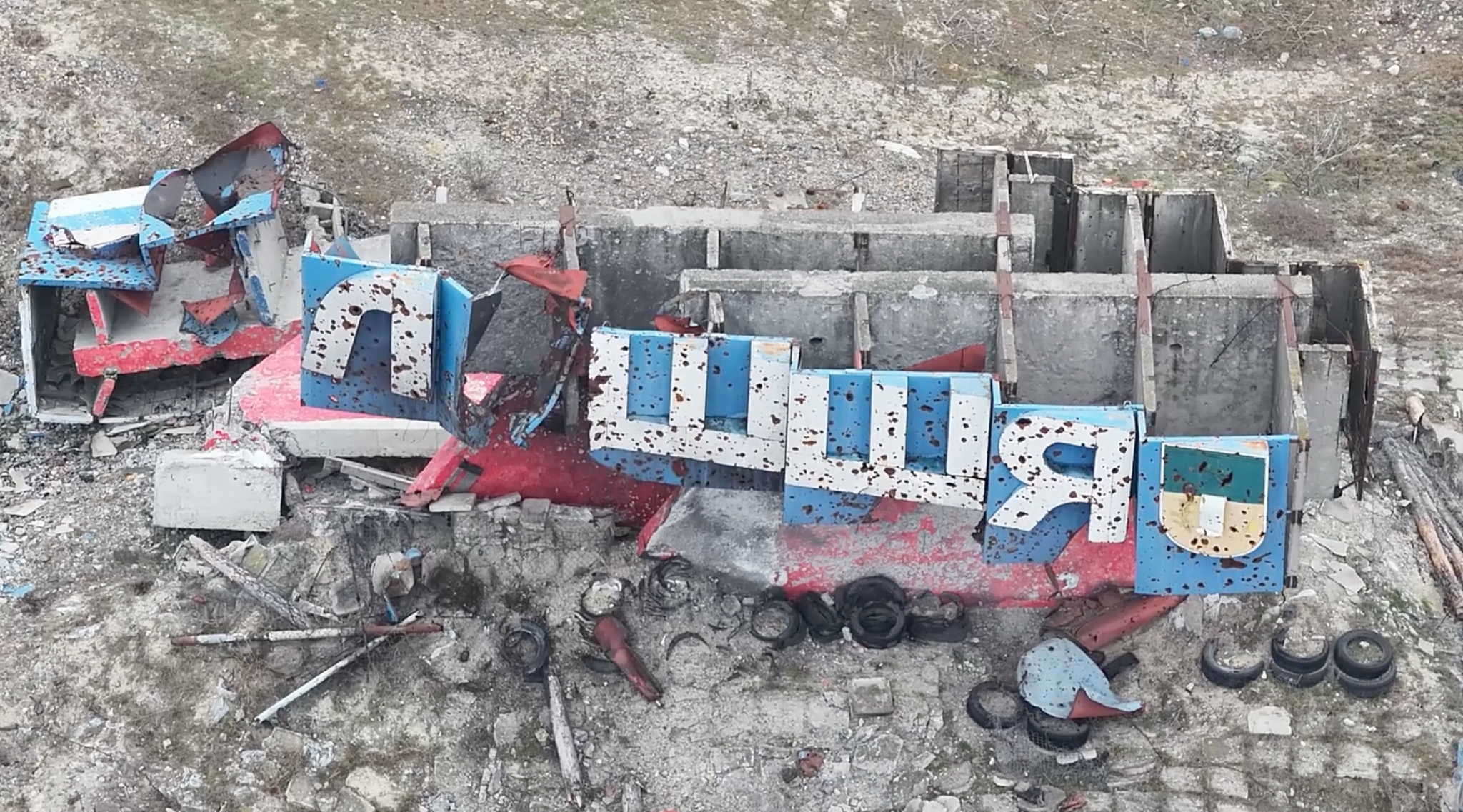
Oleshky Sign
At about 8 a.m. on Friday, September 25, a Russian drone hit a residential building in Kyiv’s Pechersk district, not far from the Israeli embassy. Daniel Umansky, 14, an Israeli citizen whose family had made aliyah and returned to Ukraine some twenty years ago, was killed. His mother was wounded. His younger brother, who was in the apartment, survived. Ukraine’s emergency service published a photo of the boy’s homework notebook. Israel’s Foreign Ministry condemned the attack.
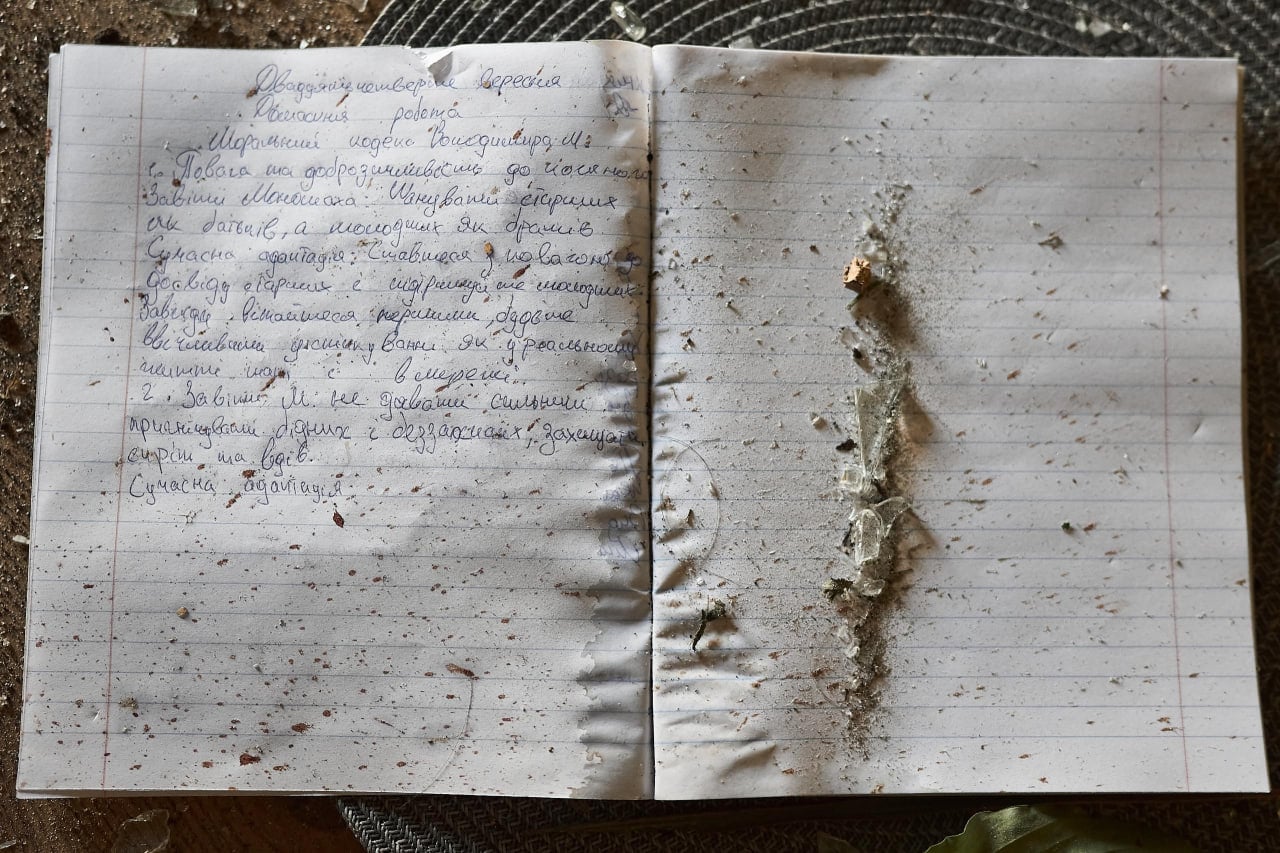
Whatever the Kremlin’s target list said that morning, the result was a child killed in his own room, over his schoolwork, in a capital city. I will not call this an accident of war. It is what war looks like when the army that started it treats every apartment block within drone range as acceptable risk.
Now travel south along the Dnipro River to a place most Israelis have never heard of. Oleshky has been under Russian occupation since the first days of the full-scale invasion. Ukraine’s Foreign Ministry says its population has fallen from 24,000 to about 2,000. Ukrainian authorities put the number in the wider community at up to 6,000 people, including more than 180 children. According to the UN, no food has reached the city since May 26.
The details are what convince me. Two civilians, a husband and wife carrying food home from a neighboring village, were killed by a Russian FPV-drone on September 20 after failing to beat the occupation curfew; four separate sources confirmed it. Only one hospital partly works, and mostly to perform amputations. The residents are surviving on one meal a day, with foraged weeds in the soup. The UN mission has documented at least 29 civilians killed and 54 wounded in Oleshky and neighboring Hola Prystan this year, most by the Russian short-range drones.
The Council of Europe’s human rights commissioner, Michael O’Flaherty, reminded everyone on September 25 that under international humanitarian law an occupying power must supply food and medicine and facilitate relief. Russia holds Oleshky. It controls the checkpoints and the roads. It decides whether a ceasefire window opens. Ukraine’s ombudsman says Kyiv prepared an evacuation list, agreed a ceasefire on its side and secured the Red Cross’s readiness, and that Moscow has not confirmed it will go ahead. The Red Cross itself says it can help if the parties ask and security guarantees are in place. That sentence is a description of a door that only Moscow can open.
Kremlin spokesman Dmitry Peskov has admitted the situation is critical, and blames Kyiv. A government that concedes a critical situation on territory it occupies, then blames someone else for the food, has conceded the duty it is failing to meet.
Ukraine is trying to bridge the gap from the air. Oleksandr Prokudin, head of the Kherson regional administration, said on September 27 that Ukrainian forces had just carried out one of their largest drone deliveries so far, dropping about 4,000 kilograms of food at 100 designated locations across the city. According to Prokudin, the operation involved the 30th Marine Corps, the Hrim tactical group, the 34th Marine Brigade “Borysfen,” the “Bolharychi” unit of the 11th National Guard Brigade, the 34th National Guard Regiment and the 79th Border Guard Detachment, and food has been delivered this way systematically since March. A regional official told CBC News that the drop could sustain residents for up to a month, but warned that the fix could be short-lived. Drone video showed that some residents received the food, but Russian troops forcibly seized supplies from civilians in some cases. Prokudin went further, accusing Russian troops of shooting down the aid drones and beating residents who accepted parcels. It is unknown how much of the food reached civilians. Aid that can only arrive by drone, across a river, is a measure of how sealed the town is. It is no substitute for a humanitarian corridor.
I have a reason to write this for Israeli readers beyond the arithmetic. Volunteers working on evacuations tell me that among those still trapped in Oleshky are people with Jewish roots. I do not say this to rank suffering. Hunger does not check ancestry, and neither does a drone. I say it because “never again” was never a promise to remember only what happened to us. It is a commitment about what we do when civilians are sealed into a town and left without food, whoever they are.
This region knows what occupation can do. In 1939, Jews made up 16.7 percent of the population of Kherson, just across the river; the German occupiers began murdering them within days of arriving in August 1941, according to Yad Vashem. That history is shared and complicated, and it cannot be reduced to a slogan. But it gives Israelis no right to look away.
Israel’s Foreign Ministry was right to condemn the strike that killed Daniel Umansky. Now I want to hear it say the word Oleshky. It should call publicly, in Israel’s own name, for a local ceasefire, a humanitarian corridor, and unhindered access for the Red Cross. It should do so before winter, when weeds will no longer grow.
Related Topics