
Writer, strategic consultant and social entrepreneur
Featured Post
The peace agreements that got us home
Israel has thrived under leaders who knew victory is not measured by the devastation inflicted on its enemies
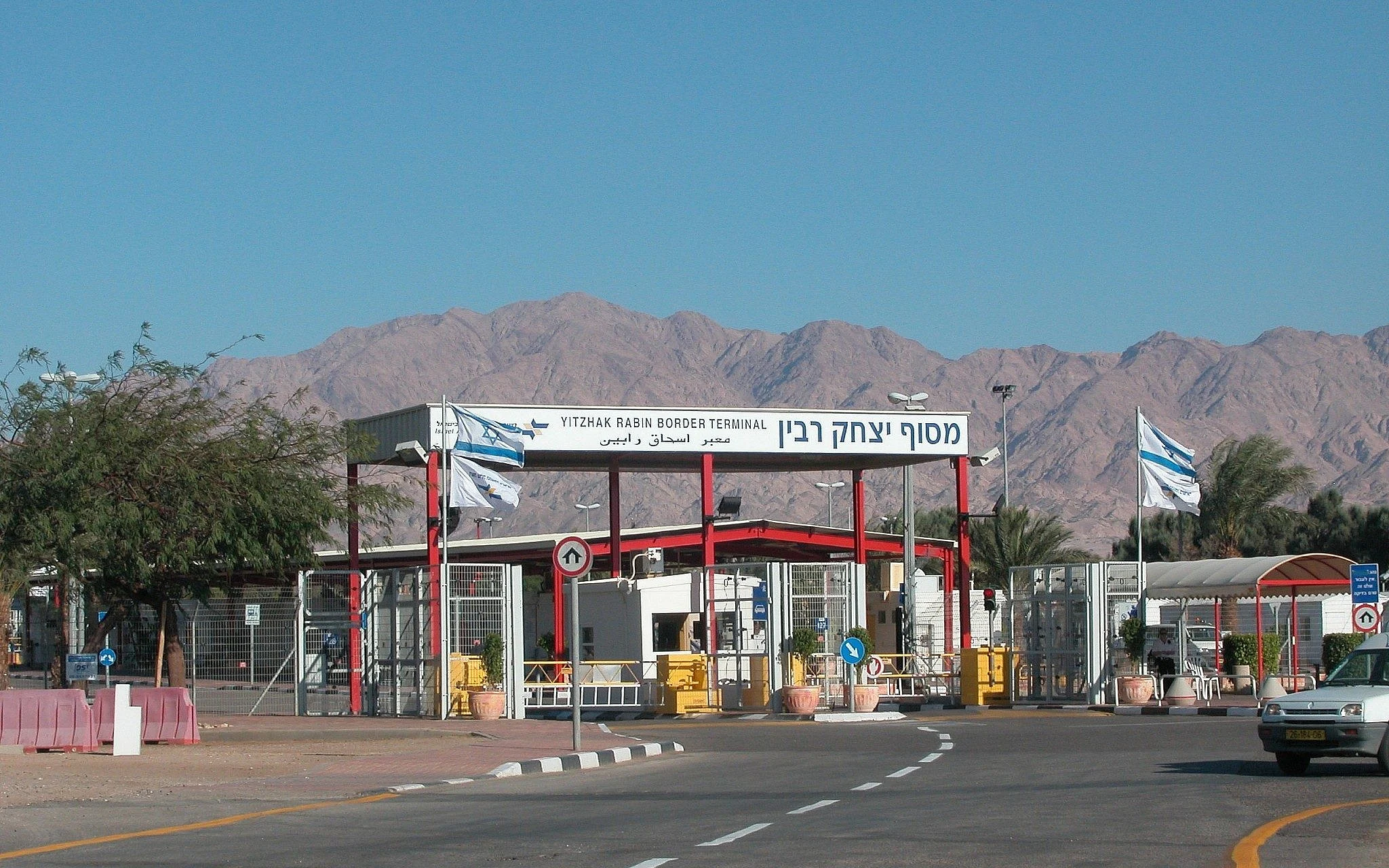
The Yitzhak Rabin Border Terminal at the Wadi Araba crossing between Israel and Jordan. (CC BY 2.5, Wikipedia, NYC2TLV)
The seder table in Cyprus was due to be set for 12. Rachel and Dan, long-time Jerusalemites, were flying in from Israel with their children and grandchildren; their siblings and cousins were coming in from America. The B&B overlooking the Mediterranean was booked, and Pesach 2026 was supposed to be a joyous family reunion. Then, two weeks before the holiday, the airline cancelled their tickets – another casualty of Israel’s second war with Iran.
Despondent but determined, they studied websites, made calls, and finally set off on a route their parents’ generation would never have imagined: south through the Negev, and across the border to the very small and overwhelmed airport in Taba, Egypt. They made it to Cyprus on time and had Seder with their family.
Rachel and Dan were not alone. During the last two wars with Iran, with Ben Gurion Airport hobbled by conflict, over 64,000 Israelis traveled safely to and from the country through Egypt and Jordan – roughly 39,000 returning home during the 12-day war with Iran in June 2025, and another 25,000 traveling overland during the most recent conflict.
Despite travel warnings from the National Security Council, many Israelis got where they needed to go – through the Menachem Begin crossing at Taba, the Yitzhak Rabin crossing in Eilat, and the Jordan River crossing near Beit Shean.
How many of those travelers, waiting in long lines in under-staffed terminals, paused to thank the men whose names are stamped on those border posts?
The architects of the open gates
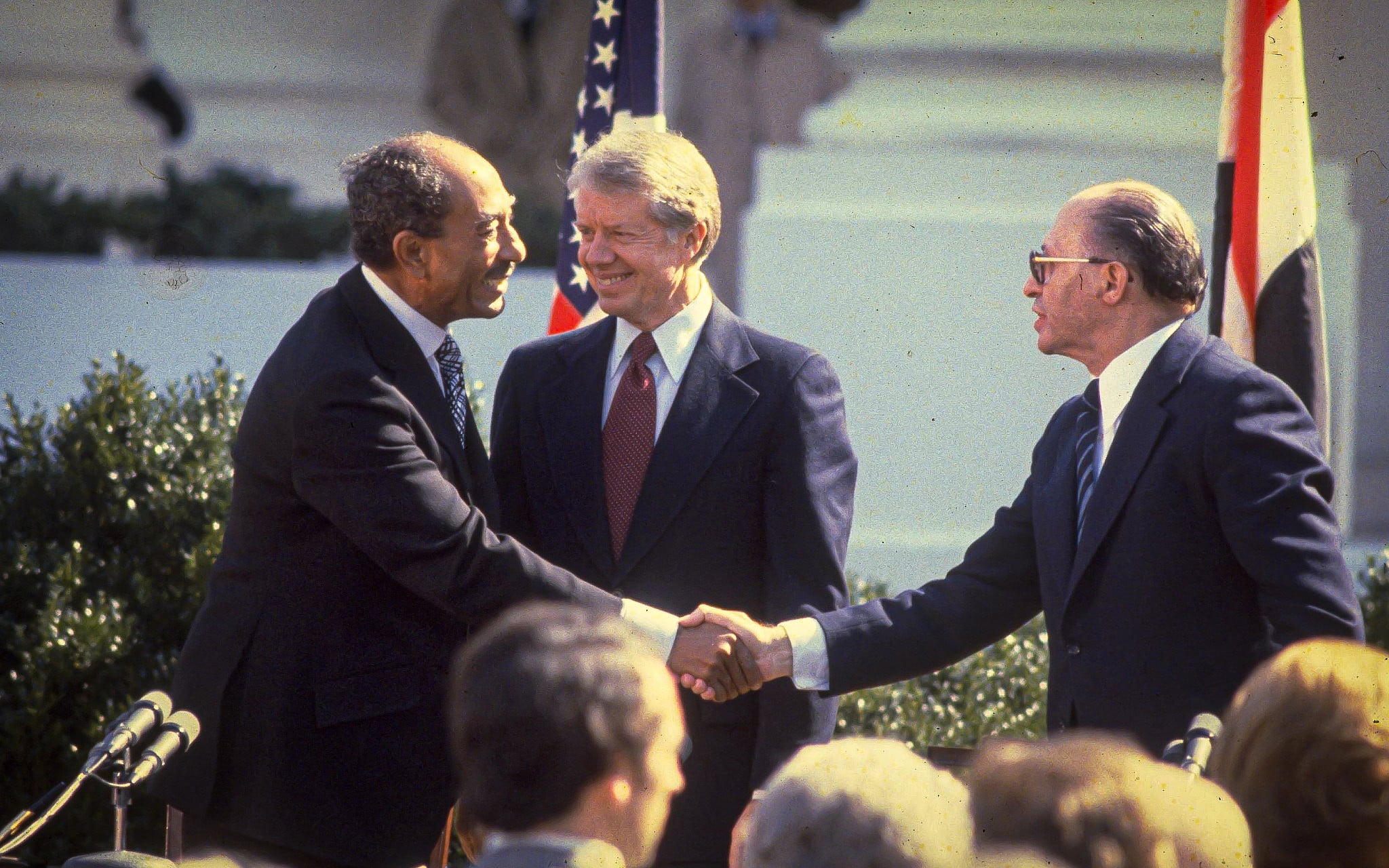
In 1979, Menachem Begin was accused of selling out Israel’s interests – surrendering Sinai, promising concessions on Gaza and the West Bank – to sign the first peace agreement with an Arab nation. March 26, 2026, in the shadow of the Iran war, marked the 47th anniversary of the Israel-Egypt peace treaty.
In 1994, Yitzhak Rabin was vilified for negotiating instead of vanquishing. The Israel-Jordan peace agreement is now nearly 32 years old. Every day, our two countries share the scarce water resources of the Jordan and the Yarmouk Rivers.
These treaties have endured over the past decades, through numerous conflicts, including the last two and a half years of regional conflict. When Iranian missiles and drones streaked toward Israel last June, Jordan’s military shot them down over its own territory. In December 2025, Israel signed its largest natural gas deal in history: $35 billion in exports from the Leviathan and Tamar fields to Egypt.
And then there is Lebanon. In October 2022, over Hezbollah’s objections, the Lebanese government signed a maritime boundary agreement with Israel, brokered by American envoy Amos Hochstein – himself Israeli-born, a former IDF soldier. The deal allows both countries to extract oil from the Karish and Qana fields that straddle their border. Hochstein’s reasoning was blunt: “A collapsed Lebanon is not a recipe for security for Israel.”
The aim of war
Compare that calculation to the rhetoric of recent months, when the prime minister repeatedly promises “total victory” in Gaza, Iran and Lebanon. As we were about to sit down to our Passover meals, he assured us, “We will continue to crush the terrorist regime, we will fortify the security zones around us, and we will achieve our goals.”
In August 2025, Eli Cohen, minister of energy and infrastructure and former minister of foreign affairs, called for Gaza City to be turned into a wasteland, saying, “Gaza City itself should be exactly like Rafah, which we turned into a city of ruins.”
In March 2026, Defense Minister Israel Katz promised that “all homes in Lebanese villages near the border will be destroyed in accordance with the Rafah and Beit Hanoun model in Gaza.”
Sometimes, Israel must go to war. But the purpose of war is not war itself. The purpose is to reach the agreements that come after – the agreements that keep us safe, let our economy flourish, and allow us to enter and leave our own country.
Begin and Rabin understood something their critics did not: agreements save lives and enhance lives.
The 64,000 Israelis who crossed through Egypt and Jordan in these past months discovered that. They are the living proof that peace, even imperfect and hard-won, is not weakness.
It is the road home.
Related Topics
Related Posts