


The pettiest of politics poisons national unity celebration
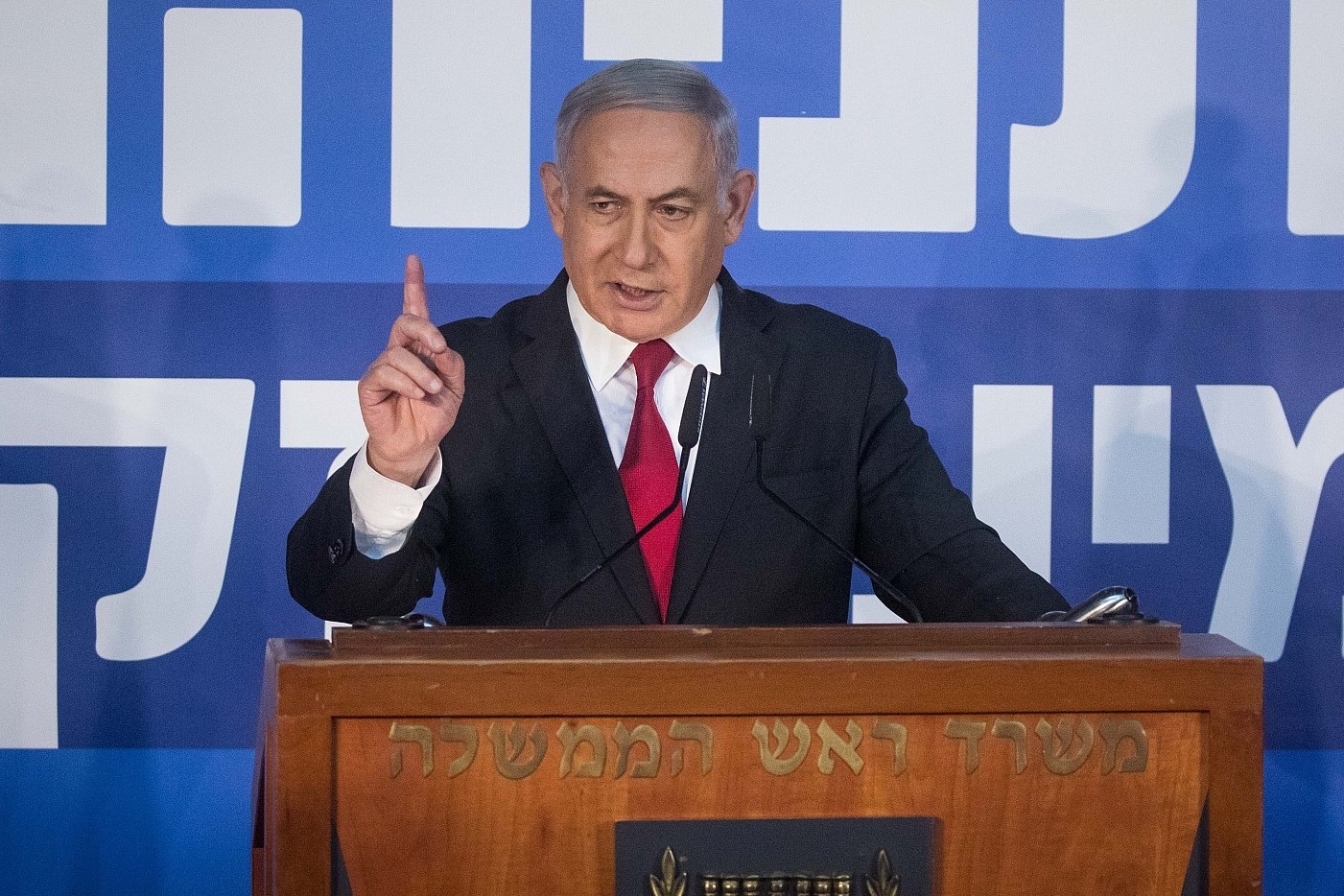
For many who hold a long list of grievances against both Prime Minister Benjamin Netanyahu and US President Donald Trump, this week’s historic session in the Knesset, a priori, was not an easy event to stomach. And yet, like many Israelis, I was more than happy to set aside deep disagreements with the Israeli and US governments’ policies in areas from the environment to democratic norms to salute America’s bold intervention and the extraordinary outcome. Trump had more than earned this victory lap.
If the price of freeing the hostages and securing a cease-fire is to watch our Knesset plenary transformed for a day into a MAGA rally, I, for one, am willing to pay it. The speeches at the special Knesset session had ups and downs, none lower than sycophantic MKs applauding when Donald Trump called Joe Biden “the worst president in history.” (I assume that learning from the President that Miriam Adelson has “60 billion dollars in the bank” was a compliment – and not a backhanded, stereotypic slur.) And while it created some awkwardness, Trump’s spontaneous ask of President Herzog to pardon the Prime Minister hardly bothered me: If Netanyahu would be willing to step down from public life, the 1974 pardon of President Richard Nixon is a reasonable model for moving forward.
In short, living in a polarized world means that celebrating a turning point in Israel’s history and rallying around our common national interests requires forebearance and self-restraint. Anyone with a thimble of appreciation for complexity recognizes that sometimes, leaders with whom one profoundly differs can still do very good things. I was completely on board.
But that fragile goodwill collapsed when I learned that Speaker of the Knesset Amir Ohana had deliberately left Israel’s Chief Justice, Yitzhak Amit, and Attorney General Gali Baharav-Miara off the guest list to the special Knesset session. A benevolent impulse to suspend cynicism and criticism for one day was replaced with dismay. Apparently, representatives of Likud had learned nothing about unity from two years of war. Instead, they dragged us back to the bitterness and arrogance that characterized the days before October 7, 2023.
Ohana’s decision represented the pettiest of politics. Playing to the anti-democratic forces within his party’s base may help him in this year’s Likud primaries. (The Speaker was held accountable in 2024 by a National Commission of Inquiry for the 45 deaths at the 2021 Meron Lag B’Omer ceremony, the greatest civilian disaster in the country’s history. In any normal country, Ohana would have resigned his present post; and in any normal political party, Ohana would need a miracle to restore his legitimacy.)
Whatever the motivation, the spiteful boycott of the chief justice and attorney general was an affront to the vast majority of the country’s citizens, who believe strongly that the rule of law and separation of powers should not be weakened. By excluding the two most prominent individuals on the front lines defending Israel’s democracy, the government cast a dark shadow over what should have been a rare moment of national solidarity.
The Persistence of Division
It took over twenty-four hours—and several biting editorials—for President Isaac Herzog to denounce Ohana’s decision as unbecoming and unimaginable at a time when unity is so crucial. The head of the Blue and White Knesset faction, MK Pnina Tamano-Shata, wrote to the Knesset legal advisor requesting a binding legal opinion prohibiting such brazen departures from decorum and contempt for central symbols of official democracy in the future. Opposition leader Yair Lapid called on President Herzog to boycott next week’s opening of the Knesset’s winter session if the Chief Justice is again not invited to attend.
Ohana offered a lame defense claiming that the “Supreme Court places itself above the people” while “trampling Israel’s legislature.” The history of democracies is paved with friction between different branches of government. In healthy countries, however, pushback is done according to basic assumptions of recognition and mutual respect.
Sadly, there really is no reason to be surprised at the mean-spirited, Knesset guest list. This government never misses an opportunity to sow division and question the legitimacy of Israel’s most dedicated public servants, who just want to obey the law and do their job.
Egregious statements by senior government officials have become so commonplace that we have grown numb to their toxicity:
- In March 2023, Minister of Communications Shlomo Karhi told pilots protesting the government’s “legal reforms” to “go to hell,” boasting that Israel could manage without reservists who opposed the government’s judicial overhaul.
- Minister of Finance Bezalel Smotrich, a self-proclaimed “proud homophobe,” described gay pride parades as “worse than bestiality.”
- Minister of National Security Itamar Ben-Gvir declared the superiority of Jewish rights to mobility than those of Arabs, and called for awarding a “medal of honor” to a settler who shot a Palestinian in the neck.
- Other ministers in the governing coalition have openly called for dropping a nuclear bomb on Gaza, “flattened” it and its “total annihilation.”
The latter statements helped fuel spurious international accusations that Israel’s campaign in Gaza is genocidal. After all, proving genocide in an international court of law requires establishing intent. The problem is that neither Israel’s Prime Minister nor any other senior government figures felt the need to censure such outrageous statements or dismiss those who spout incendiary, intolerable rhetoric. Rather, their scorn is saved for their political rivals.
This pattern of delegitimizing opponents instead of debating ideas is a hallmark of populism—and a tactic long employed by fascist regimes. It stands in sharp contradiction to enlightened democratic leadership that can accommodate criticism and engage in debate with the inclusive spirit that robust democracies require. Apparently, no member of Israel’s governmental leadership dares condemn the most heinous rhetoric of their political partners in fear that it might lead to the collapse of the present government.
When Leadership Becomes Vindictive
Declarations after elections by victorious politicians that they will represent “all citizens, not just those who voted for them” are so common as to have become a cliché in most democratic societies. But the truth is that this mantra represents a critical principle of good governance that has been recognized for centuries. The great 12th-century Jewish philosopher and physician Maimonides, who served as personal doctor to the Sultan of Egypt, understood a thing or two about political science and the importance of inclusion. In The Laws of Kings and Wars (3:6), he wrote: “For the heart of the king is the heart of the entire congregation of Israel.”
And yet, a thousand years later, in the maelstrom of vindictive 21st-century politics, decency, consensus, and compromise are drowning in the dark waters of social-media-fueled intolerance. Ohana’s outrageous decision to exclude the Chief Justice and Attorney General are somehow normalized.
We in Israel have grown accustomed to the Prime Minister’s complacency in the face of the deplorable statements and actions of senior representatives of the State of Israel. His unwillingness to rein in the reckless rhetoric of his ministers is just one of the glaring flaws of his leadership this term in office.
Unfortunately, anyone waiting for him to assert even a teaspoon of moderation in the vitriolic discourse that sustains the present coalition – or insist that in formal government events, Israel’s top judges and attorney general are included — will have to wait for some time. Netanyahu has a long history of nasty contempt for political adversaries, ever since he sneered three decades ago that “the left has forgotten what it means to be Jewish.”
Rebooting a Divided Nation
It would be a great relief if the recent cease-fire — and the sobering realization that since October 7, 1200 Israeli soldiers died fighting to protect the state of Israel — inspired a measure of humility and unity. Instead, the government’s petty politics and addiction to polarization persist. Israelis are forever being reminded that we need to be worthy of our fallen heroes. Yet the behavior of our leaders betrays that solemn expectation.
One of the central lessons of the past two years could not be clearer: Israel divided is Israel diminished. A government that thrives on demonization of public servants who bravely fulfill their duties in the face of political intimidation is not fit to lead a nation where diverse citizens depend on one another for survival on the battlefield, in the workplace, and in the public square.
If unity is truly a paramount national objective, then the path forward must begin with replacing this extreme, polarizing government with one that understands a simple truth: a nation united in purpose is stronger, kinder, and far more resilient than a nation consumed by its own hatred.