


Therapy, Nature, Meaning — Where Minds and Paths Meet
The Power of Allowed Feelings: Teaching Kids That All Feelings Have a Place
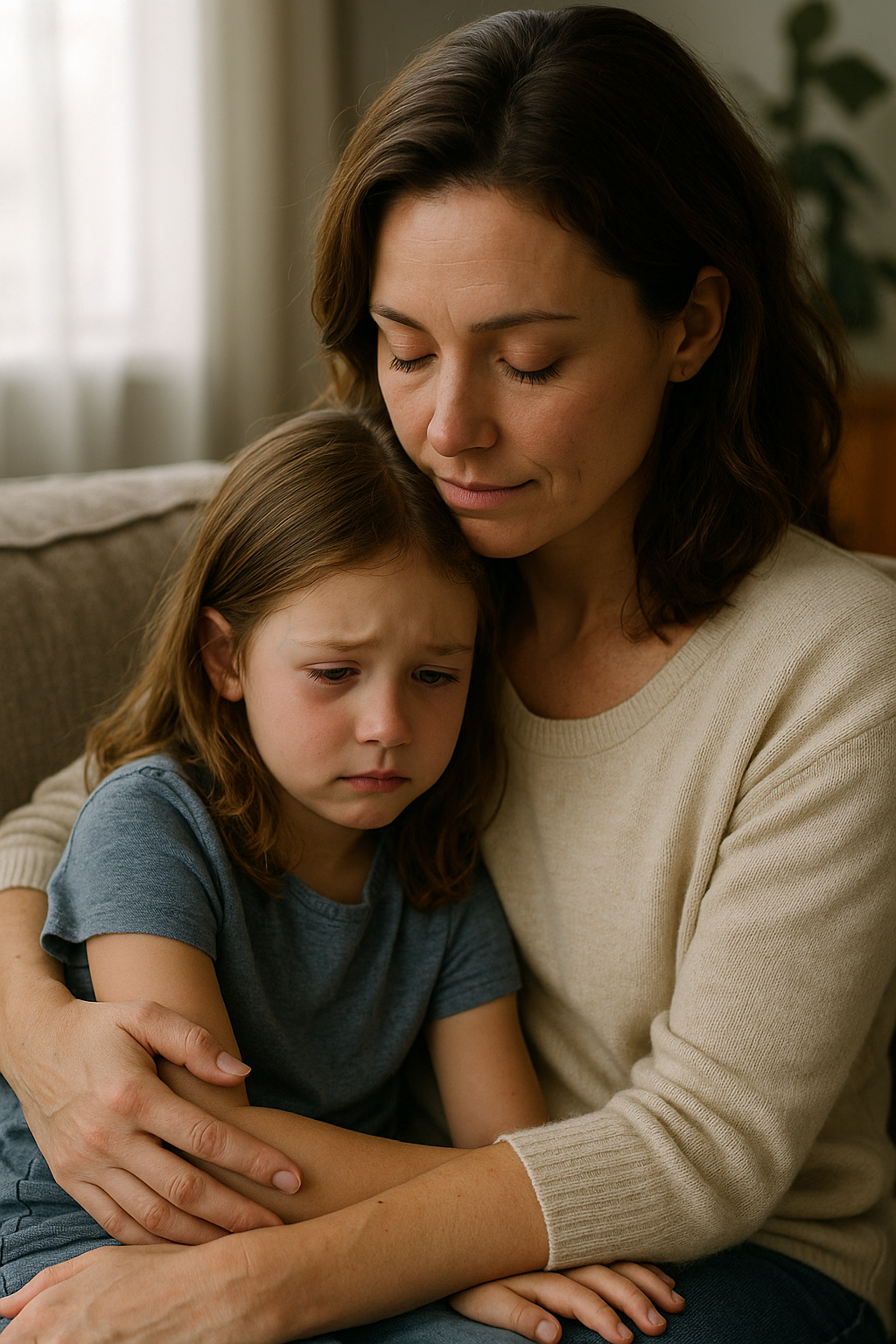
A moment of parental acceptance—showing a parent calmly holding their child while allowing space for emotional expression. The image was created with generative artificial intelligence (AI).
As parents, we want to raise strong, resilient kids. But what does “strength” really mean? For years, I believed being strong meant hiding my own feelings—pushing sadness, anger, or fear deep inside. I thought they’d just disappear. Instead, the opposite happened: the more I ignored my emotions, the more they controlled me.
The Trap of Avoiding Feelings
When we’re afraid of feelings, we do everything we can to avoid them. We steer clear of conversations or experiences that might stir up sadness, fear, or frustration. But avoiding doesn’t erase feelings—it just makes them come back stronger, like a beach ball we keep trying to push under water.
And here’s the key: our kids watch and learn from how we deal with our emotions.
What Children Hear When We Say “Don’t Cry”
Think about how often we tell kids: “Don’t be scared,” “Don’t be sad,” or “Don’t be angry.”
We say it with the best intentions—trying to comfort them (and maybe also comfort ourselves)..
But let’s be real: when I tell my child “don’t be sad” or “calm down,” do they actually stop being sad? Do they suddenly calm down just because I said so? Of course not.
What matters even more is the unspoken message our children pick up:
- “Sadness isn’t welcome.”
- “Fear means I’m weak.”
- “We mustn’t feel anger.”
When they hear this enough times, they start to believe they shouldn’t feel certain things. They try to suppress or deny emotions rather than learning to handle them. That’s not resilience—that’s self-rejection.
An Alternative: Teaching Emotional Acceptance
Instead, what if we taught our children that all feelings are welcome? That being sad or scared doesn’t mean something is wrong with them—it means they’re human.
We can model this by:
- Naming our own emotions out loud (“I feel nervous about this meeting, and that’s okay”).
- Validating theirs (“I can see you’re sad, and it makes sense to feel that way”).
- Showing them that feelings come and go like waves—they don’t have to take over or control our actions.
Acceptance doesn’t mean we like every feeling, and certainly doesn’t suggest a passive approach to life. It means we stop fighting our emotions, give them space, and then choose how to act according to our values.
Raising Kids Who Aren’t Afraid of Life
When we give our children permission to feel, we help them build psychological flexibility—the ability to feel what they feel, and still move toward what matters to them.
Next time your child is upset, try saying:
- “It’s okay to feel this. Feelings come and go.”
- “I’m here with you while you feel this.”
And perhaps say to yourself as well: “I notice this feeling. It’s allowed to be here.”
Connecting Feelings to Goals and Values
Sometimes it can also help to gently place the emotion in a wider context of purpose or motivation. For example:
“Yes, this street is a little dark, and I understand why it feels scary. And at the same time, at the end of the street is your friend’s house, and that’s where we want to go. Do you think it might be worth feeling a little afraid in order to get there?”
By doing this, we show our kids that emotions are not roadblocks—they are part of the journey. We can feel them, carry them with us, and still move toward what matters.
When we do this, we’re helping to raise children who aren’t afraid of their inner world—supporting them in developing courage for life’s complexities.