The Priest of God Most High
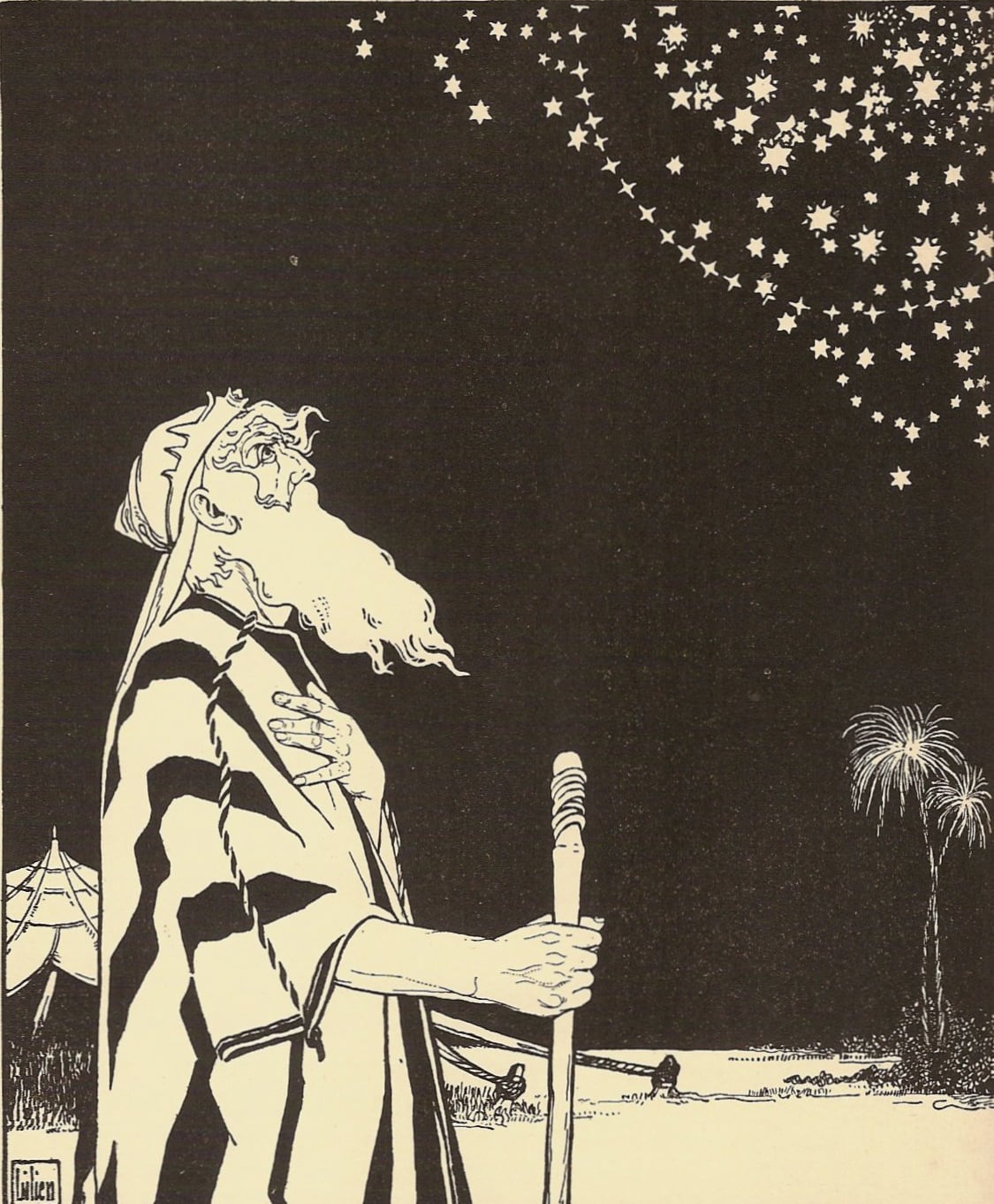
In this week’s parshah, Lech Lecha, we read the story of the war of the four and the five kings. In this war a confederation of four kings from Mesopotamia comes and attacks five kings in the Jordan Valley. Included in the five kings is the king of Sodom. Sodom was the city where Abraham’s nephew Lot is living at the time. The five kings are decisively defeated in the Valley of Siddim. The four Mesopotamian kings take many captives, including Abraham’s nephew Lot. To rescue Lot, Abraham and his allies join the war and defeat the four Mesopotamian kings north of Damascus. When Abraham returns from the war with Lot, Melchizedek the king of Salem, who is Priest of God Most High, meets him. Melchizedek brings out bread and wine and blesses first Abraham and then God. Abraham then gives Melchizedek a tithe out of all of the booty that he took during the war.
Melchizedek’s blessing that he performs is in the wrong order. After bringing out bread and wine, Melchizedek says, “Blessed be Abram of God Most High, Creator of heaven and earth. And blessed be God Most High, Who has delivered your foes into your hand.” (Genesis 14:19-20). Melchizedek first blesses Abraham as a servant of God Most High and only second blesses God. The Talmud takes issue with the fact that Melchizedek blesses Abraham first. The Talmud, referring to this blessing, says that Abraham asked Melchizedek, “And does one place the blessing of the servant before the blessing of his master?” (Nedarim 32b). According to the Talmud, Abraham, rather than being flattered by his placement in the blessing, immediately reproved Melchizedek for putting himself, Abraham, before God. Abraham understands that he is a servant of God and it is improper to mention a servant before the master. We see here that Abraham spoke properly by objecting to Melchizedek’s blessing and that Melchizedek spoke improperly by mentioning Abraham first.
According to Psalm 110, on account of Melchizedek’s improper speech in his blessing, the priesthood was taken from Melchizedek and was given to Abraham. According to some opinions, Psalm 110 is telling the story of Abraham in the war of the four and five kings. In the Psalm we read, “The Lord has sworn and he will not relent; you are a priest forever ‘in the order of’ Melchizedek” (Psalms 110:4). The Hebrew phrase “in the order of” is “al divrati,” which can mean a number of things. The Talmud in Nedarim 32b understands this phrase differently and says that we should read the Hebrew phrase “al divrati” as “according to the speech of” rather than “in the order of”. Therefore, from this reading, Abraham is a priest forever according to the speech of Melchizedek. This is understood to mean Melchizedek’s improper speech in his blessing. In this reading, Melchizedek spoke improperly in his blessing by blessing Abraham before God, so God took the priesthood and gave it to Abraham and his descendants, thereby making Abraham a priest forever. This priesthood was passed down and eventually conferred on Aaron, who was a seventh-generation descendant of Abraham and remains in the cohanim among the Jewish people. Through his improper speech, Melchizedek lost the priesthood and Abraham gained it.
Abraham and Melchizedek were now in an interesting situation. Abraham is standing before Melchizedek. Melchizedek is a man who has just forfeited the priesthood through his improper words. Abraham is one of the holiest men in all of history and even according to God in the book of Psalms he is above Melchizedek. We may expect Abraham to walk away without giving Melchizedek anything. Instead, Abraham in his great humility and holiness does something incredible here. The verse says, “And he gave him a tenth of everything” (Genesis 14:20). Abraham takes a tenth of everything he captured in the war of the four and the five kings and gives it as a tithe to Melchizedek. Even after Melchizedek forfeits the priesthood through his improper speech, Abraham still pays him a large tithe.
Why does Abraham feel the need to pay a tithe to Melchizedek? After all, Abraham had already rebuked Melchizedek. Why after Melchizedek’s improper speech does Abraham still pay him a tithe? The commentators Rashi and Ibn Ezra give two different but complementary answers to why Abraham paid the tithe. Rashi says, “And Abraham gave him a tithe of everything that he had, because he was a priest.” According to Rashi, the very fact that Melchizedek was a priest meant that Abraham had to tithe to him. Even though Melchizedek was mistaken in his speech and forfeited the priesthood, he was still owed a tithe on account of his being a priest.
Why does being a priest entitle Melchizedek to receive a tithe from Abraham? After all, Abraham is holier than him and Melchizedek cannot even order his blessing correctly. Ibn Ezra seeks to answer this question. Ibn Ezra writes, “Abraham gave a tithe out of respect for God. He found no one worthier than Melchizedek to bestow his tithe on.” Abraham wanted to respect God by giving a tithe and there was no one better than Melchizedek to give the tithe to. While Abraham may have been holier than Melchizedek, he still needed to give the tithe to respect God. Melchizedek was, despite his failings, still a priest according to Rashi. According to Ibn Ezra, because Abraham could not find anyone better than the priest who represented God, he therefore gave this tithe to Melchizedek. We can learn from here that one should always respect religious leaders. While God transferred the priesthood from Melchizedek to Abraham, Abraham still was respectful to Melchizedek and acted on this by paying a tithe.
We should all take Abraham’s example in dealing with religious leaders. Even if a religious leader does something we disagree with, that does not give us license to show anything but the highest respect to them or to neglect any religious duties towards them. None of us are Abraham and none of us have the level of clarity in life of God commenting on our interactions like Abraham had in Psalm 110. Despite the fact that God disapproved of Melchizedek’s blessing, Abraham still showed respect to Melchizedek. How much more so must we in our lives show respect towards our religious leaders. Therefore, we should always show our religious leaders the utmost respect. Abraham was able to receive the priesthood for him and his descendants and we should follow his example in our own lives of always respecting religious leaders. May the Lord soon restore the service of the priesthood among the descendants of Abraham. May we all merit to once again bring tithes to the priests in Jerusalem with the coming of the Messiah son of David; may it be soon and in our day.