
The Quantum Arms Race Is Already Here
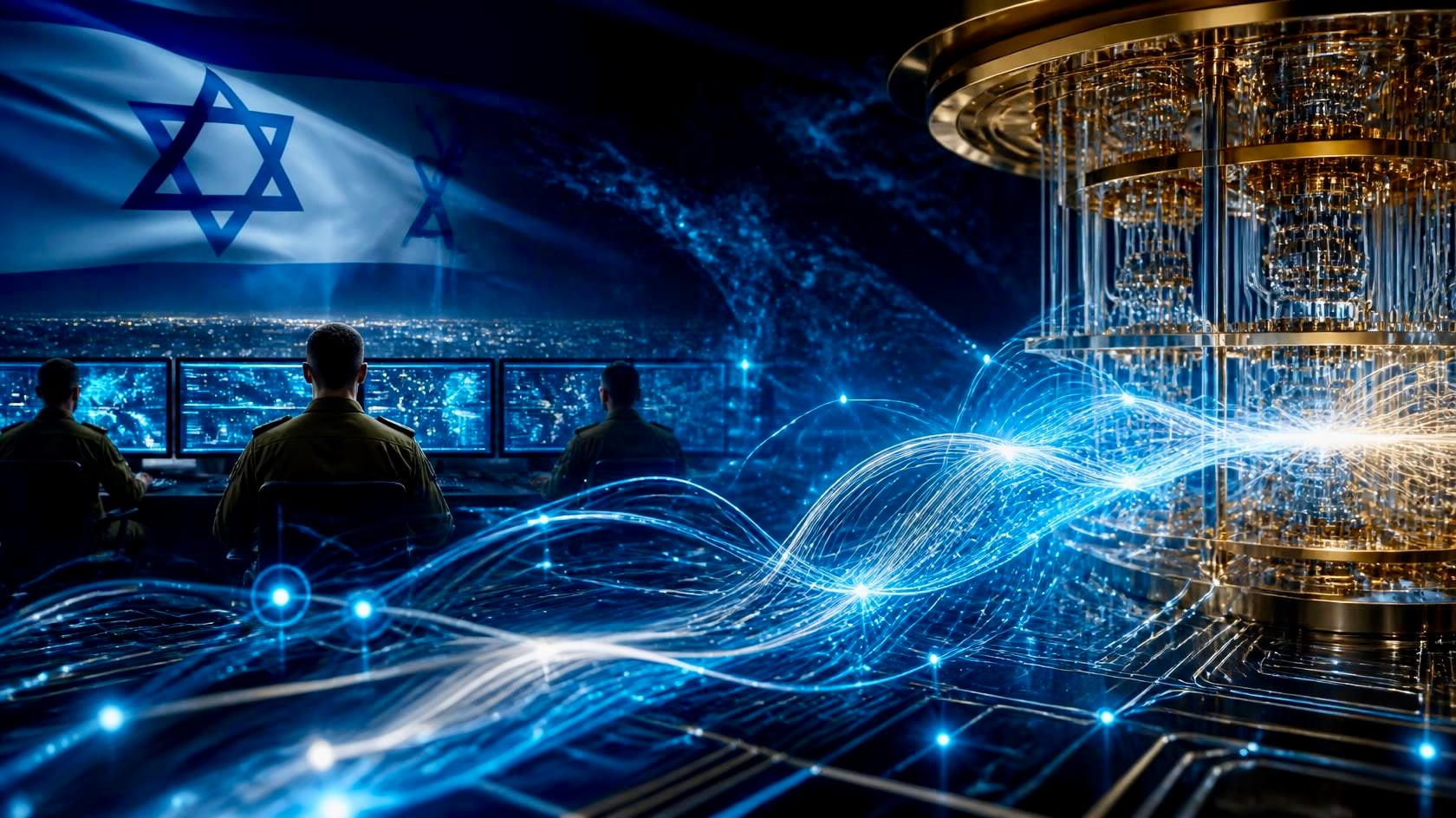
Quantum computing is often described as a future technological breakthrough. It is already reshaping national security, digital trust, and geopolitical competition, and the countries that prepare today will define tomorrow’s strategic balance.
Every generation believes it will recognize history while it is being made.
History suggests otherwise.
The Industrial Revolution did not begin when the first factory opened. The Information Age did not begin when the Internet became mainstream. Likewise, the Quantum Era will not begin on the day scientists unveil the first fully fault-tolerant quantum computer.
In many ways, it has already begun.
The real question is not when quantum computing will arrive. It is whether governments, critical infrastructure operators, and business leaders will recognize that the security landscape is already changing, and whether they will act before today’s assumptions become tomorrow’s vulnerabilities.
Every technological revolution changes what societies can do.
The Quantum Era will redefine trust.
For decades, modern society has relied on a simple premise: that the cryptographic algorithms protecting our communications, financial systems, military networks, healthcare records, and national infrastructure would remain computationally impractical to break.
Quantum computing challenges that premise.
Much of the public discussion focuses on the future moment when a sufficiently powerful quantum computer may be capable of defeating today’s widely deployed public-key cryptography. While that milestone has not yet been reached, the strategic implications are already influencing decisions made by nation-states.
Security agencies around the world have warned about the “Harvest Now, Decrypt Later” strategy, in which encrypted information is collected today with the expectation that it may be decrypted once quantum capabilities mature. Sensitive government communications, intellectual property, defense data, critical infrastructure information, and personal records often retain their value for many years. Waiting until the technology arrives may simply be too late.
By the time a cryptographic failure becomes visible, the strategic damage may already have been done.
This is no longer a theoretical discussion confined to research laboratories.
Governments are already publishing post-quantum migration roadmaps. In the United States, federal agencies have begun implementing transition strategies following guidance from NIST and the National Security Agency, recognizing that waiting for large-scale quantum computers would be a strategic mistake.
The transition has already begun, not because quantum computers have arrived, but because strategic planning cannot wait for them.
Yet the challenge extends far beyond encryption.
Replacing cryptographic algorithms is necessary, but it is not sufficient.
Trust in the digital age depends on much more than mathematics. It depends on the integrity of hardware, the authenticity of identities, the quality of cryptographic entropy, secure key management, software integrity, resilient supply chains, and the ability to adapt as technologies and threats evolve.
In the coming decade, digital trust may become as strategically important as energy security, food security, or economic resilience.
This shift carries profound geopolitical implications.
Nations are no longer competing solely for military superiority or economic advantage. Increasingly, they are competing to establish trusted digital infrastructure that will underpin government services, financial systems, artificial intelligence, telecommunications, healthcare, transportation, and national security for decades to come.
The countries that define these foundations will help shape the standards, technologies, and strategic alliances of the next era.
For Israel, the Quantum Era presents more than an economic opportunity. It presents a strategic choice.
It is a national security imperative.
Few countries combine world-class cybersecurity expertise, advanced academic research, a vibrant deep-tech ecosystem, operational defense experience, and a culture of innovation at the scale that Israel does. The same ecosystem that helped establish Israel as a global cyber leader has the potential to position it as a leader in quantum-era security and trusted digital infrastructure.
The question is not whether Israel has the talent. It does.
The question is whether it has the national strategy to lead.
Achieving that leadership, however, will require more than technological excellence. It will demand long-term national vision, coordinated public-private collaboration, sustained investment, and international partnerships. Above all, it will require recognizing that quantum readiness is not a future research project, it is a strategic priority that deserves attention today.
Every generation faces technologies that fundamentally reshape the global balance of power. Steam transformed industry. Electricity transformed economies. The Internet transformed communication.
History rarely rewards those who wait for certainty.
The Quantum Era will not be defined by the first powerful quantum computer.
It will be defined by the nations, organizations, and leaders who understood, before everyone else, that trust had become the world’s most strategic resource.
The race has already begun.
The only remaining question is whether we will choose to lead or spend the next decade catching up.
Nir Ben-David is a Brigadier General (Res.), entrepreneur, former senior military commander, and strategic advisor specializing in national security, quantum technologies, cybersecurity, and digital trust. He is the Founder & CEO of Qombat and writes about the intersection of emerging technologies, public policy, and global security.