The Question My Mother’s Memory Asks of Me
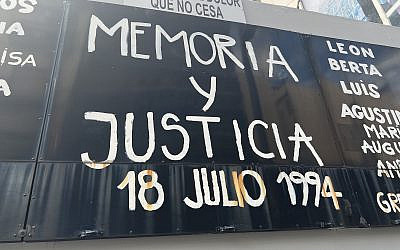
Thirty-two years ago this week, on July 18, 1994, my mother was murdered in the terrorist bombing of the AMIA (Asociación Mutual Israelita Argentina), the central institution of Argentina’s Jewish community in Buenos Aires. She worked there as a social worker and was one of the 85 people murdered in that antisemitic attack. I was 20 years old, and like so many people whose lives are shattered by a single event, I discovered that there is a life before and a life after.
Each year, as this anniversary returns, I find myself asking not why my mother died, but what her life—and her death—continue to ask of me: “Who do I want to become in response to this tragedy?”
That question has shaped much of my adult life, leading me toward the rabbinate, education, and work dedicated to justice, compassion, and peace. It reminds me that while I cannot choose what happens to me, I remain responsible for what happens next—for the kind of person I become and the kind of world I help create.
Over the years, that question has also shaped the way I think about conflict itself. If terror seeks to shape the world through violence and fear, resisting terror requires that we not abandon our moral imagination. My mother was murdered by terrorists. That shattering event could have taught me to see the world through fear and suspicion. Instead, it has become a constant reminder that every human being must still be seen as an individual created בְּצֶלֶם אֱלֹהִים (b’tzelem Elohim), in the image of God. My response to terror cannot be to become less committed to the dignity of others; it must be to ask how my own experience of loss calls me to stand with others whose lives are shaped by fear, vulnerability, and injustice.
Like many mourners, I searched not for an explanation but for a way to live faithfully with grief. I found one companion in a brief but challenging passage from the Talmud:
אָמַר רָבָא, וְאִיתֵּימָא רַב חִסְדָּא: אִם רוֹאֶה אָדָם שֶׁיִּסּוּרִין בָּאִין עָלָיו — יְפַשְׁפֵּשׁ בְּמַעֲשָׂיו
“Rava, and some say Rav Ḥisda, said: If a person sees that suffering has befallen them, they should examine their actions” (Berakhot 5a).
Many have understood these words to mean that suffering is a consequence of sin. I could never believe that my mother’s murder—or the murder of the other 84 people killed alongside her, or any other kind of suffering—was God’s punishment for anyone’s actions.
Over time, I came to hear the text differently. Lefashpesh bema’asav—”examine your actions”—came to mean not looking backward in search of blame, but looking forward in search of responsibility. The question became: Who do I want to become because this happened?
I have come to believe that terror does not only seek to end lives; it seeks to shape the lives of those who survive, leaving us more fearful, more suspicious, and more convinced that violence is inevitable. For thirty-two years, I have tried not to let fear and suspicion guide me. Anger, fear, and pain have all been part of my life. They still are. But I have tried, as much as possible, not to let fear guide my choices or determine the kind of person I become.
This year, one answer to my mother’s enduring question led me to the village of Tarkumiyah, northwest of Hebron, with Bnei Avraham, a group of religious Jewish activists affiliated with Smol Emuni (“The Faithful Left”), committed to accompanying Palestinian families living under constant threat from nearby settlers.
We spent the morning accompanying a Palestinian family to farmland they legally own but are often prevented from accessing. Before we began, we were told what might happen. Settlers could arrive. Soldiers might declare the area a closed military zone and order us to leave. Tear gas was a real possibility. In the end, none of those things happened. It was, in many ways, an uneventful morning.
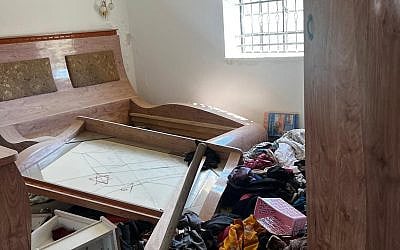
And yet our presence mattered. We walked through the remains of homes that had been destroyed by settlers, and we came—as Jews, as Israelis, and some of us as North American rabbis—to witness, to accompany, and to refuse to look away from the fear and vulnerability these Palestinian families live with every day. The hope is that the more often Palestinian families are able to be on their own land, accompanied when necessary by people willing to stand beside them, the harder it becomes to deny them access to it or erase their connection to it. We did not change the larger reality. But for one morning, we stood with people whose humanity and dignity deserved to be seen, and in our own small way, we pushed back against that reality.
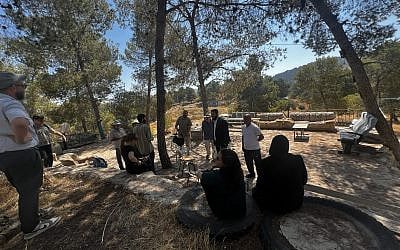
What moved me most was that everyone standing with me was an observant Jew. We were there not despite our Judaism, but because of it. Torah begins by teaching that every human being is created בְּצֶלֶם אֱלֹהִים (b’tzelem Elohim). Again and again it commands us to protect the vulnerable and reminds us, לֹא תוּכַל לְהִתְעַלֵּם (lo tukhal lehit’alem)—”you may not remain indifferent” (Deuteronomy 22:3). At a moment when acts of violence against Palestinians are carried out by Jews speaking in the language of Torah, I feel an even greater responsibility to reclaim another voice of Torah—one rooted in compassion, humility, and moral courage.
A few days later, my family gathered for an annual ritual. For the past several years, around the anniversary of the bombing, my sister has organized a volunteer day together at Leket Israel. Leket rescues food that would otherwise go to waste and ensures that it reaches people experiencing food insecurity throughout Israel. As my sister wrote when she invited us this year, there is no better way to honor our mother than by doing one of the things she loved most: helping others.
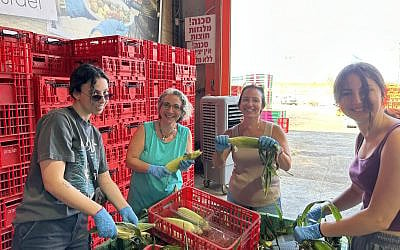
Together we sorted rescued produce that would soon become meals for Israelis experiencing food insecurity. As we worked, I found myself thinking not only about how my mother died, but about how she lived. As a social worker, she instinctively noticed people others overlooked. She asked who needed help, who needed an advocate, and who simply needed someone to stand beside them. Caring for others was not simply what she did; it was who she was.
My mother’s life—and her death—continue to ask me: What will you do now?
This year, the answer meant standing beside Palestinian families and sorting rescued produce that would nourish Israelis experiencing food insecurity. Next year, I trust, my mother’s memory will ask something different.
That, for me, has become the enduring wisdom of lefashpesh bema’asav. It is not about searching the past for blame, but about allowing suffering to become a call to responsibility. I cannot undo the tragedy that shaped my life. None of us can undo the tragedies that have shaped us. But every day we can decide what they will call forth in us. Will they make us more fearful or more compassionate? More hardened or more courageous? More indifferent or more willing to stand beside another human being?
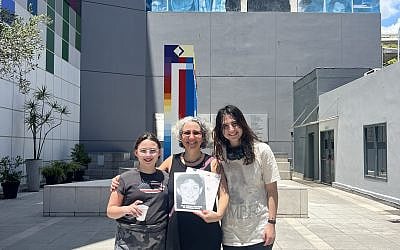
May the memory of my mother, Julia Susana Wolynsky Kreiman, be a blessing, and may her life continue to inspire me—and all of us who loved her—to bring a little more goodness and a little more sweetness into the world.