


The reason journalists in Gaza are getting killed
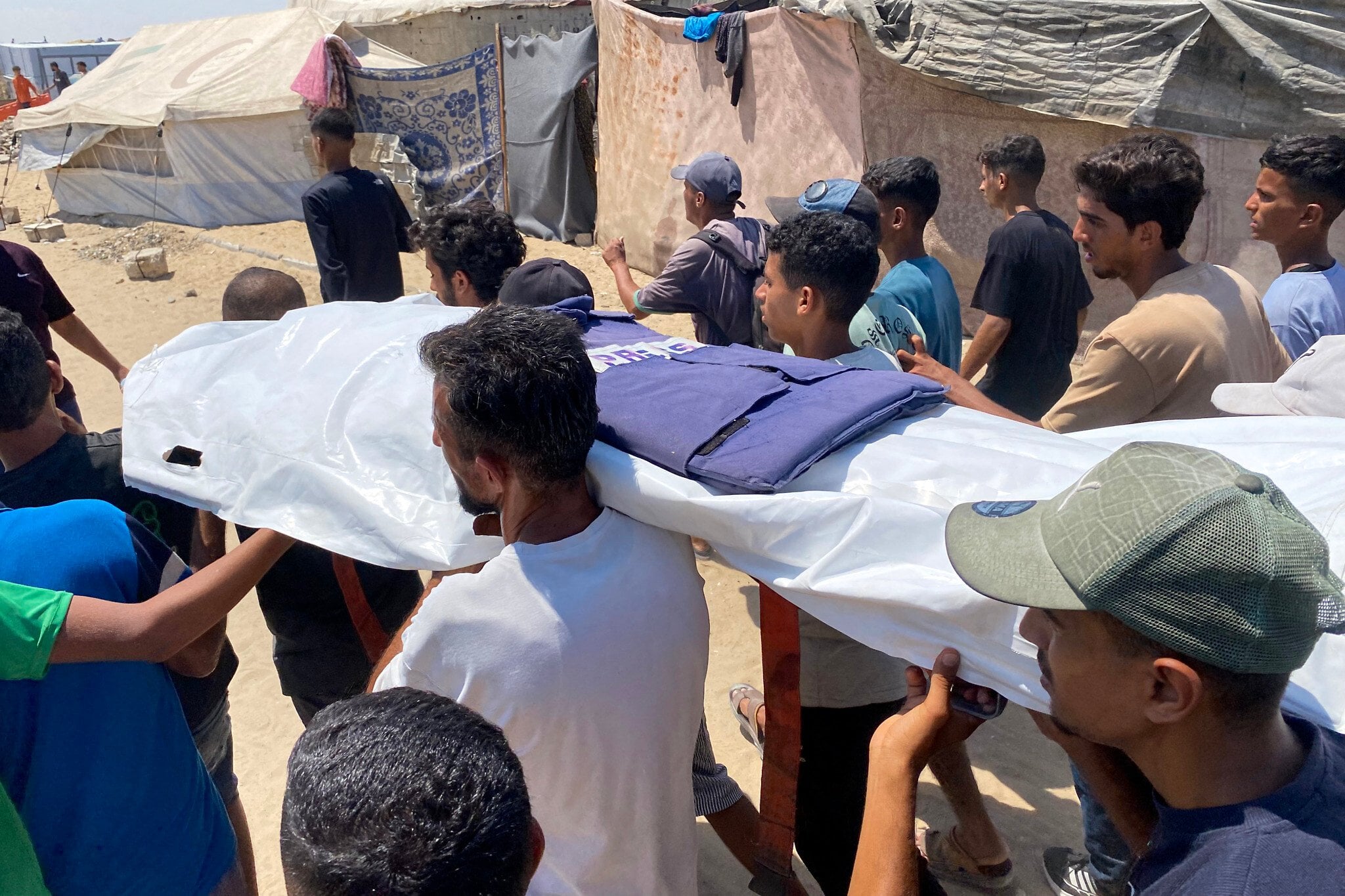
Does Israel have a policy of murdering journalists in Gaza? No, it does not. Anybody who knows the Israeli military knows it could not issue such a written or unwritten order.
Is Israel killing a disgraceful number of Gaza journalists? Yes, it is. At the Committee to Protect Journalists’ last count, 197 journalists have been killed.
But not because they are journalists, despite the CPJ’s hysterical and inaccurate claim that “Israel is engaging in the deadliest and most deliberate effort to kill and silence journalists that CPJ has ever documented.”
How many school teachers have been killed in Gaza? How many shopkeepers? How many bus drivers? Probably many more of these have been killed than journalists. We don’t know because it’s not the business of the CPJ or any other organization to count them. So they don’t warrant a headline. Journalists do.
The job of a journalist in a conflict zone is to be the eyes and ears of the world. If we help at all, it is to prick the conscience of the world. It is to warn of hunger before famine takes hold. Gazan journalists have told their story with spectacular success, and many have died in the telling.
But there is no political or military decision to murder them. Journalists are killed in such high numbers for the simple reason that they are civilians caught among other civilians in a merciless war between a relentless and callous state and an appalling terrorist organization that masquerades as a national government whose best weapon is to sacrifice its own people.
What Gazan journalists do is display extraordinary courage and solidarity. It’s true that they have little choice, as most are stuck. Those who could afford the Egyptian levy of $5,000 per adult and $2,500 per child are long gone. A hundred thousand Palestinians have bought their way out of Gaza. Those journalists who remain either couldn’t afford to leave or chose to stay, to tell the story of their people, regardless of the peril.
Israel claims some are members of Hamas, and the rest are tools of the terrorists. So what if they are? A parallel question could be posed about Israeli journalists, most of whom have served in the Israeli military and may still be reserve soldiers.
They are all doing their job, in what may be the worst conditions in history for working journalists. Who else has experienced setting out daily, camera and pen in hand, into an area of a few square miles, leaving your parents, spouse and children in a cold wet tent or a damaged house, having moved shelter half-a-dozen times in a year, always hunting for food and water, always afraid a rocket or shell could fall in a flash, and then writing or recording yet another deathly story. What other journalists have experienced this? I can think of none.
This delights Hamas. Palestinian suffering has always been the best weapon of Palestinian leaders. It is the very essence of their story and their message.
But is Israel’s response to kill the messenger? No, it is not. The deaths of so many brave reporters are inevitable civilian casualties in a senseless war fought in the middle of civilians.