The Reckless Use of Words
The emergence of totalitarianism in the 20th century took humanity by surprise. Since the dawn of time, or since humans have existed, we have known what they are capable of… But the 20th century exceeded all imagination, and no one before its advent thought about what humans could conceive and undertake when they organize themselves with method, power, and rationality, and put all their power at the service of evil. This dark period is called NAZISM, whose central ideology was to wipe out an entire people from the living world. For the first time in history, this ideology used technology, organization, discipline, and indoctrination to physically eliminate an entire people: men, women, children, and babies. This attempt to eradicate a well-defined population is called GENOCIDE.
These two terms, Nazism and genocide, should be used with the utmost parsimony and caution. They are two terrible words that were invented nearly a century ago and express the inconceivable, the unspeakable, literally that which cannot be said and therefore cannot be uttered. These words should be buried in our lips, never to leave our mouths, keyboards, or pens, except when used appropriately. Yet today, we are forced to acknowledge that their use has become commonplace, which is both unbearable and dangerous.
October 7 is not genocide, it is a massacre, a pogrom; certainly, the worst since 1945. Let us remember that when Auschwitz was operating at full capacity, in two or three days it wiped out more Jews than all those killed in the Middle East since the existence of the State of Israel, including those killed on October 7! What the Russians are doing to the Ukrainians is massacre, not genocide. What is happening in South Sudan is hundreds of thousands of victims, mass rape, but still not genocide. Let us recall the definition of genocide: “Acts committed with intent to destroy, in whole or in part, a national, ethnic, racial, or religious group.” Unfortunately, the word “in part” can be controversial. The only large-scale massacres where there was a clear intent to exterminate were the Armenian genocide by the Turks, the mass killings of Tutsis in Rwanda, and the Cambodian genocide (1975–1979). In this grim ranking, the Holocaust undoubtedly holds first place in terms of systematicity and number of victims. Today, in 2025, the Jewish population is roughly equivalent in number to what it was in 1939. In fact, we should now be twice as numerous!
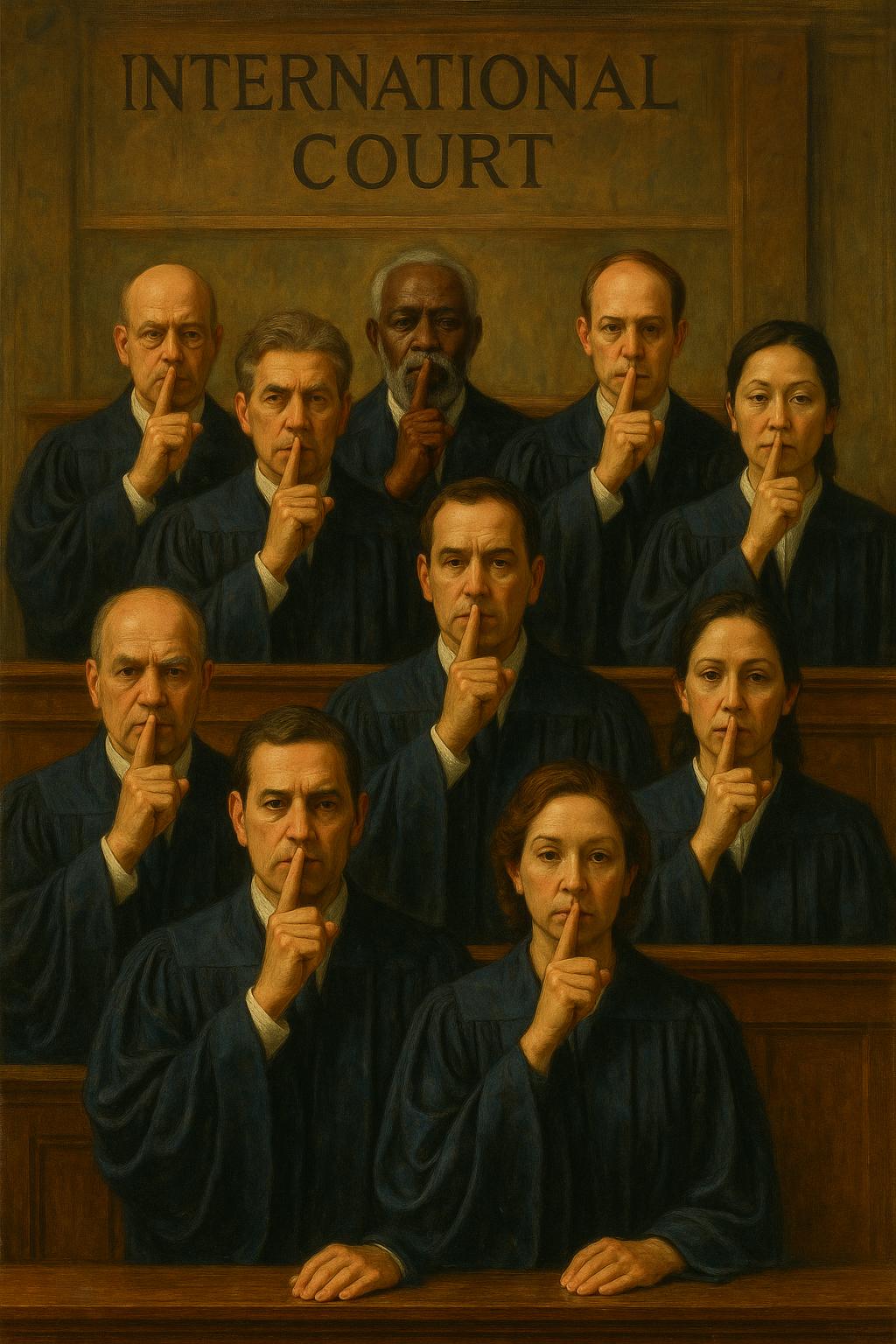
When politicians, journalists, national or international courts, or more generally public opinion condemn Israel for genocide in Gaza, or even when they investigate the possibility of genocide, they are acting, at best, out of ignorance, but often they are committing, and I choose my words carefully, a crime by reversing the meaning of history.
I could digress at length, and much has been said about this so-called asymmetrical war and the systematic use of civilians as human shields. But I prefer to give just one example of the absurdity and bad faith of the accusation. Have we ever seen potential “genocide victims” who have the opportunity to say no, who are offered a truce during which not only will the extermination cease, but as a bonus they will receive hundreds of trucks of supplies, tractors, and other materials, and who would not accept? Can we imagine SS officers entering the gas chambers and offering, in exchange for who knows what, a temporary halt to the massacre and food in abundance? Can we imagine the living skeletons deliberating whether or not it is worth accepting? The absurdity is glaring.
The attempt to accuse yesterday’s victims of being today’s torturers is monstrous. Those who accuse Israel of war crimes should ask themselves: What would I have done if I had been faced with such a situation? Let’s imagine Corsica as an independent island whose charter is the destruction of the French Republic with the aim of expelling and eliminating all its inhabitants. Let’s imagine that every week, year after year, this island bombs the mainland with hundreds of rockets, causing relatively few casualties but forcing millions of inhabitants to take shelter every day. Let’s imagine that France responds by sending Rafale fighter jets to bomb the island, causing innocent civilian casualties, and let’s imagine the outrage of the civilized world at these “heinous” crimes, clamoring for sanctions. Let us imagine further that a commando unit of several thousand Corsican fighters lands on French soil and commits massacres, rapes, and hostage-takings on affecting tens of thousands of innocent victims. Let us imagine that France responds by sending the regular army to the island and, while fighting the guerrillas, kills several thousand or tens of thousands of civilian victims. Let’s imagine that, because of its actions, or rather reactions, France is expelled from the Security Council and blacklisted by other nations. How would the French public react? Wouldn’t they feel that this was an unbearable injustice? To top it all off, let’s imagine that the International Court of Justice in The Hague accuses France of genocide against the defenseless population of Corsica!
Of course, not everything is black and white. There have been many blunders. Worse than a crime, there have been mistakes. The main one is that the Israeli government should have provided an alternative to Hamas from the outset, which would have given the Palestinian Authority a role, uprooted Hamas, and ultimately reduced the number of victims on both sides. The Prime Minister refused such a solution at all costs because of the internal implications that such a decision would have had on his government.
It all starts with words. We know from experience that words can lead to the irreparable, sometimes to the unspeakable. Let us use them with caution; every word has a meaning, let us not distort it. Words can be a source of life, but when they are misused or misrepresented, they become a source of evil and ultimately turn against those who uttered them with malice.