Director of Diplomacy, Representative to UN Geneva & UNESCO, World Jewish Congress
The Refugee Convention at 75: A Jewish Perspective on Protecting the Stranger
This month, we mark the 75th anniversary of the signing of the UN Refugee Convention of 1951. The Convention was born from “humanity’s darkest chapter” —the persecution and displacement culminating in the Holocaust—and from the recognition that never again should those fleeing persecution be left without international protection, a reality that resonates deeply with the Jewish community worldwide.
From a Jewish perspective, this is a very significant milestone. Few commandments are repeated as consistently in the Torah as the obligation to care for and love the stranger. This is not presented as optional generosity but as covenantal responsibility.
Forced displacement is not an abstract issue—it is part of Jewish collective memory. From the Exodus to the Babylonian exile, to centuries of Diaspora, displacement is woven into Jewish identity. The Torah repeatedly reminds us that we know the experience of the stranger because we ourselves were strangers.
My own family history helps me reflect on that. I am decedent of Sephardic Jews who were forced to flee the Iberian Peninsula during the Inquisition and seek safety and refuge elsewhere. In their new homes, these Jews brought with them their language, customs and traditions thus turning their experience to a living memory and reality which we cherish and reflect upon in contemporary times.
Even more so, following World War II and the Holocaust, those Jews who survived the death camps were found, often stateless, in DP (Displaced Persons) camps for several years. The creation of the state of Israel was envisioned as a national home and a place of refuge for all displaced and surviving Jews. The new state absorbed roughly 140,000 Holocaust survivors in its first few years, alongside hundreds of thousands of Jewish refugees later expelled or fleeing from Arab, Muslim and other countries. For Jewish communities worldwide, this history continues to underscore the importance of both a secure Jewish homeland and the broader international responsibility to protect those forced to flee persecution.
Prominent Jewish individuals contributed significantly to the development of the post-WWII international refugee protection framework that culminated in the 1951 UN Refugee Convention, among them the celebrated Corfu-born author and jurist Albert Cohen. As legal counsel to the Intergovernmental Committee on Refugees, Cohen played an important role in drafting the 1946 London Agreement establishing an internationally recognized travel document for refugees. That regime was subsequently an important precursor to the system of Convention Travel Documents incorporated into the 1951 Refugee Convention. The post-war reality with a great number of new refugees unable or unwilling to obtain national passports necessitated an internationally recognized travel document. This CTD, as it is commonly referred to, ultimately evolved into today’s machine-readable—and increasingly biometric—Convention Travel Document, issued in accordance with ICAO standards.
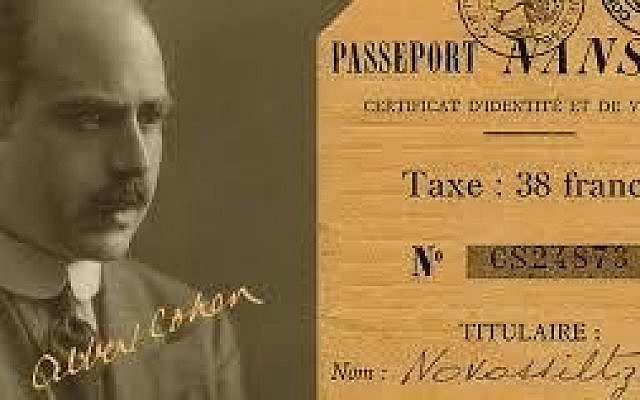
Cohen was therefore pivotal in creating a travel document for refugees, resembling that of a national passport. This new travel document was in a booklet form, unlike the travel documents that were issued until then on a single sheet of paper. Its additional new elements were a specific validity to the document and the right of its holder to return to the territory of the issuing authority of his country of asylum within the period of its validity. The provisions of the “London Travel Document” of 1946, although not in force any more, were indeed very similar to those which now regulate the 1951 Convention Travel Document.
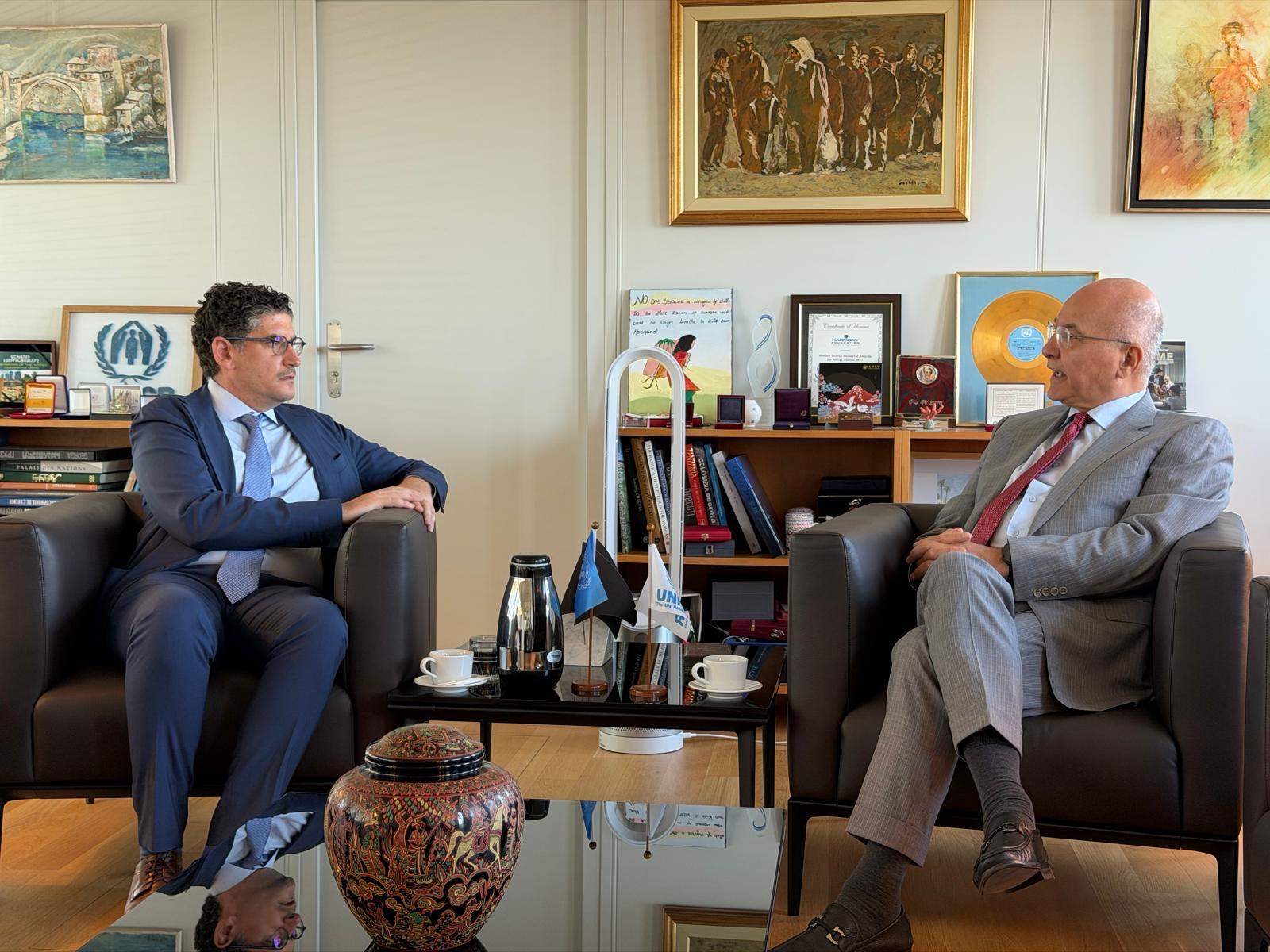
Recently, I had the great honor to meet with High Commissioner for Refugees, Barham Salih. Our discussion brought these reflections firmly into the present. Mr. Salih, a former refugee himself, shared with me the importance he pays to interfaith dialogue not only as a means to prevent conflict but also to facilitate sustainable reintegration of returning refugees in their countries of origin as well as inclusion of refugees in their countries of asylum. His “50 by 35” vision of reducing protracted displacement while making the organization more efficient and effective clearly resonates.
Seventy-five years after the UN Refugee Convention was adopted, the Torah injunction to remember the stranger because we ourselves were strangers retains an urgent contemporary meaning. We need to help people at risk who seek safety. At the same time, we need to support and express solidarity with groups that provide legal assistance to refugees, deliver services and interact with the authorities. In the fragmented world we live in, with conflict and displacement on the rise, we look to our Jewish values to draw inspiration and to help create more resilient, inclusive and peaceful societies.
Related Topics