


Solicitor & foreign policy adviser
The Return of the Best Friend
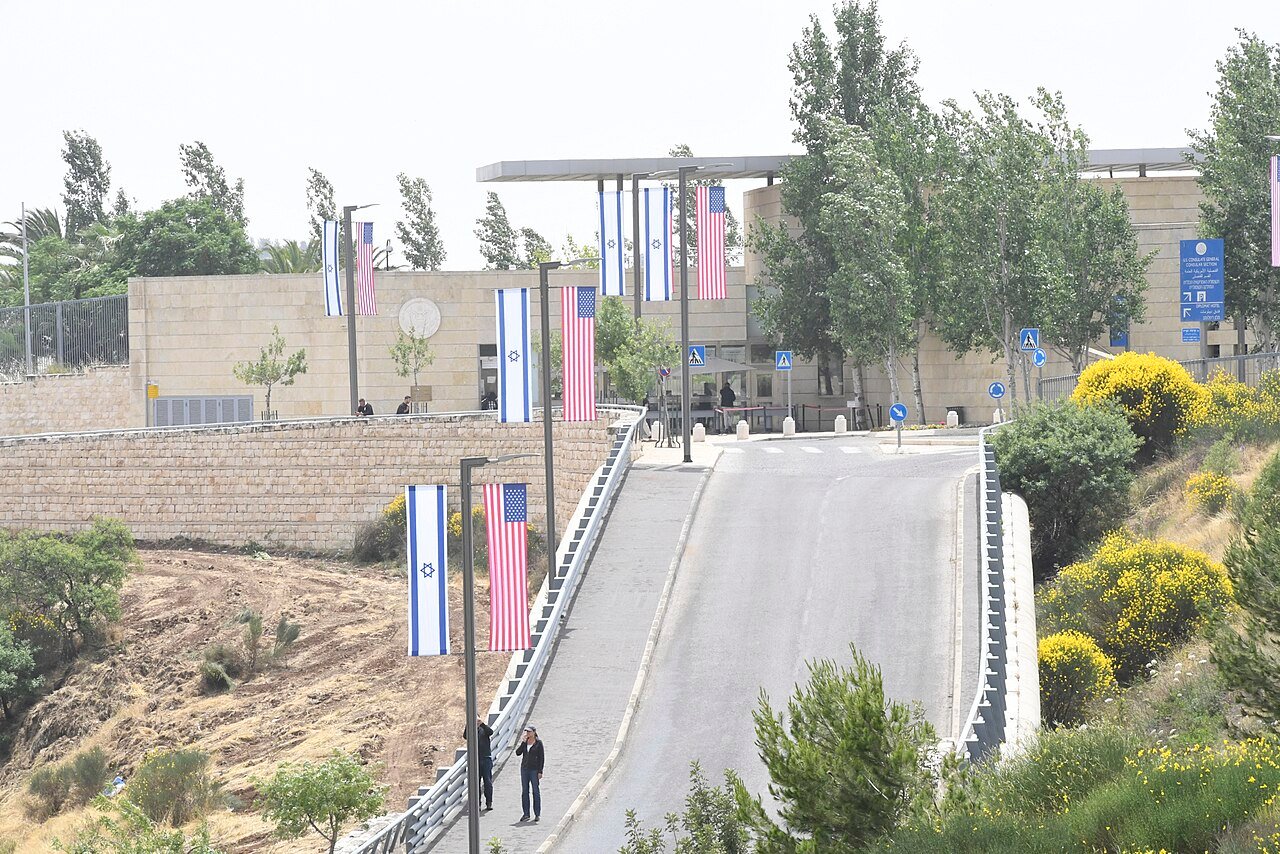
U.S. Embassy Jerusalem (Wikipedia Commons)
Israel has seen its share of visiting dignitaries at the Knesset—most of them armed with platitudes, few with courage. Donald J. Trump arrived with neither notes nor hesitation. The U.S. president, unmistakably himself, took the podium in Jerusalem and declared that the war was over. In that instant, one could almost hear the globalist establishment in Washington and Brussels drop their pens. For the first time in years, an American leader spoke not to appease the “international community,” but to restore the moral architecture that built the alliance between Jerusalem and Washington in the first place.
President Trump’s four-hour visit was a masterclass in symbolism. He met hostage families, prayed at the Kotel, and then strode into the Knesset like a man revisiting a promise kept. His ceasefire deal—brokered in secret with Egypt and Qatar—had secured the release of living captives, retrieved the remains of the dead, and halted the longest, ugliest phase of the Gaza war. The chamber was electric. Speaker Amir Ohana called him “a giant of Jewish history,” Prime Minister Benjamin Netanyahu praised him as “the greatest friend Israel has ever had in the White House,” and the benches erupted. All of it wasn’t performative in the slightest; it was gratitude finally given form.
President Trump’s speech was pure, unfiltered Trumpism: sweeping, ungrammatical, but morally crystalline. “This long and difficult war has now ended,” he said, pausing for effect. “This is not only the end of a war. This is the end of an age of terror and death.” The line worked because it broke the spell of fatalism that had hung over Israel for nearly a year. No one else in the Western world would have dared to speak of victory. Biden talked of “de-escalation.” The Europeans muttered about “proportion.” Trump talked about winning.
The commentariat will parse his phrasing, his boasts, and the theatrical appeal for Netanyahu’s pardon—“Give him a pardon, it makes sense!”—but the speech’s essence was in its clarity. President Trump presented America as Israel’s partner in triumph, not its therapist. He did not moralize about civilian casualties or demand that Israel justify its defense. He spoke the language Israelis understand: strength, gratitude, and faith. It was an exorcism of weakness, delivered with the charisma of a salesman who knows the product works.
What makes this moment so significant is not merely that Trump claimed credit for ending the war, but that he defined peace on Israel’s terms. For years, the “peace process” has been a euphemism for incremental surrender—of territory, security, and dignity. President Trump reversed that logic. His message was that peace follows deterrence, not negotiation; that moral clarity, not moral symmetry, sustains alliances. He reminded Israelis that they need not apologize for existing, nor for surviving. It was the inverse of Barack Obama’s Cairo lecture and the negation of every mealy-mouthed statement that came after October 7.
Even his brief, almost comic overture to Iran—“The hand of friendship is open; we’re ready when you are”—was less appeasement than provocation. Trump knows Tehran will not shake that hand. He wanted to make clear that it is Iran, not America, that isolates itself when it clings to grievance. Every sentence of that overture was freighted with the confidence of a man who ordered the death of Qassem Soleimani and moved the embassy to Jerusalem. When he speaks of peace, it carries the weight of deterrence. The Iranians know it.
Predictably, the bien-pensant class recoiled. The Associated Press called his claims “inflated.” Al Jazeera accused him of stealing Israel’s agency. Liberal commentators tutted that declaring “an age of terror” over was “premature.” Of course it was. Everything about Israel’s history has been premature—the Declaration of Independence, the Entebbe raid, the Oslo disillusionment, the Abraham Accords. The point of President Trump’s statement was not to predict, but to declare: to name the moral order he believes must replace the old one. That’s what leaders do.
Critics forget that Israelis, unlike their European scolds, do not mistake pessimism for sophistication. They respond to affirmation. Trump’s genius, often mistaken for vanity, lies in understanding that symbolism and statecraft are inseparable. When he tells Israelis they have won, he forces the world to reckon with an outcome no one wanted to admit. When he praises Netanyahu as a patriot and hints at forgiveness, he implies that the judicial warfare waged against the prime minister has always been political. When he calls the Knesset “the heart of freedom in the Middle East,” he is not flattering. He is defining civilization against barbarism.
President Trump’s enemies will scoff, but history will remember this day as more than a photo op. It was the first time since 1967 that a U.S. president addressed the Knesset as if Israel’s victory were America’s too. He neither scolded nor sermonized. He thanked. He congratulated. He said what Israelis longed to hear and what bureaucrats dread to admit: that moral confidence is the beginning of peace.
The image that will linger is not the standing ovation, but the man himself, grinning at the chaos of applause, as if to say, “Told you so.” Trump’s critics will call it vanity; Israelis will call it faith. After months of funerals and hostages, of rockets and recriminations, the American president gave Israelis something that no ally had offered in years—not weapons, not aid, but vindication.
For those still clutching the ruins of the “rules-based order,” this was heresy. For Israelis, it was deliverance. The man who moved the embassy now moved the needle of history again. Say what you will about his style; Trump speaks in results. And if peace in the Middle East now carries his signature, it’s because no one else dared to sign it.
Sometimes history doesn’t whisper. It tweets in all caps.