The Rhythm of Silence
It happened back in school — on stage, when I played in the band.
One afternoon, we arrived at the music room to find the cymbals gone — stolen — just hours before our big performance at the leavers’ party.
We were desperate to find replacements, but the only music shop with stock was miles away on Charing Cross Road — too far to reach before closing. Eddie, our drummer, was exasperated. We all had to think fast.
Then Anne, our backing singer, said, “There’s a globe in the geography room — metal — it sounds good when you tap it.”
We laughed, but Anne wouldn’t let it go. Eddie grabbed his sticks, and we all ran upstairs to try it. She was right — it actually sounded good. Not perfect, but good enough to stand in for the missing cymbals. It looked ridiculous, but Eddie didn’t care; all he wanted was to keep the rhythm alive.
The globe stood on a heavy wooden stand in a second-floor classroom. We tried to separate it from its base, but the bolts were rusted tight. There was no time — we had to move it as it was. The four of us heaved and shoved, puffing and huffing, trying not to laugh or drop it. It weighed a ton.
Anne took lookout duty, peering round corners like a secret agent. At one point, she stopped a passing teacher and asked, with exaggerated confusion, “I’m lost — could you tell me where the dining room is?” The poor man turned the other way while we kept moving, half-panicked, half-hysterical.
Halfway down the last flight of stairs, Jonny, the bassist, sneezed — the kind of sneeze that could register on the Richter scale — and the world slipped from our hands.
The globe tumbled, bounced once, then hit the bottom step with a hollow thud — splitting clean in two, right along its equator. We froze. The world had literally fallen apart.
We were about to run when Eddie shouted, “Wait!”
“Wait? Are you crazy?” we yelled back.
“Did you hear that?” he said.
“Hear what? The crash?”
“No,” he said, “listen — that sound!”
Eddie was onto something. The crash had made a strange, resonant tone. He insisted we use it. We hauled both halves into the hall and fixed them onto the existing cymbal stands.
That night, people whispered, pointed, and laughed at the sight of a drum kit crowned with two giant domes — like twin planets, as if the whole world had joined the band.
We were more worried about Mr. Blackmore, who would soon notice his missing globe on stage. But when we launched into “Rocking All Over the World,” the crowd went wild. Everyone thought the broken globe was part of the act — a clever stage prop. Even Mr. Blackmore was half-smiling, as if he understood that sometimes the world needs to fall apart to find its rhythm again.
The song became our encore — and the talk of the night.
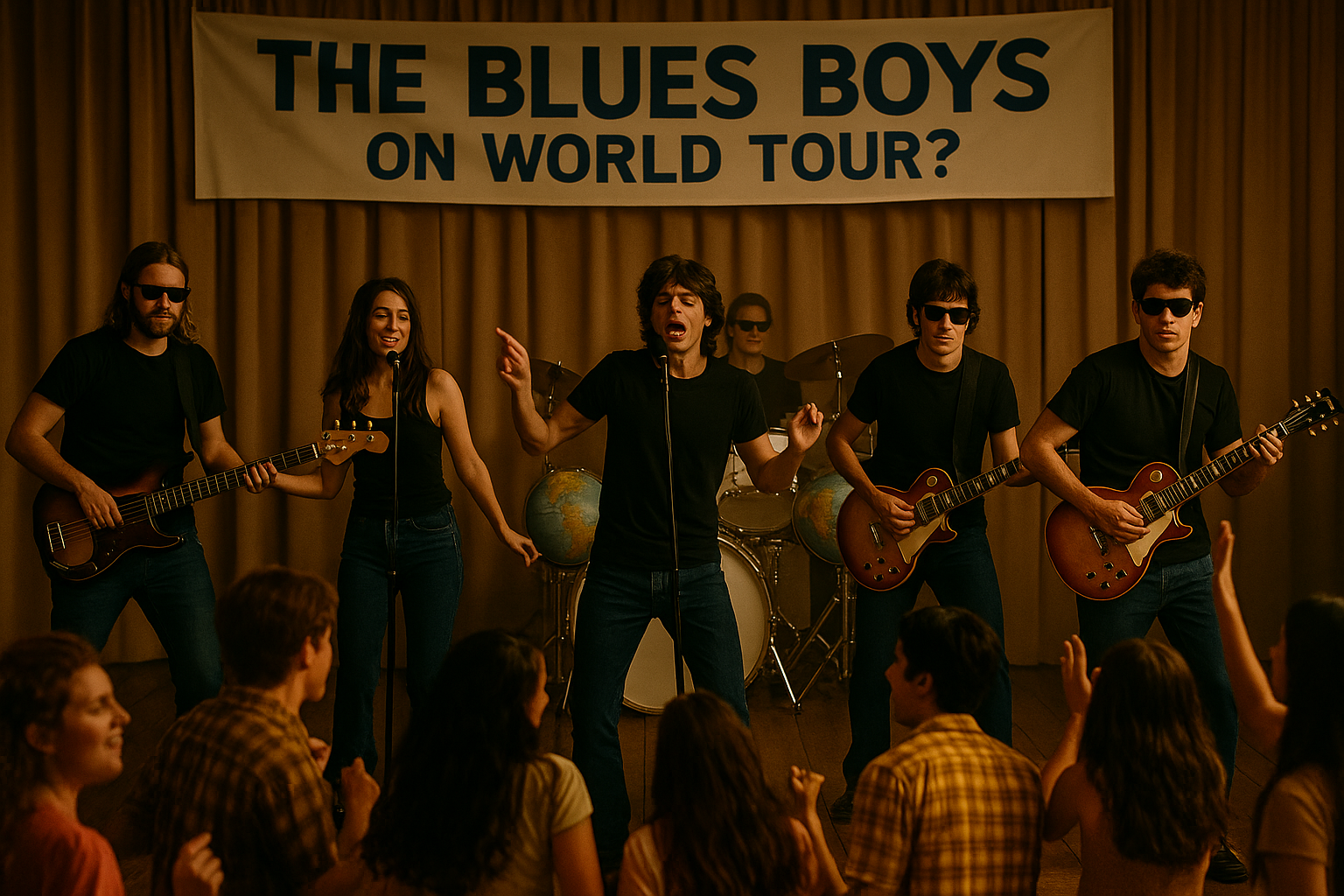
The Blues Boys – On World Tour?
Music has its rhythm, and so does life — but what happens when the beat goes wrong?
In Noach’s time, the world spun too fast. It was filled with noise — violence, greed, and restless desire. The rhythm of living lost its balance — and everything beautiful began to crack apart. Then came the Flood — a divine pause, washing away the chaos so creation could start again.
Rabbi Zadok HaKohen taught that renewal begins not with sound, but with stillness. After the Flood, the first step wasn’t noise or celebration — it was quiet awareness.
That pause wasn’t empty; it was potential — the moment the world tuned itself back to the sacred.
Maybe that’s why the moments that change us rarely arrive with noise. They come quietly — in the pause before we speak, the breath before a decision, the silence after loss or discovery. That’s where the world begins again, one person at a time.
Our generation also struggles to hear beneath the noise. We fill our days with motion and messages, often mistaking speed for purpose. Rabbi Zadok reminds us that holiness begins when we stop — when we make space to listen.
From that quiet, creation found its balance again — and, in time, its color.
The Sefat Emet taught that the rainbow after the Flood revealed creation’s hidden harmony — light and rain, heaven and earth, opposites joined without losing their difference. A rainbow doesn’t deny the storm; it transforms its remnants into color. It teaches that redemption isn’t a restart, but the same world seen through new light.
Perhaps that’s our task too — not to stop the world’s motion, but to guide it back into rhythm. To build small arks of peace — a walk, a prayer, a real conversation — where what truly matters can be protected and heard.
The rainbow remains our reminder: even after the storm, beauty can return — not as it was, but refracted through change.
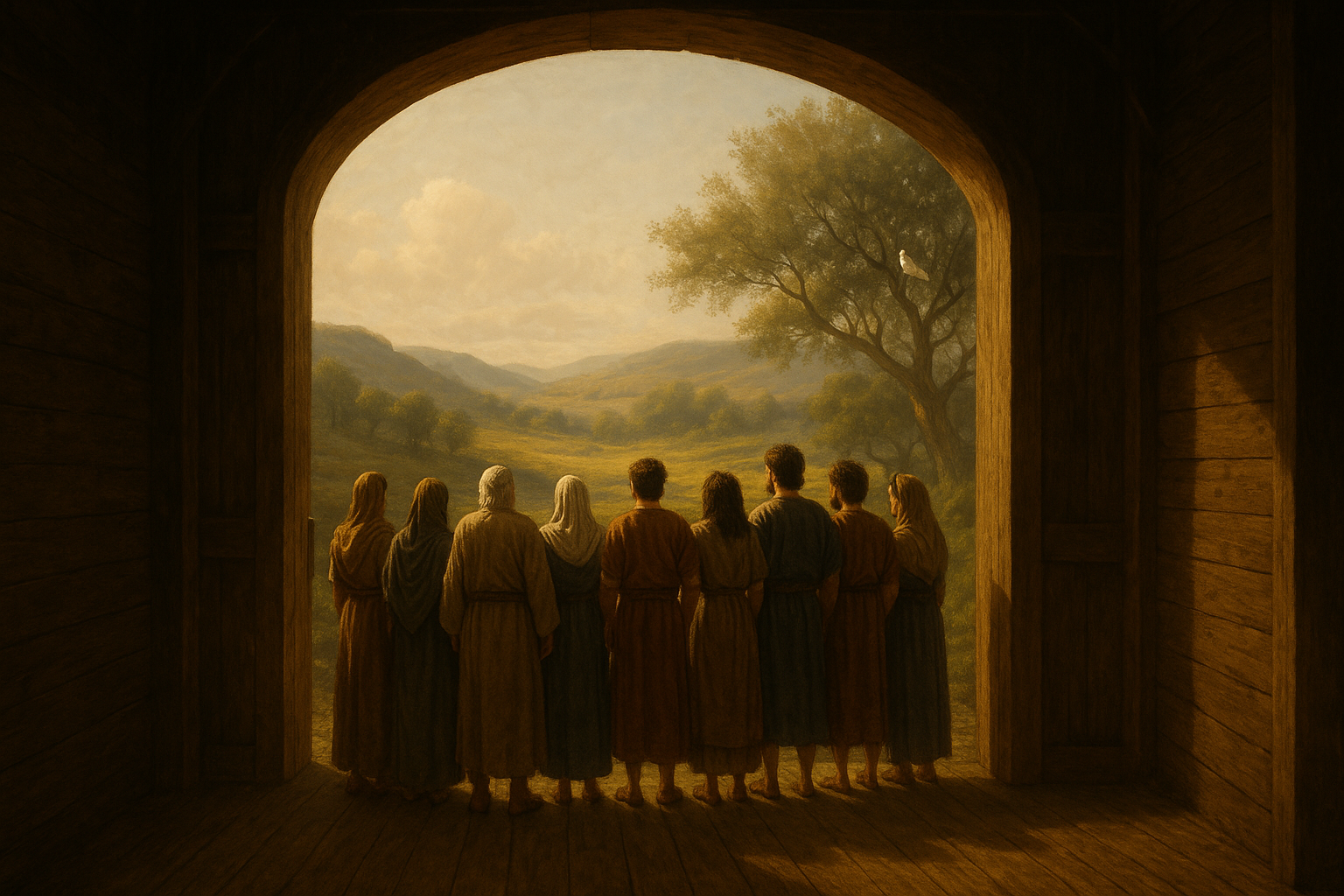
And the door opened — what a beautiful world
Life will always keep spinning. The challenge is to keep its rhythm human.
In music, the hardest part of songwriting is silence — because that’s when the listener truly hears, if it’s placed with rhythm.
Maybe that’s the work of our lives too — to find that still point within the noise, where motion and meaning meet.
To listen between the beats, to let silence shape the sound.
Because the rhythm was never lost — only waiting to be heard again.
שבת שלום
שמואל