

Mathematics Teaching Professor, Author
The rise of antisemitism since Oct 7: An Interview with Dori Zuravicky Bomback
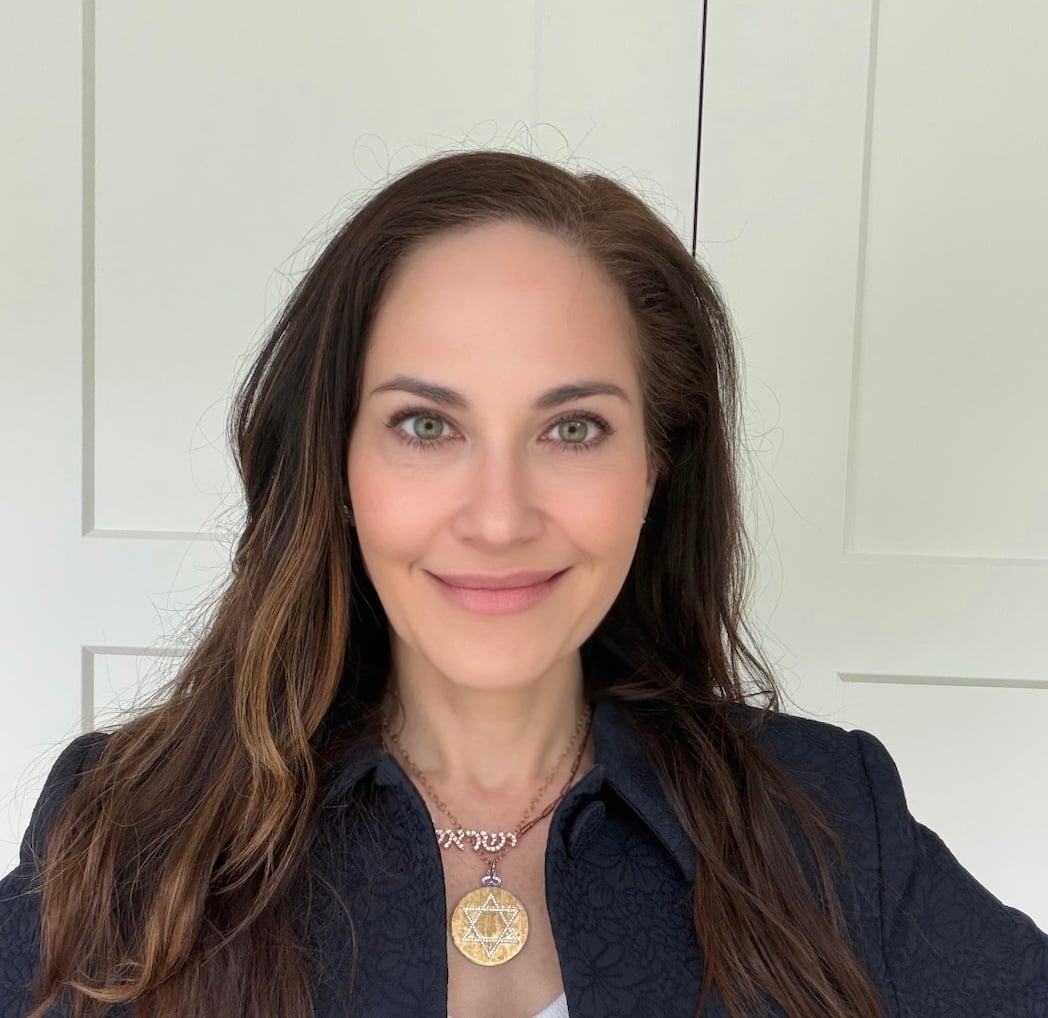
Dori Zuravicky Bomback (Source: Mia Bomback)
Dori Zuravicky Bomback is a Jewish communal leader, speaker, and digital educator focused on Israel, antisemitism, media narratives, and public discourse. She serves as Regional President of Jewish National Fund-USA in Westchester/Southern Connecticut, sits on the Board of The Faces of October Seventh, and co-founded Flip Your Diploma. Dori speaks to Jewish audiences and has appeared on numerous podcasts. She holds degrees from Barnard College at Columbia University and Columbia University’s Teachers College.
It is an honor to interview Ms Zuravicky Bomback for this article to discuss the current rise of antisemitism in the United States since Oct 7.
What inspired you to become involved in Jewish communal leadership and education?
I never aimed for a title. I was born with a responsibility.
I am Dori, a name that means “my generation”. When I was a baby in Israel, my father fought in the Yom Kippur War. My grandmother survived the Holocaust, everyone else perished. My mother’s family moved from Poland to the Land of Israel in the 1800s, were expelled to Egypt, and still managed to find their way back home. For me, Jewish continuity has never been just an idea; it is why I am here.
Later, at Columbia University, I studied Israel and the Middle East, and my thesis focused on trauma, resilience, and why Israel had to remain strong. Fast-forward decades, I saw that the same university had let down Jewish students after October 7. I tore up my diploma in front of the camera. This was not for effect; it was a granddaughter of survivors refusing to let a piece of paper be more important than the people it was meant to protect.
My children were the result of years-long struggle; I was given a gift, the privilege of motherhood. I cannot raise them from the sidelines; if our generation becomes silent, they will inherit fear. If our generation is loud and proud, they will inherit belonging.
Your family carries the legacy of a Holocaust survivor. Can you share how that history has influenced who you are and the work you do today?
I lost an entire family on my father’s side in the Holocaust. A world– grandparents, aunts, uncles, cousins, was erased. My grandmother was the sole survivor of a large family. My father was born in 1945, weeks after WWII ended. My grandfather passed away before my father’s first birthday. Together, they walked 3,000 miles from Tajikistan back to Poland, where they waited to emigrate to Israel legally. My father, a pioneer Israeli of early statehood, lived that void every day of his youth.
In Israel, my father grew up in a world of survivors. My grandmother remarried, and his own stepfather had witnessed the Auschwitz selection of his first wife and two toddler sons for the gas chamber.
My father carried that vacuum across continents when he came to America. I grew up feeling its weight.. No big family reunions, no simchas, no cousins to befriend. No crowded holiday tables filled with stories from the old country. Just gaps, questions and ghosts. The devastation of the Holocaust raised real questions about good and evil, justice and injustice, and life and death. My father could not reconcile how G-d and the atrocities of the Holocaust could coexist. The covenant between man and G-d had been rendered null and void. That question seeped into my everyday existence, shaping my struggle to find faith.
Despite it all, marriage is about compromise, and I was educated in a Jewish day school. We kept kosher. We were surrounded by Hebrew language, Israeli culture, and music. Yet we always seemed to be in the middle of a household identity crisis— a battle between the traditional rituals of my mother, and the modern zionism of my father—which did not include these.
There was confusion and questioning; after all, the chain was nearly severed in the Holocaust. My entire extended world, gone. Murdered, burned and erased as if they never existed.
That chasm tore at my heart. I have spent much of my life obsessing over the Holocaust.
Living in the diaspora, being Jewish seemed defined by a synagogue. In America, you couldn’t just go out in the street and feel Jewish. You had to find a way to connect and belong.
Dor v’dor is more than a phrase. It is our people’s vow: What we receive, we pass on. What was taken from us, we refuse to let die. Jewish life is never guaranteed. It must be chosen and fought for. Celebrated. Taught. That is how I live my faith now.
How would you describe the landscape of antisemitism in America since October 7, 2023?
Antisemitism is the WORLD’S OLDEST FORM OF HATE. It has taken many shape-shifting forms: Religious, racial, and now for the Jewish nation and its rightful claim to self-determination in its ancestral homeland, Israel.
Today’s antisemitism is cloaked as anti-Zionism. The keffiyeh has replaced the swastika.
It pretends to be progressivism, yet it allows every group except Jews the right to self-determination.
Antisemitism comes from three sources:
- the Left
- the far-Right
- from within our own
The antisemitism on the Left has been surging for decades. It’s the antisemitism that loves to paint a picture of Israel as the aggressor, the white colonizer. It’s the type of propaganda that lies about apartheid in Israel and genocide in Gaza. It’s the jihadi sympathizers, the islamist apologists, the DSA, and those who coined DEI and Islamophobia.
We’ve seen it everywhere, holding Israel to a different standard than any other country. It’s the left that hides behind academia and sophistication and DEI, Wokeism, and Diversity as being the holy grail.
On the Right, we have fringe elements to contend with. Their hate is rooted in old discrimination tropes of Jewish control and classic blood libels.
AND, WE HAVE SELF-LOATHING ANTISEMITIC JEWS.
We have traitorous Jews among us, who think Tikkun Olam only applies to other races, religions, and creeds. We have Rabbis who use their sermons to promote political agendas instead of educating about Jewish history and what it means.
We have Jews who have traveled everywhere in the world except for our homeland, Israel.
How can we come together to fight external antisemitism when we have antisemitism in our midst, when we have people who think that Judaism and Zionism can be separated? When Jew-ish organizations say “We’re not anti-Semitic, We’re just anti-Zionist,” it’s as ridiculous as saying “We’re not anti-black, We’re just anti-Nigerian.”
What does Zionism mean to you personally?
Zionism is not passive. It’s a responsibility. Zionism is about existence, and it was recreated in 1948.
Zionism is the strength of character never to surrender our legitimacy, to teach defense of Jewish survival, and to refuse loyalty tests that demand Jews condemn their own people to belong in society.
Zionism is home. A concept over 3000 years old, written everywhere in the Hebrew Bible, Zionism and Judaism are inextricably related. Judaism, unlike other religions, is an identity that is both faith-based and nationalistic.
College campuses have seen a significant increase in reported antisemitic incidents. What do you believe is driving this trend? Why has the conflict become such a defining issue on college campuses?
These events did not begin on October 8. University campuses were already structured to support them.
For the last sixty years American universities have changed from promoting independent thinking to focusing on group identity. As Christopher Rufo points out in America’s Cultural Revolution, instead of treating students as individuals they have now been grouped according to their identity. The D.E.I. initiatives have placed a greater emphasis on equity than on equality. If students are taught to see the world from the point of view of oppressors vs. oppressed, then there has to be an opposing force. Israel has been given that role.
The students who turn up on campus are not empty slates, K-12 education has been gradually moving to the left since the 1960s. A great many of the students already know the system well. The university does not need to teach them; it only has to organize them, and linked organizations offer financial incentives to student activists. Data on faculty composition show that the ratio of liberal to conservative professors has become increasingly unbalanced. As a result, ideological self-selection occurs: conservative academics are less likely to be employed at elite institutions.
Groups like Dissenters in Chicago are offering students money for “anti-militarist” fellowships. Open Society, George Soros’s foundation, has funded that fellowship. Other progressive funders piled on. These networks have shared stages with Samidoun, a sham fundraising front for the PFLP, a terrorist organization. It’s money, events, and alliances running through the Palestinian Youth Movement, the U.S. Palestinian Community Network, Students for Justice in Palestine, and Within Our Lifetime. They are embedded in the National SJP network.
When convicted terrorists become campus speakers, Jewish students are living a threat. That is why the “conflict” became the defining campus issue.
BDS gave the ideology its foreign policy. Isolate the Jewish state until it stops being a Jewish state. A long list of demands for Israel, none for the other side. In 2016, the Movement for Black Lives put that boycott into an American racial-justice platform. They named one foreign country: Israel. Apartheid. Genocide. Cut the aid. Black Lives Matter is the slogan people know.
The increase in antisemitic incidents has nothing to do with Gaza. It is the consequence of an academic establishment that has been captured, together with a group of activists who have received money, links to terror-related front groups, and a boycott movement that has been directed through American identity politics. They already decided the world is split into villains and victims. They needed a villain. Jewish students were on campus, so they became the target. Israel became the big issue because it is the one country that fits the narrative they were already teaching.
What role does the mainstream media, TikTok, Instagram, X, and other social platforms play in shaping public perceptions of Israel and Jewish communities?
The press does not show people Israel. It shows them a choreographed story. Israel is the perpetrator. Palestinians are the victims. When Jews are murdered, it is part of a recurring “cycle of violence.” But, when Israel shoots back, it is the headline to every story.
Wikipedia is underneath the news and is regarded by millions as the final word, if it’s on the page, the masses figure it must be true, it’s not. State media that dislikes Israel—linked to terrorist groups—receive thousands of citations and are marked as reliable. Al Jazeera has more than 20,000 citations
What’s worse is the well-educated live on it, and the big AIs train on it. So anyone asks a question and gets a sentence that already chose the side against Israel.
All of this feeds the social media frenzy. TikTok drops the war on kids who couldn’t find Gaza on a map and tells them what to regurgitate. Instagram, presents similar narratives in visually appealing videos framing them as a cause.
That is how a lie about Israel ends up being a feeling about Jews.
Are there particular antisemitic tropes or narratives that you are seeing reemerge?
Antisemitism becomes a crisis when we don’t see it as one. When antisemitism is acceptable—when it blends into the background of everyday discourse—we are in deep trouble. And that is where we find ourselves today. Antisemitism is not new; it’s simply no longer timid.
It has become fashionable to hate Jews. We are made to explain ourselves, justify our views, and apologize for our self-defense. We must always prove that we are the “good kind” of Jew, aka, the “weak Jew.”
What do you think people who are not Jewish most misunderstand about the current experience of American Jews?
This is a loaded question. Not all American Jews understand one another, and there is much difference in the lived experiences of immigrant Jewish families and American Jews who have been here since the 1650’s. The most common misconception by non-Jews is that they are “unaffected” by the current landscape. To them I say: There is a saying among Islamists: “first we take care of Saturday, then we take care of Sunday.“ This phrase refers to both the Jews, who celebrate Shabbat on Saturday, and the Christians, whose holy sabbath is Sunday.
But, more broadly, Westerners, including many American Jews, don’t understand that Islam is both a religion and a political doctrine. It teaches its disciples that there cannot be lasting peace with non-Muslims because Muslims believe that they are superior to non-Muslims.
Zohran Mamdani has become one of the most prominent Democratic politicians associated with the democratic-socialist movement. The Democratic Socialists of America have adopted an explicitly anti-Zionist position. What concerns, if any, do his positions raise for you as a Jewish advocate?
Few, particularly NY Jews who voted for him, grasp how dangerous Zohran Mamdani is. His raison d’etre goes beyond one city; it is part of a wider effort to align Western values with radicalism and Islamist extremism. The fact that a Jew hater could be elected in the most populous Jewish city outside of Israel by Jews gives our enemies free rein to do and say anything that threatens American Jewish civil liberties.
It enables Jews to be tokenized, divided, and used as an excuse for shameful behaviour that no other minority group would ever tolerate.
This trend in elections is now common. Among Muslim Americans who hold extreme antisemitic views, the majority can be found in city and town councils–and education boards. They are deciding on the curriculum that your children will study at school.
Their common denominator is anti-Zionism—it appears in every script and every DSA toolkit. They are getting elected in the USA, because they are mad about Jews and Israel.
A wise man said that New York used to be a beacon of modern Jewish life, that is the warning. Baghdad was once a home to 100,000 Jews. Now it has fewer than ten, and even the memory of those Jews was wiped from their history.
As a final thought, what do you most want readers to take away from this conversation?
Our children need Judaism and Israel in their lives. When Jewish parents do not raise their children in the Jewish way, they deprive them of a sense of self, belonging, resilience, and higher purpose. Without knowing Jewish history, Shabbat, holidays, and traditions, who are we? Judaism teaches us to think thoughtfully, ask questions, and challenge. When we create family experiences in every vacation hub on earth but never take our kids to Israel, we lose an integral connection and an existential purpose. When we don’t teach our children Hebrew words, we deny them an identity and a chance to enter the community rather than watch it from the sidelines.
I got tired of letting lies go unanswered. I watched false narratives about Israel spread unchallenged. I watched October 7th get denied, minimized, and perverted into something it wasn’t. I kept waiting for someone to push back — loudly, clearly, without apology.
I’m not a politician. I’m not a scholar. I’m a Jewish woman who loves her children, her people, and Israel — and who refuses to let the narrative be stolen. Everything I do is driven by the world my children and their offspring will inherit. We carry the truth forward.
The night before my daughter left for college, she asked, “Mom, can the whole world be wrong?” Yes. The whole world can be wrong when the institutions that claim to certify truth have been captured. I walked those corridors, and thirty years later, I tore up my diploma on camera because my alma mater could not tell the difference between a protest and a pogrom, and would not protect Jewish students when it mattered.
I get this question a lot. “What can we as Jews do to change today’s reality?” The answer is not a one-size-fits-all approach; however, WE ALL PLAY A PART in creating a new playbook that rejects the status quo. It’s not just about being reactive. It’s about being proactive so we can live with dignity, strength, strategy, and the ability to control our own history. We must demand to be taken seriously, and embrace our Jewish power without apology.
We are in an existential war for our survival.
For Jews, Zionism, and the connection to the land of Israel must reaffirm an ancient relationship with the land of Judea, steeped in religious and cultural significance. The connection predates the modern state by thousands of years. The covenant described in the Torah has always positioned the land as the spiritual heart of our people. For centuries, Jews in the diaspora lived under the constant threat of persecution.
Then, in 1948, modern Israel was born. It remains the only country where Jewish identity is central to national life, offering all Jews a critical safeguard against antisemitism.
For diaspora Jews, Israel represents the ability of the Jewish people to defend themselves, to write their own destiny, and to provide a haven for those facing persecution. Israel is the thriving bastion for Jewish culture and heritage. Jews will never again be powerless in the face of oppression.
This is all rooted in history from ancient to modern. Without the Jewish state, we are in peril.
Diaspora Jews, wake up. You need Israel more than she needs you.
Contact Information:
Email: dorizbomback@gmail.com
Dori Zuravicky Bomback , Regional President Board of Directors JNF-USA Westchester and So. CT
Book Dori Zuravicky Bomback for speaking engagements at:
https://www.dorizuravicky.com/
Follow Dori Zuravicky Bomback on Instagram, X, Substack and Facebook:
https://www.instagram.com/strength4israel/