


Mathematics Teaching Professor, Author
The Rise of Antisemitism since October 7: An Interview with Jonah Platt
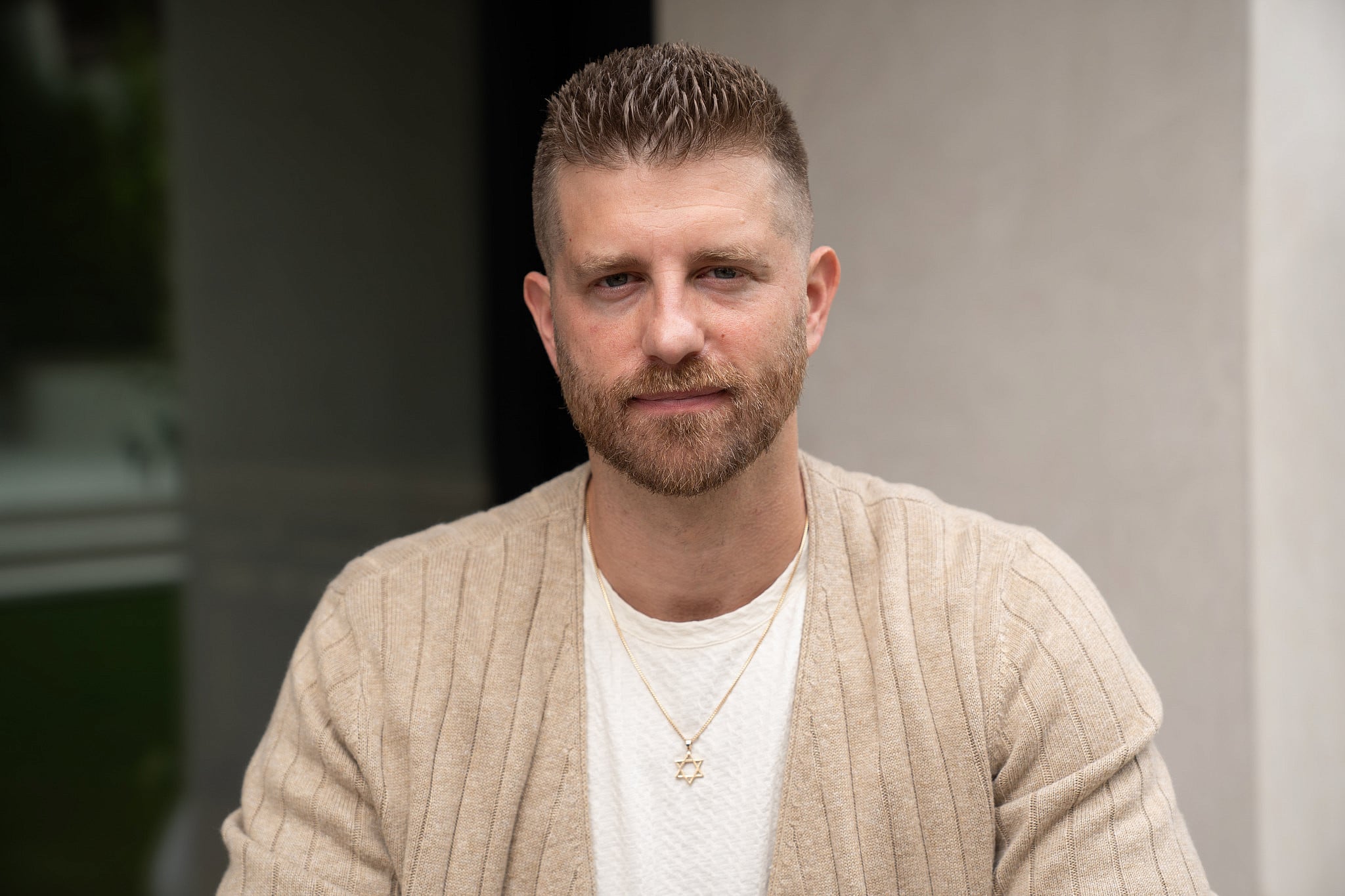
Jonah Platt (Courtesy of Jonah Platt)
Jonah Platt is a celebrated entertainment multi-hyphenate, Jewish advocate, writer, and performer known for his work across Broadway, film, television, music, and theater. A trusted voice on modern Jewish identity, culture, and current events, his writing has appeared in Variety, The Forward, USA Today, and The Times of Israel, and he has appeared on CNN, i24, Fox News Digital, and other major media outlets. His entertainment credits include Wicked, Being the Ricardos, Menorah in the Middle, The Office, and Uncoupled. Jonah serves on several Jewish and arts-focused boards, has received awards for his advocacy against antisemitism, and is currently pursuing a Master’s in Antisemitism Studies at Gratz College. Jonah Platt’s podcast, Being Jewish with Jonah Platt, has become a popular and well-received platform for conversations about Jewish identity, culture, current events, and the issues affecting the Jewish community.
It is an honor to interview Jonah Platt for this article on the current rise of antisemitism in the United States since October 7.

You are an accomplished actor, and you’ve become a prominent voice on Jewish identity and antisemitism. What motivated you to become more outspoken?
I was motivated by the necessity of the moment. I started speaking up about Jewish issues, Jewish identity, culture and current events as far back as spring of 2021, when I began using my platform online to communicate and filter complicated ideas to understandable, digestible language for folks, and help articulate what I felt American Jews like me were feeling in certain moments. That’s grown organically and then it really exploded after October 7th when the moment has just called for anyone and everyone to utilize their skills and passion and sphere of influence for the benefit and support of the Jewish people. And that’s just what I’ve been doing, trying to use my skills, my passion and my sphere of influence to help the Jewish community however I can.
How would you describe the landscape of antisemitism in America since October 7, 2023?
It’s a travesty. It is no surprise to any engaged Jew in America that we are living through the most anti-Jewish period we have had in this country for almost a hundred years. Certainly, in the lifetimes of almost everybody alive today. The Jew hatred is out of control. It’s on both the right and the left. It takes the guise of both antisemitism and antizionism. It has been given the intellectual stamp of approval from academia and the intelligentsia, from politicians, social media, news media, all parroting anti-Jewish, and often terrorist-created tropes, and propaganda.
It is a major, major issue. The levels of hostility, of ostracization. It’s not something any of us have ever seen before. And the most troubling part is how normalized and how widespread it has become. It’s the normalization. Even if it’s not everybody, those who do espouse this anti-Jew ideology, they have been allowed into polite society from the fringes. It is no longer grounds for dismissal from polite society.
What does Zionism mean to you personally?
I go by the most understood definition, Zionism is the belief in the sovereignty and self-determination of the Jewish people in their ancestral homeland. That’s it.
College campuses have seen a significant increase in reported antisemitic incidents. What do you believe is driving this trend? Why has the conflict become such a defining issue on college campuses?
A few issues drive this. Number one, many elite colleges have been receiving literally billions of dollars from foreign countries with anti-Israel, anti-Jew, anti-West agendas. And they have been seeding ideas and faculty members to espouse those ideas for quite some time.
College students tend to be both extremely liberal and very naïve, poorly informed about the world, and very gullible. They are also most looking for acceptance from a peer group. All of these things lead college students to make the very low-stakes decision to join the hot “social justice movement” that is anti-Israel. It’s a place to pick up chicks. It’s what all your friends are doing. It’s what your professors are telling you.
Kids are being taught pre-college and in college this oppressed-oppressor binary paradigm for how to view the world. They’re being taught this sort of postmodern moral relativism where anything can be given “context” and viewed from either side. Even the barbaric October 7th attacks can be looked at from another way. The 9/11 attacks can be looked at from another way. They’re all being taught this stuff and they’re not being taught how propaganda works, who and what Jews are. So, it’s just a fertile area for growing anti-Jewish sentiment in so many ways, which is why it was so strategically and effectively targeted by enemies of Jews, Israel and the West.
What role does the mainstream media play in shaping public perceptions of Israel and Jewish communities?
The mainstream media plays almost the entirety of the role of shaping public perceptions of Israel and Jewish communities. Most people on earth have never met and will never meet a Jew. Their only touch point with Jewish people is the prejudices they hear through the ether, what they’re taught in school, and then what they see in the media, what they see in TV and film, what they see on the news, what they see on social media.
Most people who are going about their day, if they know anything about Israel and Jews, it’s what they hear in the five minutes that they turn on the news or glance at their phone. And so whatever is there, that is going to shape their narrative. And most of the time it’s negative. You know, there’s very little effort to get it right from a lot of the mainstream media. There’s so much agenda-driven media today. I mean, there was a study that just came out proving how anti-Israel the New York Times, aka the paper of record, has been. There’s the number of employees at the AP who cover Israel compared to all of Asia and Africa combined, the sheer number of stories that get talked about this teeny, tiny land. It’s what we call sort of the anti-Zionist gaze. It’s this obsession with the Jewish state that we don’t have for any other people in any other situation.
How have social media and online algorithms affected the spread of antisemitic ideas and misinformation; what role has TikTok, Instagram, X, and other social platforms played in shaping the conversation about Israel and Jews?
Social media. Yeah, it’s sort of the same thing. They’re in the same bucket, except there’s even less accountability. Which is why it works so well. There’s the Brandolini law the asymmetrical nonsense principle: I can say absolutely anything I want with no corroboration on the internet, and it can go completely viral in two seconds, even if i’s a complete lie. And it doesn’t matter because it’s already hit the wire, and it’s gone around everybody. And even if I issue some sort of retraction or prove it later, which is going to be so much work and so much effort, no one’s going to see it. No one’s going to care. It’s already hit.
Social media is algorithmic, so it’s built to show you things that are going to engage your emotions, outrage you, terrify you, which is why so many people are getting so much anti-Israel stuff. And out of context, horrible images, with no understanding of how or where or why or what they are, just that they’re bad.
TikTok is full of people who have absolutely no authority or expertise talking about this conflict. And when you hear something enough, we have this cognitive bias. If you just hear it a lot, you believe it to be true. So, through repetition, through really easily repeatable slogans and buzzwords that can zip around social media, it’s how a lot of this stuff takes root and nobody questions it. Their brains just take it as fact because they hear it a lot.
Are there particular antisemitic tropes or narratives that you are seeing reemerge?
Yes. I mean, all of them. Again, there’s anti-Zionism, anti-Zionist tropes and antisemitic tropes. And I think it is really important to distinguish the two.
The antisemitic tropes are the classic ones we hear of Jews controlling stuff. Any time any Jew opens their mouth to do anything, see the Jews control the banks, see, the Jews control the world. The war in Iran, see Israel controls America. Jews are all in it for themselves and look down on other people and hate the hate the goyim. That’s all on the right. Then there’s the anti-Zionist stuff.
Tropes that are half a century old: “Zionism is racism,” “baby killers,” “genocide lovers and supporters.” It’s that ancient blood libel coming back. We even saw with the Ed Sheeran thing, antisemitic cartoons coming back with hook nose and claws, and blood coming out of his mouth. It’s like Nazi or Soviet propaganda. We’re seeing all of the old tropes come out as they never have before.
What do you think people who are not Jewish most misunderstand about the current experience of American Jews?
Oh gosh. I don’t think most people understand the experience of American Jews at all. I think most Americans don’t think about it, don’t even think that there’s an experience they should be aware of. They don’t know what antisemitism is, that it’s happening, that Jews are experiencing it.
Most people think of Jews, if they think of them at all, think of them as rich white people who certainly don’t need any help, who are certainly not experiencing anything negative, despite none of those things being true.
So, I think if I had to pick one thing, I would say that it’s most people have no idea who or what Jews are. They don’t think of Jews as a tribe, as a people. They don’t know where we come from. They don’t know what we believe. They don’t know what our culture is or what our customs are. People just know absolutely nothing about us.
Zohran Mamdani has become one of the most prominent Democratic politicians associated with the democratic-socialist movement. What concerns, if any, do his positions raise for you as a Jewish advocate?
He’s awful. He is somebody who is normalizing, mainstreaming the hate of Israel and legitimizing the libels used against it that create the permission structure to hate on Jews. He’s a classic anti-Zionist. He’s a classic antisemite at the same time. He marches in everybody’s parade except the Israel parade. He invites Palestinians to his house all the time. Never invites Jews or Israelis. He’s got double standards, and that’s the antisemitic side. And then he’s spreading libels. He wants to arrest Netanyahu. He doesn’t think Jews deserve their own sovereign state. He’s a classic Jew hater, sort of dressed up in charisma.
The Democratic Socialists of America has adopted an explicitly anti-Zionist position. As someone who advocates for the Jewish community, what concerns do you have about the impact of this position on Jewish Americans?
The DSA has been terrible from the beginning. The only foreign policy question on their candidate questionnaires was, “Do you promise never to visit Israel?” Like that is a key plank of their association is to be anti-Israel.
So, it is of great concern to me. It is why anyone affiliated with the DSA, whether they adhere to that specific viewpoint or not, is to me a danger, a slippery slope. You know, I’d rather keep them all out entirely than allow, again, it’s the normalization of what should be a completely unacceptable idea within society. It’s the mainstreaming and normalizing of that that concerns me the most. That’s how it sort of happens. It’s a drip, drip, drip. And then all of a sudden, it’s everywhere.
As a final thought, what do you most want readers to take away from this conversation?
Well, you asked the questions, but it’s mostly been negative, right? This is all about sort of how bad it is getting. So, I’d love to leave with something positive, which is that for all the stuff we’re wading through, the Jewish community, the engaged Jewish community, is growing stronger and prouder, and more innovative and tighter than ever. There are people engaged in ways they never have been before, and new initiatives left and right in a million different ways.
We have allies all over the place, even though we may not hear them loudly or see them, they exist. I mean, I see and hear them all the time. So, they are there. If you are willing to look and listen for them, I come across them all the time, through my content, through my show and my public appearances all over the place.
We are going to ultimately be so much stronger and more engaged and such a more vibrant Jewish community because of all this conflict. We are going to come out, you know, through the heat shining like a diamond.
Contact Information:
Email: info@jonahplatt.com