
Leadership With Heart
The Rising Threat of Political Hate Speech
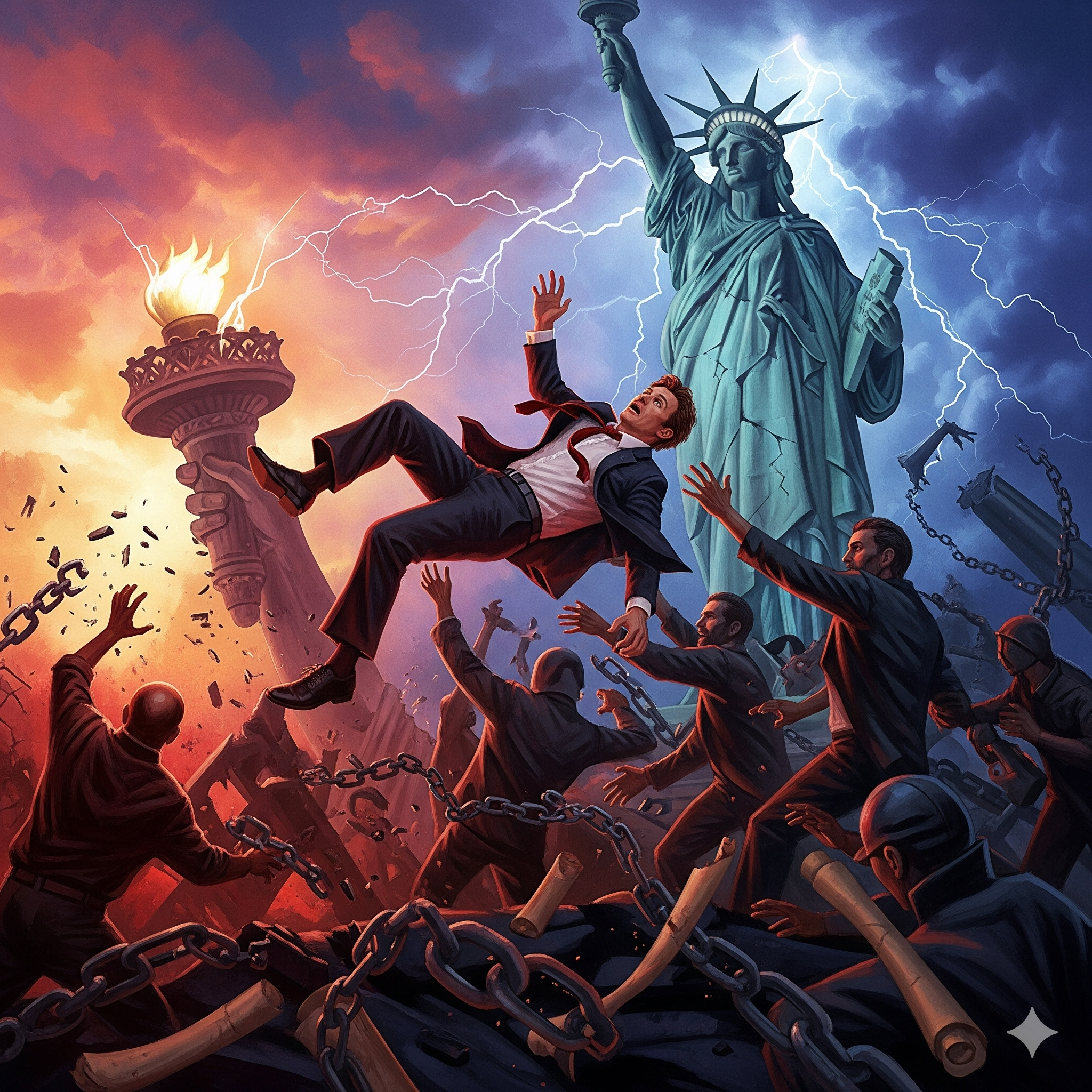
AI generated image via Gemini
This week, the nation was shaken by the brutal assassination of Charlie Kirk, a prominent conservative voice deeply connected with younger generations, who was shot in the neck by a sniper while speaking at Utah Valley University. The tragedy itself is horrifying, but what followed was even more disturbing: celebratory reactions from many individuals on the left, especially among younger people. Social media exploded with laughter and cheers over his political murder, mocking not only his legacy but also treating his death as justified. Why such vitriol? One reason perhaps is because they branded him with incendiary labels—“fascist,” “Nazi,” “divisive,” “hate-monger,” and “far-right radical.” In their eyes, Kirk didn’t just deserve death; his killing was something to rejoice in.
The Celebration of Violence
This alarming response reveals a deeper and more dangerous polarization within American society. According to a recent Wall Street Journal survey, while 93% of Baby Boomers say political violence is never acceptable, only 56% of Generation Z share that conviction. That decline reflects a troubling generational divide—one in which political conflict is increasingly seen not as a contest of ideas but as a battle for survival. When opponents are viewed as existential threats rather than fellow citizens, hatred becomes easier to justify, and violence begins to look like a solution.
Lessons from History
This weaponization of hateful labels to demonize and eradicate perceived enemies has a long and tragic history, particularly for Jewish people. For centuries, Jews were falsely accused of grotesque crimes—such as using Christian children’s blood in Passover rituals or poisoning wells during the Black Death—charges that fueled catastrophic pogroms, forced conversions, and expulsions. In the 20th century, Nazi propaganda labeled Jews as subhuman vermin, criminals, and demons, paving the way for genocide. Today, similar patterns emerge: since October 7, supporters of Hamas have vilified Zionists as “occupiers,” “baby killers,” and “genocidal aggressors,” fueling calls for their boycott, persecution, and violence—from university campuses to city streets.
The Cost of Dehumanizing Language
It is absolutely essential to recognize that words matter. The childhood saying “sticks and stones may break my bones, but words will never harm me” is tragically false. Hate-filled rhetoric lays the groundwork for violence; it creates the environment and justification for physical harm—and ultimately, for murder. In today’s America, the alt-left’s overwhelming influence in education—financed by interests such as Qatar—and the pervasive reach of social media amplify one-sided political propaganda that poisons young minds. This toxic climate of division extends from our schools to the halls of Congress, as starkly illustrated by Kirk’s assassination and the subsequent refusal by some Democratic Congressional members to observe a moment of silence after his passing.
A Culture of Division
Regrettably, many leaders in education, media, and politics not only tolerate this polarization but actively contribute to it, showing disdain for opposing viewpoints and shutting down opportunities for meaningful dialogue. Whether the issue is DEI, abortion, immigration, gun control, tariffs, foreign aid, crime, or unwavering support for our closest ally, Israel, compromise and constructive conversation have all but vanished. Political discourse has become a pendulum swinging uncontrollably to extremes on both the right and left. The progressive policies from the Obama and Biden administrations sparked the rise of Trump’s MAGA movement; now, that momentum has descended into multiple assassination attempts on Trump himself and culminated in the tragic killing of Charlie Kirk, a potential future Republican presidential candidate. Without urgent reform, this cycle will only intensify.
A Path Forward
The future of our democracy hinges on three critical actions:
- A thorough overhaul of our education system to foster balanced discussion—incorporating both left and right perspectives—and encourage a consensus around moderation and critical thinking among our youth;
- A fundamental shift in the media toward fair and balanced reporting, rather than serving as a tool for partisan propaganda that deepens divisions;
- A genuine willingness from politicians to bridge partisan divides, collaborate ethically for the people’s benefit, and unequivocally reject extremism and violence.
Failure to act decisively on these fronts risks plunging our nation into darkness, tearing apart the very fabric of our democracy. It is not merely a political imperative but a moral one: to restore respect, empathy, and reason to public discourse so that extremism and violence are no longer seen as an acceptable response to disagreement. The time to choose unity over division, dialogue over demonization, and peace over hatred is now—before further and irreparable damage is done to the nation we all share.
Related Topics