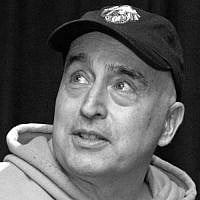
"I'm the spokesman for the OK Boomer generation"
The Road to Democratic Socialism Runs Through Conservative Inaction
Photo: Tony Senatore: all rights reserved
As we approach the midterms, it has become clear that democratic socialism is on the rise in the United States. In an article published by The Hill, Political commentator Bill O’Reilly said Monday that the rise of socialism in the US stems from a growing culture of entitlement, blaming social media for shaping younger generations’ perceptions of the country. While there might be some truth to that, the idea that a bunch of lazy, entitled, spoiled brats are just looking for free stuff is surely a juvenile and misguided assessment of a serious situation. Before Mr. O’Reilly condemns younger Americans as Marx-worshipping radicals intent on bringing communism to our shores, as a member of the Boomer generation, he should understand that today’s economic landscape bears little resemblance to the one that allowed him to attend Harvard and buy a mansion in the Hamptons.
While Americans have about 63% more purchasing power than they did in 1973, it is not enough to offset the dramatic rise in the cost of homeownership and a college education. Compared to 1975, the average home price is about 1,045% higher in 2026, and the cost of a four-year public college degree is about 177% higher. Most of my conservative friends have no sympathy whatsoever, and their views align with Mr. O’ Reilly. In this blog, I will save the housing crisis for later. Because I believe the road to democratic socialism runs through conservative inaction, I want to talk about what I feel are America’s two greatest problems: the inability of Americans to obtain a college education and, most pressing of all, the lack of access to healthcare for America’s citizens. I am a Republican, and try as I might, I can’t think of anything Republicans have done to remedy this situation other than make healthcare harder for most Americans to attain. Repealing and replacing Obamacare has been the mantra for decades, but the focus has been only on repeal, with no viable replacement plan.
The progressive democrats have suggested free healthcare and education for all, which is unrealistic. Moreover, they choose to be the arbiters of how much wealth one person should be allowed to accumulate, how much they are morally obligated to give away, and of the idea that the wealthy are somehow evil oligarchs who acquired their money unjustly. My plan does not resemble anything currently offered by our political establishment. What I propose is a college education and medical training in exchange for public service, and this is how I propose to get it done.
My healthcare proposal is straightforward. The United States Government would pay medical school tuition in exchange for future service. My idea is not without precedent. It would expand the National Health Service Corps(NHSC), which was created in 1972 to address physician shortages in underserved communities. The federal government would pay for a student’s education in fields such as medicine, dentistry, nursing, physician assistant programs, and mental health professions. In return, graduates would agree to work in rural America, its inner cities, and low-income communities. If, for some reason, they refuse to fulfill their obligation, they must repay the scholarship with significant financial penalties.
Additionally, the US Military has operated a similar program for decades through the United States Armed Forces, called the Health Professions Scholarship Program (HPSP). The military pays 100% of medical school tuition, so graduates incur little or no educational debt. In exchange, they become military physicians and typically serve one year of active duty service for each year of scholarship support. After fulfilling their obligations, many physicians either continue military careers or enter civilian private practice. Thousands of physicians have entered medicine through this pathway. The education is not free; it is earned through service. I can just see my right-wing friends crying “socialism” and sending me a Che Guevara T-shirt for my radical ideas. I would remind my detractors that my healthcare proposal does not eliminate private hospitals, prohibit private medical practice, or place the entire healthcare system under government ownership. Instead, it uses public funding to educate physicians in exchange for public service, for a term to be determined. It is not socialism but rather a public service scholarship or a human capital investment. Ultimately, entire hospitals could be built across the United States. Still, a more practical approach would be to start with clinics and urgent care facilities in underserved regions instead of building hospitals in every state.
My educational proposal is equally straightforward: I would convert every community college in the United States into a four-year institution. Moreover, I would transform community colleges into regional workforce centers that would partner with trade schools. Another option might be to allow community colleges to offer bachelor’s degrees only in fields with labor shortages, such as nursing or cybersecurity. Of course, obtaining four-year accreditation requires substantial investment in faculty, laboratories, libraries, and research capabilities. I believe the pros would outweigh the cons. The cost of obtaining a bachelor’s degree would be significantly reduced, as would reliance on government student loans, as working adults, veterans, and first-generation students would have greater access to education than ever before.
Ultimately, the government training doctors to serve crisis areas and provide medical care for all who need it, combined with the expansion of community colleges into four-year colleges, could evolve into a National Service Scholarship model. Government investment will expand the supply of essential services. The linchpin of my plan is that higher education is an investment in the public good, rather than an unconditional subsidy, emphasizing both opportunity and civic contribution.
My proposal is rooted in a simple principle: if the American people invest in an individual’s education, that individual should invest something meaningful back into the American people. We already accept this principle in the military and through existing federal scholarship programs. I simply believe we should expand it to meet the greatest domestic challenges of our time.
If conservatives continue to dismiss every government initiative as socialism while offering no serious alternative to soaring healthcare costs and an increasingly unattainable college education, they should not be surprised when younger Americans embrace the promises of democratic socialism. People rarely vote for ideology alone; they vote for solutions. When one side presents answers, however flawed, and the other simply says “no,” the outcome should not be surprising.
I remain a Republican because I believe in personal responsibility, earned opportunity, and the power of free enterprise. But I also believe that the government has a legitimate role in addressing problems that markets alone have failed to solve, and it can do so without condemning the wealthy or causing them to leave our great cities. Asking future doctors, nurses, dentists, teachers, and other professionals to earn their education through service is not an attack on capitalism, but rather an investment in America. Expanding affordable pathways to four-year degrees is not class warfare—it is nation-building conducted for the benefit of the United States, not in some foreign land or in a never-ending war. These ideas in unison would be America First in its finest form.
The choice before us is not between socialism and unfettered capitalism. It is between continuing to manage decline and embracing practical reforms that strengthen both individual opportunity and the common good. If we want to preserve the American Dream, we must make it attainable again. That requires more than slogans about repealing programs or promises of free benefits. It requires a new social contract, one built on responsibility, service, opportunity, and the conviction that investing in our people is ultimately an investment in the future of the United States.
Related Topics