
The Rules-Based Order’s Jewish Exception
International norms were supposed to be our moral and legal compass in a rather anarchic international system—a set of hard-won principles forged from the ashes of global conflicts and designed to constrain both terrorists and the states that fight them. Since October 7th, however, we are witnessing something unprecedented: the deliberate erosion of these norms by their own creators. The same Western states that spent decades establishing rules of engagement, defining terrorism, and codifying the right of self-defense are now rewriting the playbook—with Israel as their target.
Spain’s decision to boycott Eurovision if Israel participates stands in stark contrast to its support for banning Russia after it invades Ukraine. In Spain’s moral calculus, Israel’s response to the October 7th massacre—the largest slaughter of Jews since the Holocaust—is apparently more objectionable than Putin’s unprovoked war of conquest. France, a founding member of NATO and longtime advocate for collective defense, now calls for an arms embargo against a democratic ally under siege, effectively arguing that Israel should defend itself with one hand tied behind its back. Japan and Belgium face mounting pressure to boycott Israeli food exports, with activists demanding these trade-dependent nations abandon economic relationships that were never questioned during decades of importing from far more controversial regimes. Perhaps most tellingly, Australia and Canada—countries that spent years refusing to recognize unilateral declarations of independence from territories such as Catalonia—now rush to recognize a Palestinian state that controls no territory, governs no unified population, and whose leadership openly celebrates terrorism.
Israel has achieved historically unprecedented ratios of civilian to combatant casualties in one of the world’s most densely populated and militarized territories—a feat that required extraordinary tactical restraint and precision targeting. Yet countries like Spain, which participated in Operation Inherent Resolve against ISIS—a campaign that killed thousands of civilians in densely populated areas like Mosul and Raqqa without a single serious policymaker invoking genocide—now readily level such accusations against the Jewish state.
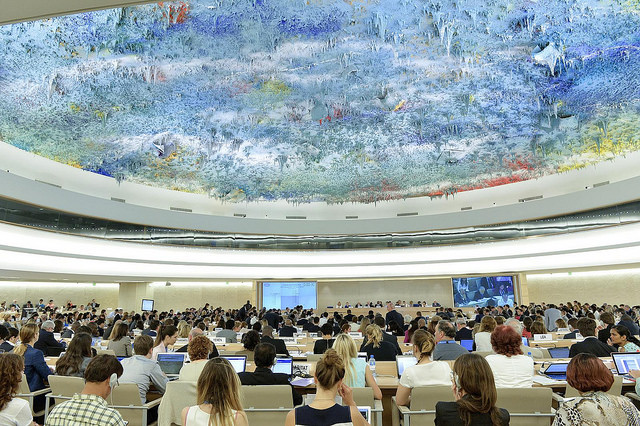
Meanwhile, international institutions have become willing megaphones for Hamas propaganda, systematically omitting mention of the 240 hostages, the deliberate use of human shields, or even the October 7th massacre that triggered this war. Perhaps most telling is the condemnation of Israeli strikes in Qatar targeting Hamas leaders—the very architects of October 7th who continue to orchestrate the conflict from luxury hotels. This outrage comes from the same Western nations that spent decades establishing and applying the principle that states “unwilling or unable” to address terrorism within their borders forfeit their right to provide a haven.
The Obama administration invoked this doctrine to justify drone strikes across Pakistan, Yemen, and Somalia; Trump applied it in Syria and Iraq. Yet when Israel targets the masterminds of the largest terrorist attack in its history, operating from a state that knowingly harbors them, suddenly this foundational counterterrorism principle no longer applies.
Each of these actions represents more than policy disagreement; they constitute a fundamental departure from principles these nations have historically championed. When democratic allies abandon their own precedents to isolate the world’s only Jewish state, they reveal that the “rules-based order” was never really about rules at all—it was about who gets to make them, and who becomes their target.
The implications extend far beyond Israel. If established norms can be selectively abandoned based on political pressure rather than legal principle, then no nation can rely on consistent international standards. Today’s exception for Hamas becomes tomorrow’s precedent for other terrorist organizations.
The message to authoritarian regimes is unmistakable: democratic values are negotiable, international law is malleable, and Western resolve crumbles under sustained pressure campaigns. When the architects of the post-war order demonstrate that their own rules don’t apply universally, they hand a roadmap to every dictator and terrorist group seeking to exploit Western inconsistency. This isn’t just about double standards—it’s about the systematic erosion of the very framework that has prevented global conflicts for nearly eight decades. If allies cannot maintain principled consistency in the face of the most clear-cut case of terrorist aggression since 9/11, what hope exists for deterring the next authoritarian power that tests Western resolve?
The collapse of credible international norms doesn’t create a vacuum—it creates an invitation for chaos.