
Rabbi, cantor, composer, lyricist.
The Same Hate That Drove Jews from the Arab World
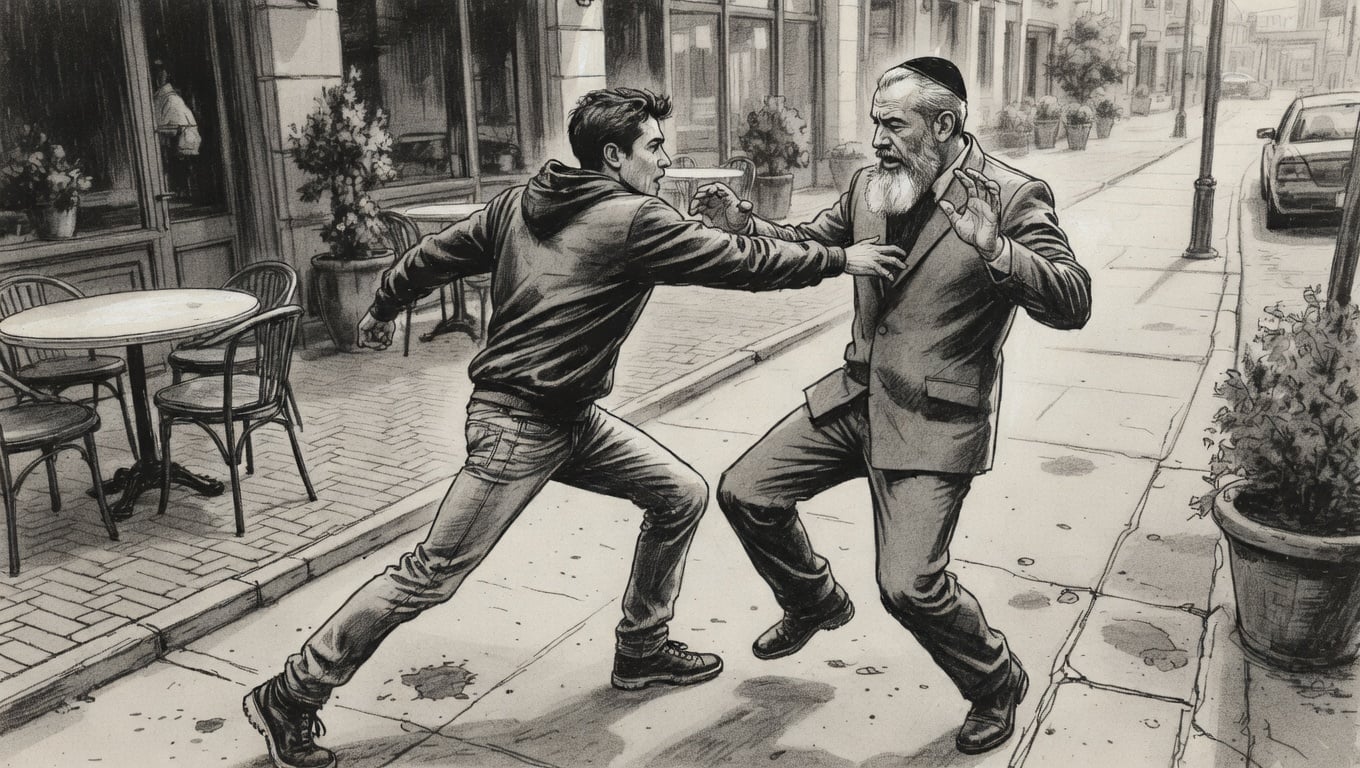
Generated by Grok
The hate we are seeing today directed at Jews in Western societies carries a familiar energy — one that Jewish history has seen before.
It is the same energy that, in the twentieth century, helped drive nearly a million Jews out of the Arab world.
In recent months, disturbing scenes have emerged across the West. In San Jose, a Jewish man speaking Hebrew at a restaurant patio was assaulted by a group of young men who targeted him specifically because he was Jewish. In Toronto, synagogues have been shot at and Jewish establishments vandalized with swastikas.

Each of these incidents can be dismissed as isolated. But taken together they create something more troubling.
They create an atmosphere. It’s an atmosphere of tolerance towards anti-Jewish hate. It’s an atmosphere that justifies discrimination against Jews. It’s an atmosphere that is open to targeting Jewish community life at all levels.
Jewish communities rarely disappear overnight. They disappear when the atmosphere around them begins to change.
First come the small signals: Jews hesitating to display their identity in public. Synagogues suddenly requiring security. People speaking Hebrew becoming targets of harassment or violence. Each incident may appear isolated. But together they signal something deeper — an environment in which Jewish identity itself begins to feel unsafe.
Jewish history offers a sobering example of how such an atmosphere can develop.
Before 1948, nearly one million Jews lived throughout the Arab world — in Iraq, Egypt, Yemen, Libya, Morocco, Syria, and beyond. Many of these communities were ancient. Some were in these lands even before the Arab conquest. The Jews of Iraq traced their roots back more than 2,600 years to the Babylonian exile.
Within a single generation, most of these communities disappeared.
One revealing moment occurred during the debates over the future of Palestine at the United Nations in 1947. The Syrian delegate Faris el-Khouri reportedly warned:
The implication was clear: Jews living in Arab countries — Jews whose families had lived there for centuries — might face consequences for a conflict taking place elsewhere.
And that is precisely what happened.
It is important to understand that hostility toward Jews in the region did not begin in 1948. Jewish communities in Muslim lands sometimes experienced periods of cultural flourishing and relative stability. Yet their position was often precarious. Jews generally lived as dhimmis — a tolerated but subordinate minority whose security depended on political conditions.
Shifts in power or social tension could quickly lead to persecution or violence.
In the 1066 massacre in Granada, thousands of Jews were killed after a Jewish vizier rose to prominence. In the 1465 pogrom in Fez, thousands more were slaughtered by a mob. These events were reminders that even during periods of coexistence, Jewish security was never guaranteed.
When the Arab-Israeli conflict erupted in the twentieth century, hostility toward the existence of the Jewish state often spilled over onto local Jewish communities.
Across the region, Jews immediately got the message: hate for Israel meant hate for them, the local Jewish population.
In Egypt, antizionist demonstrations in 1945 turned into riots targeting Jewish neighborhoods in Cairo and Alexandria. In Iraq in 1948, the prominent Jewish businessman Shafiq Ades was publicly executed after a show trial accusing him of assisting Israel — charges widely believed to be fabricated.
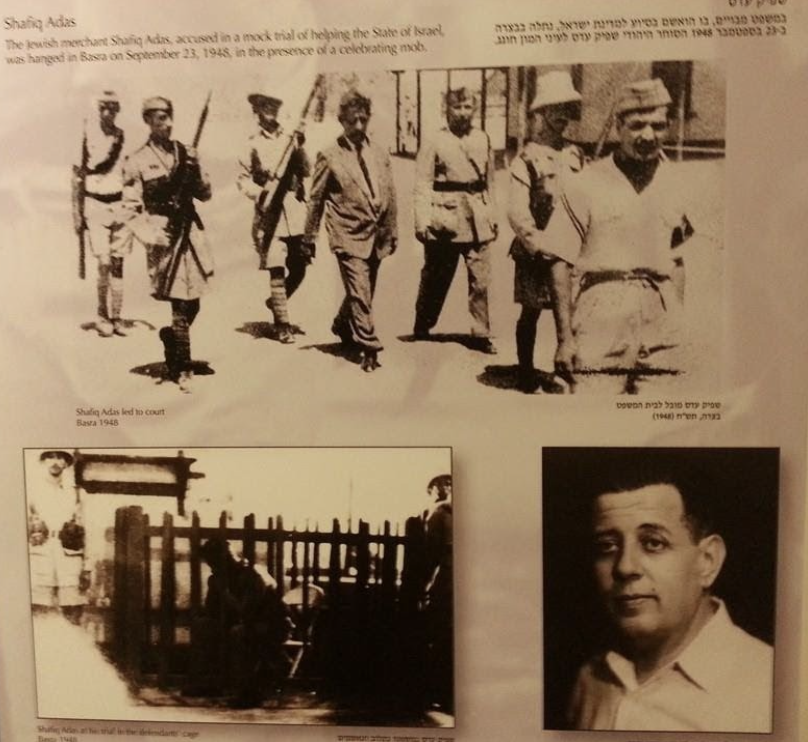
For many Jews in the Arab world, these events signaled that the ground beneath them had shifted.
Over the following decades, roughly 850,000 Jews left the region, often abandoning homes, businesses, and communities that had existed for centuries.
Today, in many of those countries, the Jewish population is effectively zero.
There’s an infamous video of Hillel Neuer, Executive Director of UN Watch, who, at the U.N., calls out to various Arab countries, and after citing how many Jews used to live in their countries, asks, “Where are your Jews?” Indeed, the atmosphere in these countries was so hostile to Jews that, despite Jews having lived in these lands for so long, the number is now almost zero.
History rarely repeats itself exactly. But it often leaves recognizable patterns.
Jewish communities rarely disappear suddenly. First, the atmosphere changes.
The question for Jews today is whether we will recognize those warning signs—and whether, through vigilance, solidarity, and advocacy, we can help shift the society around us before it’s too late.
Related Topics
Related Posts