
Middle East Analyst
The Schumer-Van Hollen Race for Senate Majority Leader
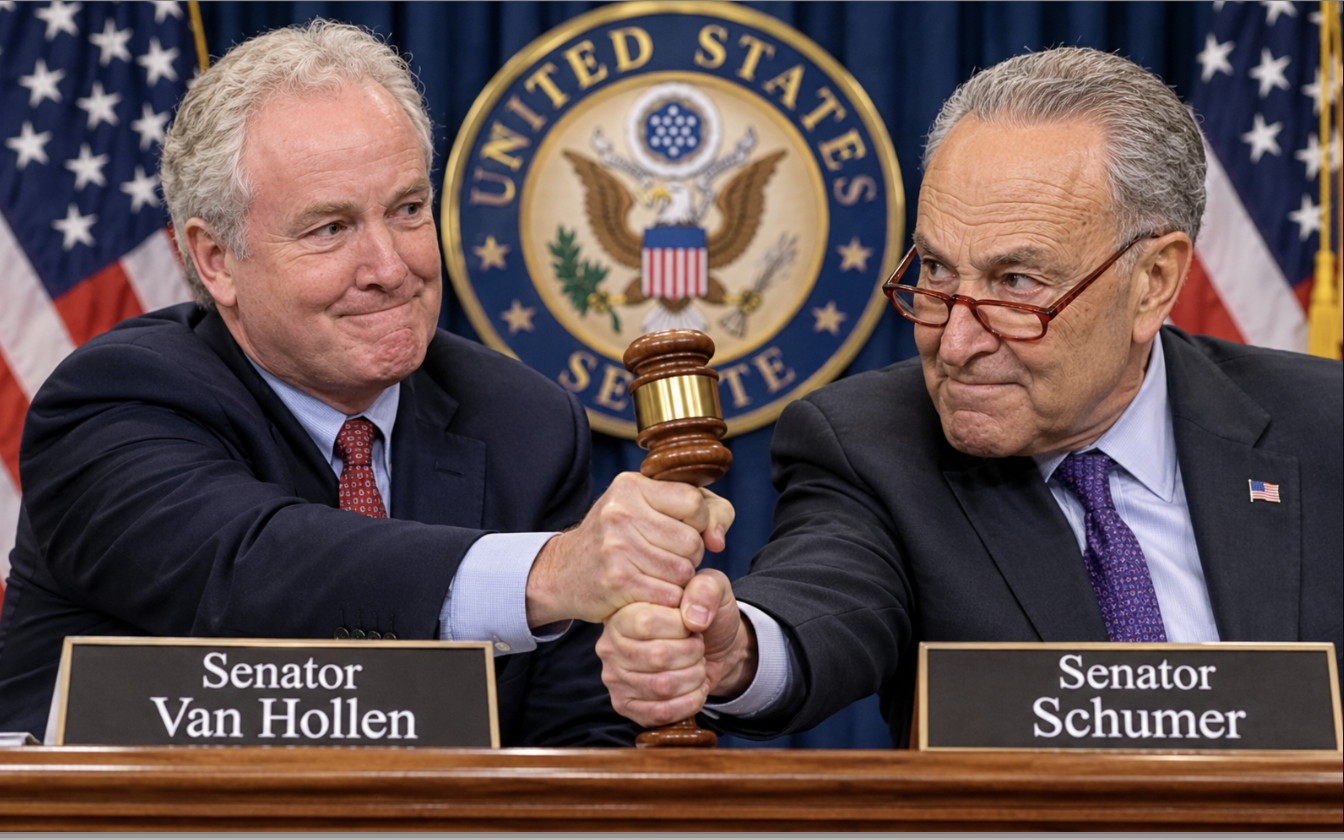
by author (AI)
A Contest Over What Democrats Think They Won
Chris Van Hollen has entered the race for Senate Majority Leader against Chuck Schumer. He announced after the party swept the midterms, and the secret-ballot vote comes in early December, the first contested Democratic leadership election in decades. It is scheduled for December 1. Schumer is the favorite. The result will probably tell us less than the argument now under way, because both camps cite the same election as proof of their position. ironmountaindailynewswashingtonsun
The case for Schumer
The incumbent’s case is a record. Schumer points to “55 seats and counting,” and he recruited many of the winning candidates and raised money for them. Colleagues credit him with flipping as many as nine seats, and Sen. Chris Coons calls Van Hollen’s chances remote. Angus King put the logic in baseball terms: you don’t fire the manager after the World Series. Van Hollen to challenge Schumer for Senate Democratic leader +2
For senators focused on governing, that argument carries real weight. A majority leader manages personalities, committee assignments, and floor time. Replacing the person who just delivered the majority, on the eve of using it, would need a compelling reason.
The case for Van Hollen
Van Hollen’s case rests on interpretation. He says voters called for change and that the new majority needs new leadership. What he would change is less clear. AP reports he has not yet laid out his own agenda. The documented differences concern process, money, and foreign policy. ironmountaindailynewsironmountaindailynews
He has charged that Schumer and the Democratic Senatorial Campaign Committee sided with the crypto industry and AIPAC against two progressives who went on to win. That is his claim. The documented acts are narrower. He led a letter from a dozen Democratic senators asking congressional leaders to remove US-Israel military and intelligence cooperation provisions from the 2027 defense authorization bill. He also favors more aggressive tactics to end the Iran war and has criticized Schumer’s opposition to the Obama nuclear deal. Van Hollen puts Schumer on notice +2
Affordability does not separate the candidates. Schumer’s first-hundred-days plan already covers health care, tariffs, and efforts to stop the Iran war. If the race is a referendum on economic message, the challenger has yet to show a different one. timesofisrael
What the voters said
The central dispute is whether the vote was an endorsement of leadership or a demand for change. The evidence supports neither reading cleanly, and the most useful point is that the two main explanations of the vote overlap.
About four in ten voters in the AP Voter Poll said they cast their congressional ballot to express opposition to Trump. That can look like a force separate from economic frustration. It most plausibly was not. For many of those voters, opposition to Trump meant watching him fail on prices, housing, and health costs. Others held a mix of grievances, but affordability appears to have been on nearly everyone’s list. Most voters named the economy or the state of democracy as the top issue, with cost of living and government corruption weighing heavily. CBS exit polling found that persistent negative views of the economy turned against the party in power. how key demographic groups voted in the 2026 midterms according to the ap voter poll +2
That has a consequence for both camps. A vote driven by dissatisfaction with whoever holds power is a loan, not a mandate. It does not endorse Schumer’s stewardship, and it does not endorse any specific change either. The AP poll found that a large majority of independents, and about four in ten Republicans, said Congress is not doing enough. The new majority is on probation with the same voters who just empowered it. ksat
Independents, and the voters who didn’t pick a leader
Independents appear to have decided the outcome. Republicans won only 38 percent of them, their worst showing since at least 1998. One summary of the AP Voter Poll puts independents at roughly a third of all ballots. That figure comes from a secondary source, so treat it as provisional. Independents are also the voters least attached to any party’s internal hierarchy. They did not vote for a Senate leader. They voted against an administration they judged to be failing them, and they will judge the next majority by whether costs come down. Whoever leads Senate Democrats inherits that test. kjzz
The generational question
Treating this as a generational contest misdescribes the candidates. Van Hollen is 67 and Schumer is 75. The generational pressure sits with the party’s supporters, not its leaders. Many in the Democratic base are agitating for generational change, and AP notes that Van Hollen has positioned himself as a new face. ironmountaindailynewsironmountaindailynews
The evidence that age is a proxy rather than the point is in his backers. His public supporters are Bernie Sanders, Jeff Merkley, and Senators-elect Abdul El-Sayed and Peggy Flanagan. Sanders is older than Schumer. Younger voters would very likely prefer Sanders to Schumer anyway, and the reason is posture. What much of the base appears to want is a leader who treats the party’s problems as urgent, stays out of contested primaries, and keeps distance from the donor and lobbying networks Van Hollen is attacking. Age is the shorthand for that preference, and not a good one. washingtonsun
The youth vote also supplied less of the volume than the debate suggests. Only about one in ten 2026 voters were under 30. The shift was real, though its size varies by survey. One poll shows a 35-point Democratic margin among young voters, against 14 points in the 2024 House exit poll. NPR’s analysis shows 48. Young voters moved toward Democrats in each Senate race where the party picked up a seat. They matter for the coalition’s direction. They did not supply its numbers. how key demographic groups voted in the 2026 midterms according to the ap voter poll +3
The family conversation
Senators have begun describing the leadership contest as a family matter. Cory Booker declined to say how he will vote, calling it a family conversation that belongs inside the caucus. Lisa Blunt Rochester used nearly the same phrase before the November 17 caucus lunch. The press has adopted the metaphor, with The Hill calling it a Democratic family feud and The Bulwark a reluctant family-therapy session.
The framing is defensible. A secret-ballot vote among colleagues who must work together afterward is ordinary, and caucus privacy is part of how such contests stay manageable. It is also a rational position for Booker, who is considering a 2028 run and gains nothing by alienating either camp.
The cost appears outside the caucus. The voters who delivered this majority did so out of frustration with institutions that seem to serve themselves, and a leadership fight conducted behind a family label can look like the same habit. Van Hollen says senators are staying quiet because they fear retaliation. That is his explanation and it is unconfirmed, but it points at the same problem. The caucus has chosen discretion over transparency, and the choice has a price with the electorate. washingtonsun
Where the fight really is
The foreign policy dispute is the part of this race least likely to fade. Schumer is a long-standing defender of the US-Israel relationship, and he is exposed from both directions. Some Jewish leaders have criticized him for his criticism of Israel and AIPAC, and he has been described as increasingly out of step with his caucus and voters on Israel-related matters. Sanders has cited Israel policy as one reason he will not support Schumer. On the other side, Sen. John Fetterman suggested a Van Hollen leadership would be troubling because of Van Hollen’s criticism of the Israeli government. article 914784 +2
The Iran war sharpens the divide. A Democratic majority controls the Senate calendar and can force votes on war powers, military aid, and Israel policy. The question for senators is not only who manages the caucus best. It is who decides when those votes come and how Democrats defend them. A challenger who wants a harder line on both Iran and Israel is asking the caucus to accept that exposure. An incumbent who has resisted it is asking the caucus to postpone it.
The incentives and the count
Several incentives are visible. Van Hollen has said he is considering a presidential run. A credible but unsuccessful challenge raises his national profile and his standing with the activist base, so a loss costs him less than it would cost a senator with no larger ambition. ironmountaindailynews
The public count is thin. About fifteen senators back Schumer and four publicly back Van Hollen, well short of the roughly thirty votes needed. The remainder are undecided or concealed, and the evidence does not yet say which. The secret ballot protects senators from retaliation, and it also lets them make public pledges they need not keep. Schumer’s allies reportedly wanted an earlier vote, and senators including Jon Ossoff pushed back. An incumbent who tries to move the calendar is usually not certain of his margin. washingtonsunwashingtonsun
The history matters too. The rift opened in spring 2025, when Schumer sided with Republicans on a spending vote, and he has since recovered much of his standing by leading the caucus through the shutdown and the election. Sen. Tim Kaine’s position captures the caucus mood. He credited Schumer with working harder than anyone not on the ballot for the victory, while acknowledging that voters are demanding change. Both statements are probably true, and the senators still have to vote. ironmountaindailynewswashingtonsun
What the vote will decide
If Schumer wins, the margin will matter. A narrow win leaves a leader who owes his position to colleagues he cannot fully count on. A comfortable one leaves a challenger who still speaks for a large part of the base. If Van Hollen wins, it will mean the caucus judged the electorate’s message to be about posture and priorities rather than results.
Either way, the larger risk runs through both camps. The voters who delivered this majority were frustrated with the party in power, and they overlap heavily with the voters most worried about prices. If Democrats read the result as a reward, they risk repeating the complacency that cost their opponents the majority. If they read it as a demand for change without specifying what to change, they will have a new leader and the same problem. The leadership vote will be over in December. The test of what Democrats concluded from November will last through the next Congress.
Related Topics
Related Posts