
The Secrets of the Four Chambers
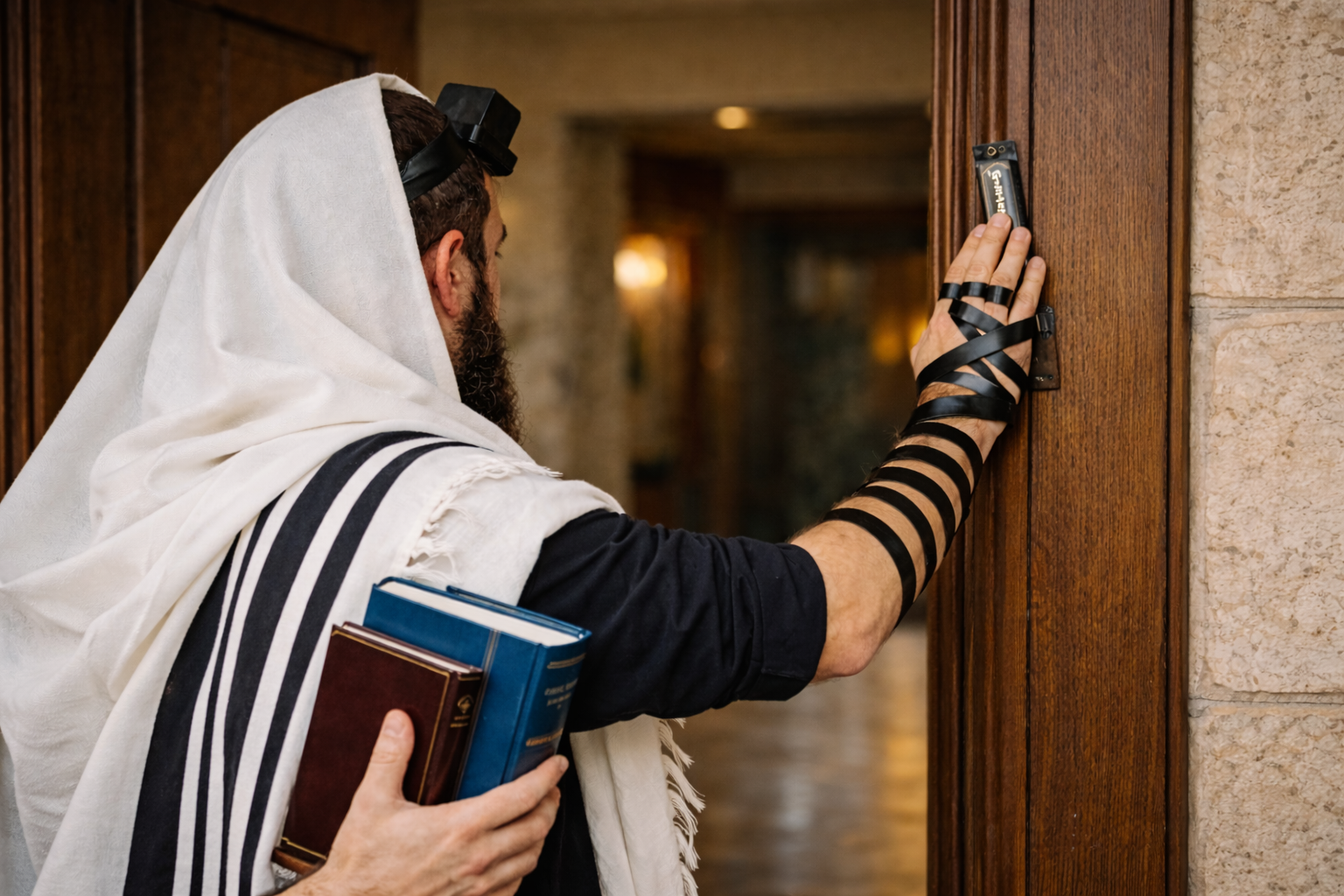
Ever paused for a moment to wonder what tefillin are really about?
Not just what they look like, or when we put them on—but what lies inside them. What words are hidden in those small black boxes. Why they are built the way they are at all. And why the Torah insists that they be bound not to a place, but to the human body itself.
The Torah first introduces this mitzvah with quiet precision:
And it shall be for you as a sign upon your arm and as a remembrance between your eyes, so that the teaching of G-d shall be in your mouth; for with a mighty hand G-d brought you out of Egypt.
וְהָיָה לְךָ לְאוֹת עַל־יָדְךָ וּלְזִכָּרוֹן בֵּין עֵינֶיךָ לְמַעַן תִּהְיֶה תּוֹרַת ה’ בְּפִיךָ כִּי בְּיָד חֲזָקָה הוֹצִאֲךָ ה’ מִמִּצְרָיִם
(Shemot 13:9)
Parashat Bo introduces tefillin almost unexpectedly. In the midst of plagues, power, and liberation, the Torah shifts its focus. From miracles that shatter Egypt to practices meant to shape memory. From blood placed on doorposts for a single night to words bound to the arm and head for a lifetime.
Tefillin are not a symbol of redemption. They are its continuation.
Inside the tefillin shel rosh, the head tefillin, are four distinct chambers, each holding its own parchment. This is not a technical flourish or an aesthetic choice. It is precise and intentional. The parchments contain four passages from the Torah: two from Shemot, recalling the physical experience of redemption from Egypt, and two from Devarim, articulating faith, love, and responsibility. Together they convey a single truth, yet they insist on being heard as four distinct voices.
Redemption remembered.
Redemption taught.
G-d’s unity declared.
Covenant accepted.
Before we ask what tefillin demand of us, we are asked to notice how carefully they are constructed. Meaning in Judaism is rarely abstract. It is built, layered, and worn.
The mind, Judaism teaches, is allowed complexity. Thought distinguishes, weighs, and holds multiple truths at once. That is why the head tefillin separate these ideas rather than blending them together. Consciousness is refined not by simplification, but by clarity.
By contrast, the tefillin shel yad, the arm tefillin, contains all four passages written on a single parchment. Action, unlike thought, must be unified. The hand does not debate; it acts. Judaism allows the mind to ask four questions, but it demands that the body give one answer. Faith may be layered, but commitment must be whole. This is why the arm tefillin is bound close to the heart, turned inward, and covered from view. The most powerful commitments do not need to announce themselves.
Even the exterior of the head tefillin continues this quiet education. Embossed into the leather are two letters Shin, one on each side. Yet they are not the same. One Shin has three branches; the other has four. The sages teach that this detail, too, is a tradition from Sinai. Three suggests structure and order; four represents expansion into the world, direction, and presence. Together, they proclaim that divine unity does not erase complexity. It governs it.
Hidden from view, inside the head tefillin, another detail completes the picture. Each parchment is tied with real animal hair, traditionally from a goat, and the ends of all four bindings are gathered together and emerge through a single opening. Hair represents life force restrained, physical vitality disciplined and redirected. Some explain that this detail quietly responds to an earlier failure in Jewish history. The Golden Calf was an attempt to spiritualize the physical in the wrong direction. Tefillin reverse that mistake, not by rejecting the physical world, but by reclaiming it. Four ideas begin separately, yet their bindings emerge as one. Many truths, one life.
At this point, the tefillin reveal an even deeper dimension. They contain words of Torah and also form a Name—not spoken aloud, yet embodied in silence and worn upon the body. On the head tefillin rests the letter Shin. At the back of the head, the knot of the strap takes the shape of a Dalet. And on the arm tefillin, the knot forms a Yud. Together, these letters spell the Divine Name Shakai.
The Dalet rests deliberately at the base of the skull, where head meets body. It sits at the threshold between thought and action, intellect and lived behavior. It is unseen by the wearer, reminding us that true discipline anchors us even where we are not consciously looking. Faith does not reside only in what we know, but in how that knowledge descends into the way we live.
Chazal explain Shakai as “the One who said to His world: enough.” It is the Name of boundaries, of divine power restrained so that life and holiness can flourish. The letters of Shakai are also understood as an abbreviation:
The Guardian of Israel’s Doorways — שומר דלתות ישראל
(Midrash Tanchuma, Ki Tetze; Zohar III, 266b)
This is why the Name appears on the back of the mezuzah parchment, facing the doorpost. The mezuzah watches over the entrance to the home, while tefillin safeguard the inner thresholds of thought, intention, and action. One protects the physical space we inhabit; the other guards the gateways of the self.
Jewish tradition often describes mitzvot in the language of dignity rather than burden. The Midrash speaks of the tallit/tzitzit as a royal cloak. The Zohar describes the head tefillin as a crown placed upon the mind. The arm tefillin becomes a sign of allegiance, a shield of purpose, a badge of honor worn in service of something higher. To put on tefillin is not to submit in weakness, but to stand in disciplined freedom.
In Egypt, blood marked the doorposts for one night. In Jewish homes, the mezuzah carries that memory forward. And each weekday morning—except for Shabbat and the sacred days of the festivals—tefillin carry it further still, binding redemption onto the body itself. In the quiet moments before the day accelerates, leather straps turn theology into posture, memory into movement. Parashat Bo teaches that liberation does not end when chains fall away. It is completed only when freedom is engraved into thought, channelled into action, and carried forward as a lived covenant.
May we learn to carry the secret of the four chambers out of the black boxes and into lives shaped by meaning, dignity, and purpose.
Open for me the gates of righteousness; I will enter them and give thanks to G-d
פתחו לי שערי צדק אבוא בהם ואודה לה’
(Tehillim 118:19)
שבת שלום
שמואל