


The Selective Politics of ‘Context’
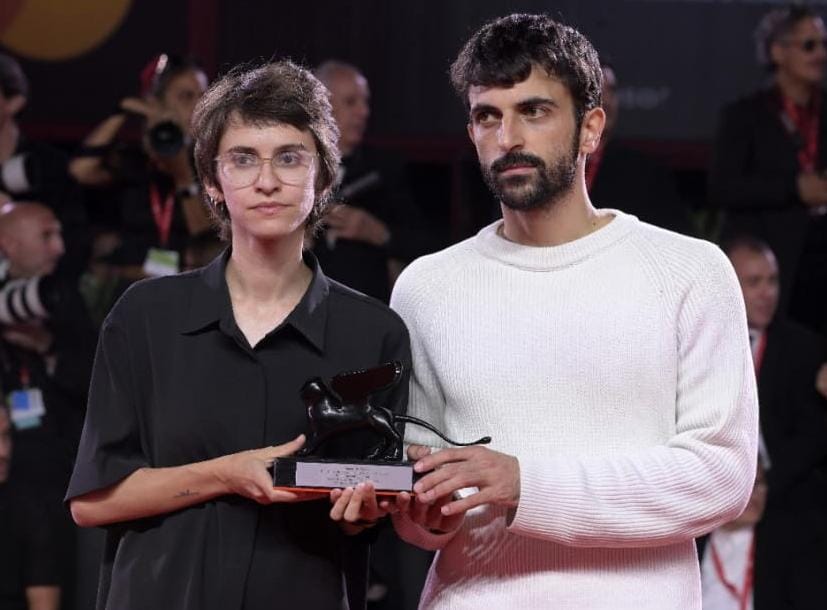
The heated debate surrounding the film “NAZA” included, among other things, criticism that the film does not present the context in which the events it describes took place – primarily the barbaric massacre carried out by Hamas on October 7, which preceded the Israeli response in Gaza.
This criticism does not come only from those who seek to defend government policy or justify the conduct of the war. It is also heard from liberal individuals, very critical of Israel’s conduct in Gaza, who do not believe that the filmmakers, Yuval Abraham and Rachel Shor, are acting out of hatred for Israel or a desire to harm it. A prominent example of such dissent is the journalist (the excellent) Raviv Drucker, who criticized the lack of context.
This is a legitimate criticism, but it raises a broader question: can we even demand that a film, or any work of art, present “the whole picture”? And if so – where does the context begin? On October 7th? In the Six-Day War? Maybe in the War of Independence? Maybe earlier? Every historical event is a link in a chain of events that preceded it. The moment we demand that a creator present “the entire context,” we are arguing against their choice of what counts as relevant history for the story they chose to tell.
Such a request is, of course, not a neutral demand. A film is primarily a tool of expression for the creator. It is neither an investigative committee nor a history book. The creator chooses what to focus on, what to show, and what to leave out of the frame.
To my understanding, the most important dimension is whether the film misleads viewers about the subject it seeks to present. In other words, does it ignore relevant facts that could change the story it aims to tell? This choice can be controversial and can draw criticism both on its merits and with “what about …” arguments. Still, it does not necessarily mean that the work is misleading or that the creator is intentionally ignoring an inconvenient reality.
In the case of “NAZA,” the creators focused on aspects they deemed important to present, primarily the operation of intelligence and fire technology used by the IDF during the war and the results of using this integrated technology, which mainly involved extensive harm to the civilian population—issues they felt were not sufficiently represented in large parts of the Israeli media.
Is this a trivial or important issue? Are the testimonies they rely on credible, or are there testimonies that refute them? Is their claim that there is a connection between target identification technology, the extent of permits granted for harming non-combatants, and the number of civilian casualties in Gaza a substantiated claim, or are these exceptions? These are the relevant questions, and the discussion should address them on both the factual and normative sides.
It’s also important to remember who the creators of the film are. I watched Yuval Abraham’s first film, “No Other Land,” and I can testify, based on my personal acquaintance with what was described there about the events in the southern Hebron Hills, that it was true to reality.
Anyone who examines Yuval’s statements since the massacre will discover a deep and clear shock at Hamas’s actions. Therefore, it is difficult to seriously argue that the film intends to justify the massacre or erase it from memory. One could certainly argue that the film should have included an explicit reference to October 7, and its omission is a substantive critique of an artistic choice. But from here to claiming that the lack of emphasis on this context makes the film illegitimate – the distance is great.
In other words, the choice to present in the film a significant aspect of the IDF’s combat methods and their implications for widespread harm to civilians is a legitimate, relevant, and important choice, primarily for the public in Israel, and the discussion about it should be conducted entirely on a factual and value-based level.
In general, it is particularly revealing to examine how consistent we are in demanding “context.” Over the years, I have watched quite a few articles, films, and programs about October 7th and the Israeli society that the war shook. I don’t remember seeing a detailed description of the context within which the reality in Gaza developed.
I don’t remember seeing in them a description of a society where, for years, millions of people have lived in poverty and overcrowding in a small area. A huge part of the population is refugees and descendants of refugees from the War of Independence – an event that, in the Palestinian narrative, is called the Nakba.
I don’t remember seeing discussions about the policies of Israeli governments over the years toward Hamas, especially the notion that a split between Hamas and the Palestinian Authority could serve Israeli interests. I haven’t heard of any real public discussion regarding the “Hamas is an asset” policy, which aims solely to prevent progress toward a political solution while strengthening and financing Hamas with huge sums.
Where was the discussion on the strategic outcome of the 2005 unilateral disengagement from Gaza, instead of coordinating with the Palestinian Authority, Israel’s moderate partner in prior agreements? As a direct result of unilateralism, Hamas managed to present the disengagement as proof that Israel withdrew under pressure and not as a result of negotiations. This narrative helped him argue that the path to Palestinian independence does not go through diplomacy but through violent resistance.
Such an argument does not mean that this history justifies the massacre. Not at all. Because an explanation is not a justification, understanding the context does not mean exemption from responsibility. But if we believe understanding history is necessary to grasp how we arrived at this point, then this principle should apply in all relevant directions of the discussion.
Israel’s reaction to UN Secretary-General António Guterres illustrated this point well. After repeatedly condemning the Hamas attack and the massacre of Israelis, he said that the October 7 attack “did not happen in a vacuum. ” A storm broke out in Israel. Many people perceived the words as an attempt to justify the massacre. But saying that the event “did not happen in a vacuum” does not justify it. We can condemn a crime absolutely and, at the same time, try to understand the historical and political conditions that made it possible.
In essence, the claim of the absence of “context” is made only when the desired context serves our argument. When we are required to see the context in all its aspects, silence is the automatic response.
The same paradox arose with the three American university presidents who testified before Congress. They were asked whether a call for the extermination of Jews or any other group violates university rules. One answer, phrased in a way that drew immense criticism, was that it might depend on the “context” and whether it involves speech or behavior that violates the university code.
The public criticism was understandable and justified because moral lines should not be blurred by endless layers of interpretation. But precisely for this reason, we need to distinguish between two different uses of the word “context.” One context explains, and another justifies. Because it is possible to understand why many Palestinians see 1948 as Nakba – without accepting the claim that it justifies the massacre of October 7—and it is possible to understand the conditions in which Hamas grew – without justifying its ideology or its crimes.
And on the other hand, it is also possible to understand why most Israelis experienced October 7 as an unprecedented national trauma – without concluding that every action taken in Gaza is legitimate or even legal.
And yes, it is possible to describe the suffering of citizens in Gaza – without erasing the suffering of Israeli citizens. This is because understanding the context is not a zero-sum game. In fact, if we want to have a serious debate about the war, the film, and Israeli society, we need to be able to hold several truths simultaneously, among them – that Hamas committed a horrific crime on October 7; that Israel is entitled to defend its citizens; that not all Palestinian civilians are Hamas; that the suffering and destruction in Gaza deserve documentation; that Israel’s methods of warfare in Gaza are not immune to criticism; and that the reality that led to October 7 did not begin that morning and does not end there.
Because a film, book, or any other work of art does not have to tell the entire story from “In the beginning, God created” to the present day. Yes, the artists have the right to focus on the aspect they choose to present. But a viewer is entitled to ask what story the film is telling and what it leaves out of the frame. Similarly, anyone who reviews a film in the name of “context” should be prepared to ask themselves the same question about the stories they themselves tell. And mainly, that the “context” argument will not serve as a convenient excuse to evade the substantive discussion of the argument the film raises.