


The Semites who sheltered Jews during the Detroit terror attack
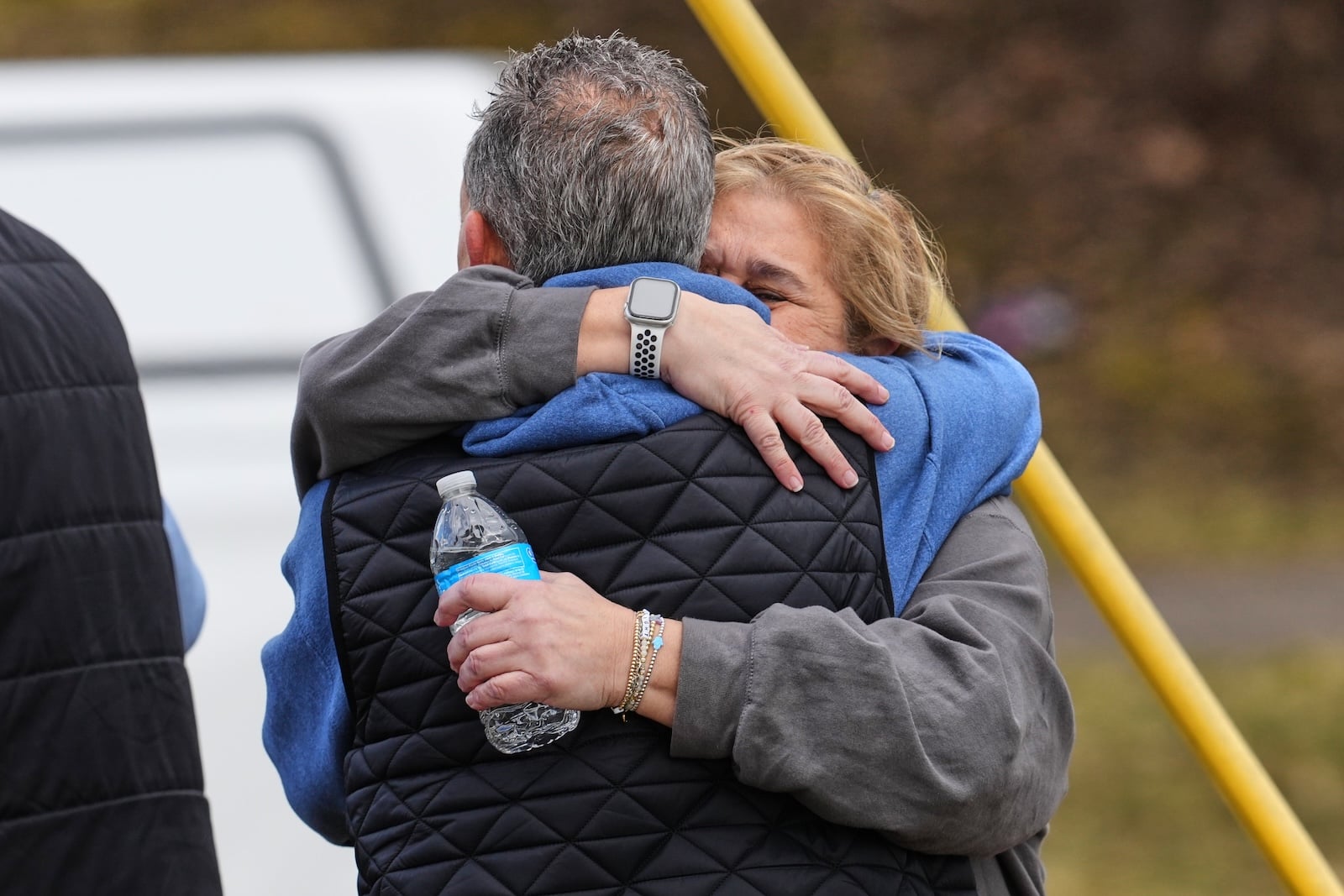
In the aftermath of the horrific terror attack against Temple Israel, when Jews in Detroit and across America were dazed, vulnerable and feeling alone, the 135,000-strong Chaldean community in Michigan embraced us. No strings attached. No hollow words. No “yes, we condemn the actions of the terrorist, but you can’t really blame him.”
In the midst of the unfolding disaster, well-trained security guards, teachers and first responders quickly scooped up more than 100 pre-school children and hustled them into the awaiting arms at the Chaldean community-owned Shenandoah Country Club. The following evening, about 1,000 Temple Israel members and guests crowded into a makeshift sanctuary – a ballroom often filled to capacity with celebrants singing, dancing and flinging cash at newlyweds – to conduct a Shabbat service described as “somber, joyful and defiant.”
“We treat our neighbors as we treat ourselves,” the club’s general manager, Hassan Yazbek, told The New York Times. “These are our brothers and sisters.”
Who are the Chaldeans?
Until departing my position at the Baltimore Sun in 1986 to publish the Detroit Jewish News, I had never met one or knew why so many were living in the Detroit metropolitan area. Suddenly, they were my West Bloomfield, Michigan neighbors, the corner grocers, liquor store owners, restaurateurs and shopkeepers who worked long hours and proudly displayed evidence of their Christian faith from car rearview mirrors, around their necks and on the walls of their businesses.
Though Eastern Rite Catholics long ago baptized by St. Thomas the Apostle, many of today’s Chaldeans – often referred to as Iraqi Christians – were educated by American Jesuits. Their church services are in Aramaic – portions of which sound like the kedushah Hebrew prayer – and observe Baoutha d’Ninwaye, also known as the Fast of Jonah (yes, that Jonah from Nineveh). Nebuchadnezzar II, destroyer of the First Temple in Jerusalem and the reason for present-day utterings from The Book of Lamentations on the Jewish fast day of Tisha B’Av, is a Chaldean hero. The opera lover in me hears “Chorus of the Hebrew Slaves” from Nabucco.
Chaldeans came to Detroit in the early 20th Century for economic opportunities associated with the automobile industry and to escape religious discrimination by the Muslim majority. Subsequent waves of immigrants arrived after political upheaval in Iraq and changes in US law, increasing the Chaldean population to about 75,000 by 1992. Following the 2003 invasion of Iraq, several thousand additional Chaldeans arrived. Detroit’s Chaldean community is the largest outside of Iraq and comprises about one-third of the Middle Eastern-ancestry population in Southeast Michigan. In comparison, Detroit’s Jewish community is estimated at about 75,000.
The Chaldeans and the Hebrews. Ancient and Semitic peoples – neither Arab by ethnicity.
Only after the March 12 attack did the media discover the Chaldeans. They were an ideal sidebar-of-goodness, a glimmer of light in the darkness. So did the rest of the country and world. And then, the media moved on to the next news cycle.
Here is some of what they left behind.
The deep-rooted Chaldean-Jewish relationship was built through decades of grassroots engagement and personal relationships. Jews who had already established themselves in the grocery business mentored new Chaldean immigrants and helped them open their stores and stock their shelves. Jewish and Chaldean real estate developers and builders partnered on commercial and industrial projects, sharing the risks and rewards. Immigrant Chaldean and Jewish families benefited from the services provided by HIAS, the Hebrew Immigrant Aid Society. Chaldeans and Jews worked side by side as partners in medical and dental practices, law firms, retail stores and served together in government positions as judges, state representatives, school board members and township directors.
Families attended each other’s lifecycle celebrations, participated in Passover seders and Thanksgiving dinners; men played golf, smoked cigars and shvitzed together while downing chilled vodka while women played canasta, mahjong and exchanged recipes for tabouli, mujadara and matzo ball soup.
At the Chaldean community’s request, Jews assisted in establishing a Federation-style umbrella model for planning and fundraising; a supplemental medical support program, Project Besmutha, emulating the Jewish community’s Project Chessed; and creating the English-language Chaldean News, mirroring the look and feel of the Detroit Jewish News. The newspapers established a multi-year initiative, anchored by shared content and people-to-people gatherings, to better educate and further connect their respective communities to each other.
When last week’s terror attack unfolded, these relationships undergirded the one Temple Israel established over the years with its Shenandoah neighbors. Unlike the security team and first responders, the Chaldean and Jewish communities had been unknowingly preparing for a day like this – when trust, respect, empathy and appreciation combined to help bridge the two-lane road that brought Jewish children into the arms of friends, not strangers.