The Sephardic Voice the Jewish World Needs
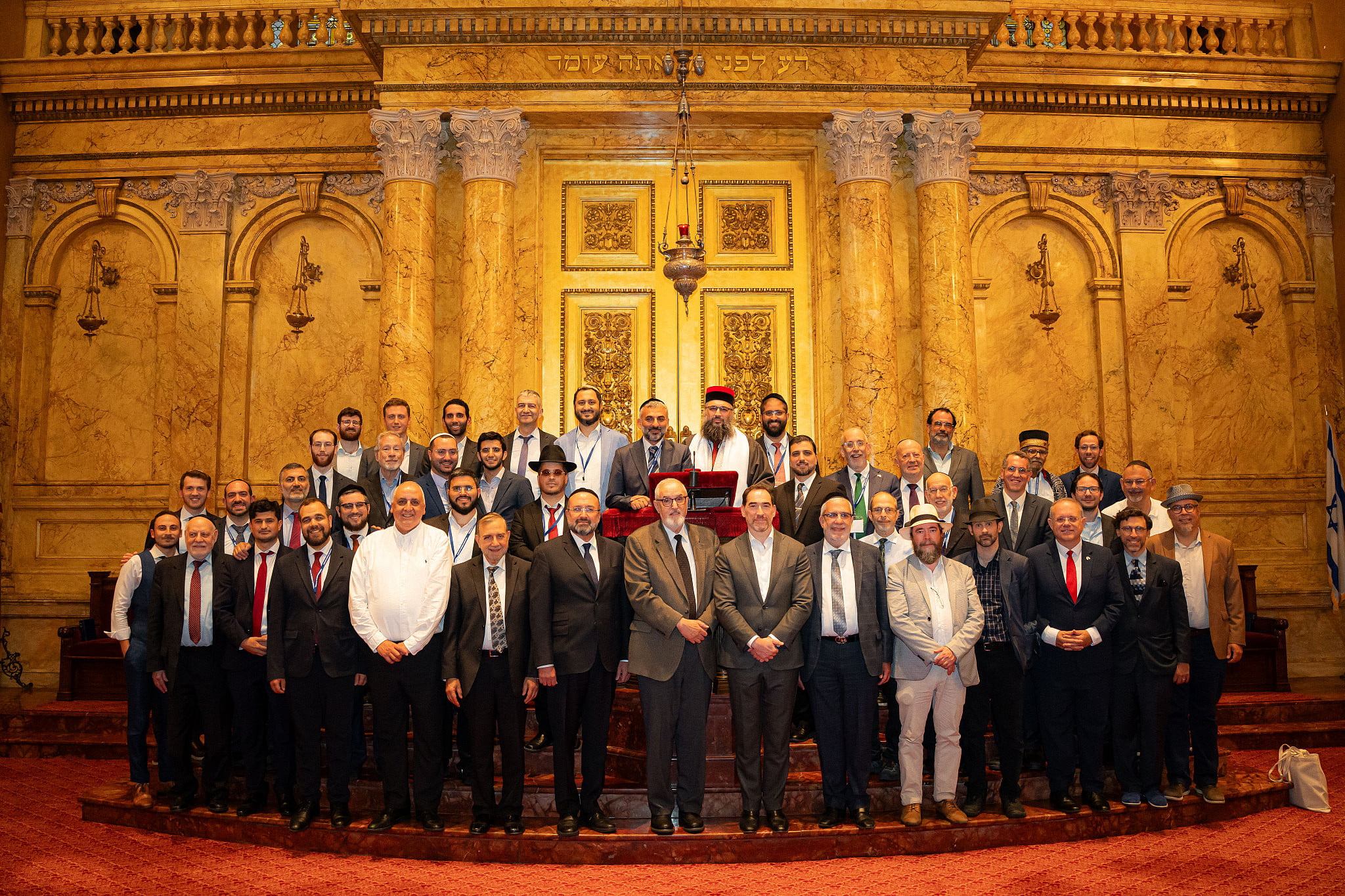
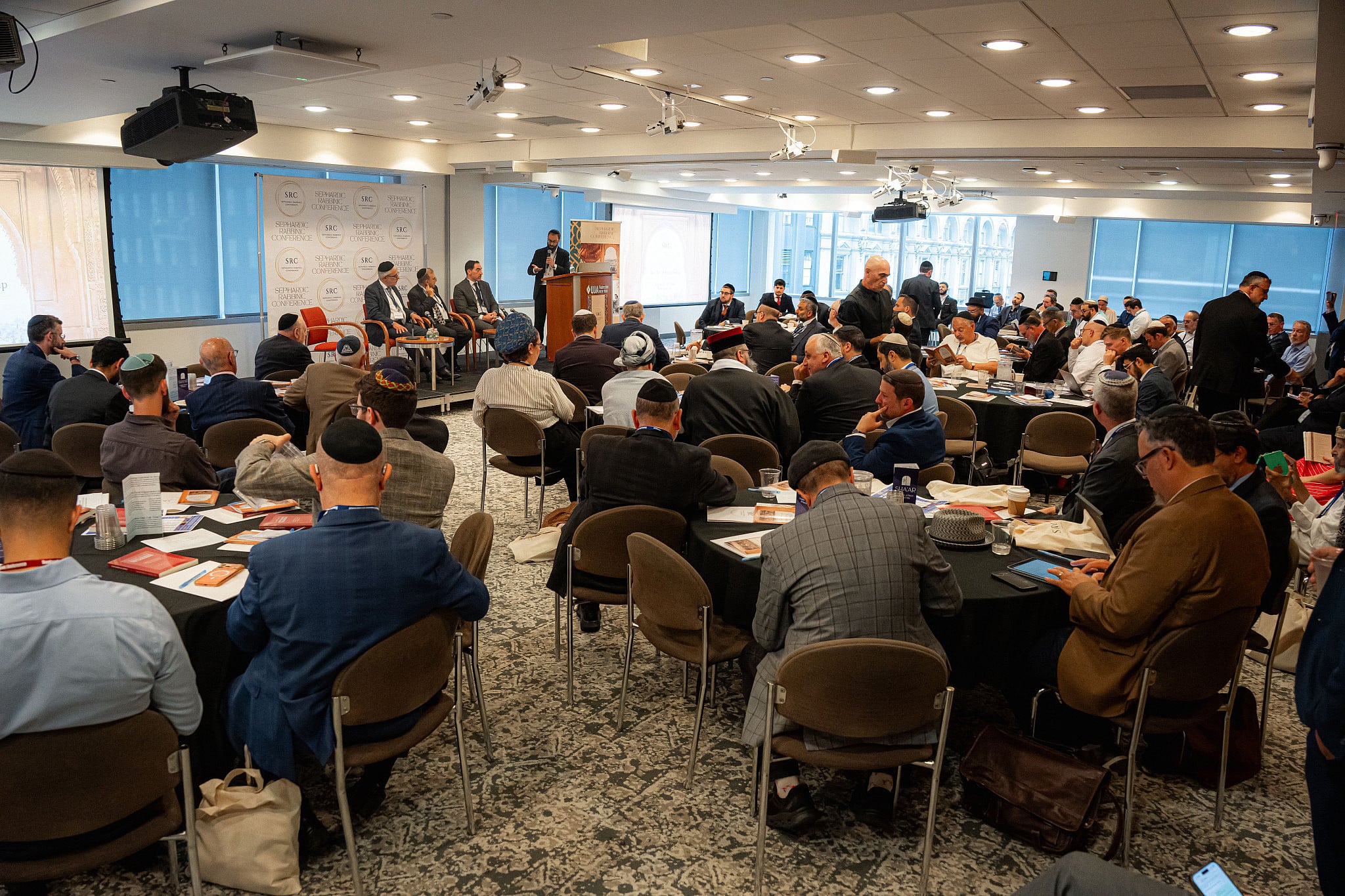
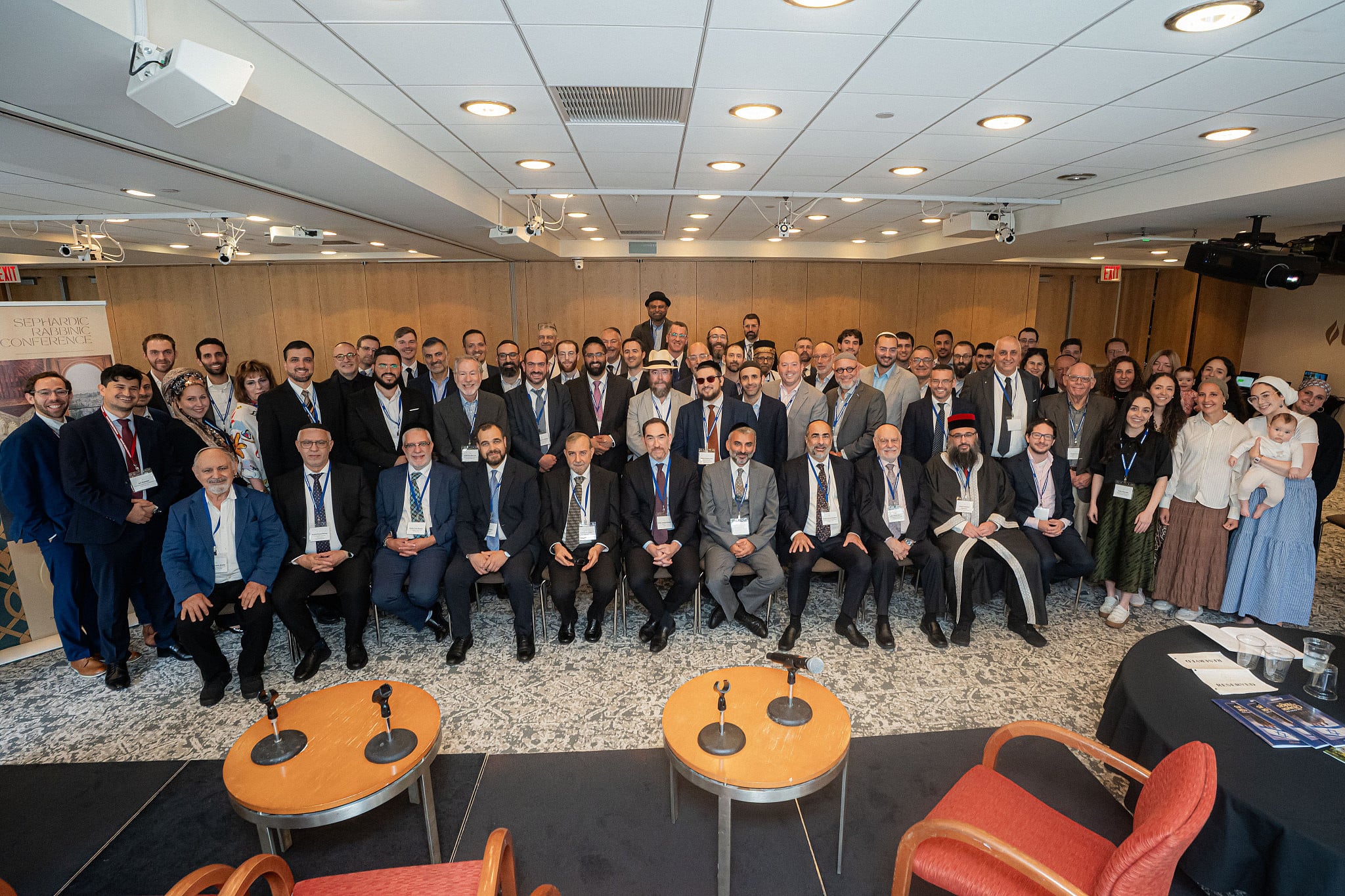
This past August, around 150 rabbis and community leaders from a dozen countries gathered at the UJA-Federation in New York for the second Sephardic Rabbinic Conference. There were representatives from over 13 U.S. States and delegations from Canada, Mexico, the United Kingdom, the Netherlands, Spain, Portugal, Sweden, Turkey, the United Arab Emirates and, of course, Israel.
The Sephardic Rabbinic Conference is, of course, concerned with strengthening Sephardic communities and leadership. However, more than ancestry or representation, it is inspired by a distinct worldview —one that emerged from the Sephardic experience but which, I believe, extends far beyond Sephardic Jewry and is urgently needed in the wider Jewish world.
It is an approach to Jewish life that upholds Torah and Halakha, but is sensitive to reality, human complexity, and scientific progress. It is engaged with the modern world without surrendering to it. It cares deeply about society, the Jewish people as a whole, the Jewish state and the Israeli Defence Forces—and indeed hopes to spiritually elevate them—but is not judgemental or coercive in its attempt to do so. It is principled and demanding, but eschews black-and-white rigidity and sectarianism. It is guided by the Maimonidean middle path and by the proverb, derakheha darkhei noam vekhol netivoteha shalom—“her paths are paths of pleasantness and all her ways are peace” (Mishle 3:17).
As society and the wider world grow ever more polarised and are pulled towards extremes — and as the Sephardic world, in particular, is increasingly drawn towards Haredism from one end and cultural absorption on the other — Rabbi Haim Sabato, Rosh Yeshiva of Birkat Moshe in Ma’ale Adumim, reminded us in the opening remarks of the conference that the balanced approach at the heart of the Sephardic way are not projections of weakness. They are, in fact, the very source of our strength and durability.
The Sephardic Alternative: Big Tent Judaism
The Jewish conversation today is too often dominated by binaries: religious or secular. Traditional or modern. Conservative or liberal. Frum or frei. Retreat or assimilate. The Sephardic tradition offers another way—one that refuses to make these binaries the defining feature of communal life. Jews may live very different kinds of Jewish lives, yet still belong to the same synagogue, school, and communal gathering.
This “big tent” is not a euphemism for a free-for-all. It has a strong center of gravity: Torah is our constitution and Halakha our framework. Shabbat, kashrut, family, and synagogue remain indispensable sacred institutions of Jewish life.
But the tent is Abrahamic. Historically, Sephardic communities made room for the Jew who prayed three times a day and the Jew who had bacon for breakfast; for the learned and the less learned; for the pious rabbi and even for those who drove to synagogue on Yom Kippur.
The instinct was not to redraw Judaism’s boundaries every time Jews failed to live up to halakhic standards, nor to create separate denominations for different levels of observance. Darkhei noam – The pleasant path means there is indeed a defined path, but it is wide, inviting, and forgiving. The wandering Jew may still be on a journey, but is never off the derekh.
The Sephardic Rabbinic Conference: Applying the Vision
The theme of this year’s conference was the ‘Art of Leadership’ and over two days we explored what it means to lead a Jewish community today with all these values in mind. We discussed the role of the Rabbi as a spiritual leader but also as CEO, as posek, as an educator, as a counsellor, how to balance authority and pastoral sensitivity, knowing when to serve and when to defer. We spoke about how uniquely positioned Rabbis are to engage in communal leadership whether that is Israel advocacy or interfaith engagement, and we heard from communities in Brooklyn, Amsterdam, Mexico, Israel and elsewhere about what is working and where we are struggling.
This tension between conviction and compassion was not abstract at the conference. Rabbi Harold Sutton, Rosh Yeshiva of Moreshet Yerushalayim, drew attention to the greatness of Hakham Ovadia Yosef highlighting the sensitivity and care for Jews who lived lives very different to his own, and his legal creativity in finding solutions within halakha to solve communal and even national matters. He spoke about Hakham Meir Mazuz, who shaped his rulings on the latest findings of science and proven facts. Other sessions on day two dealt directly with societal issues; loneliness, addiction, mental health, marriage and shalom bayit — applying Torah to the realities of complex human lives, with fidelity to its principles and sensitivity to the people living them.
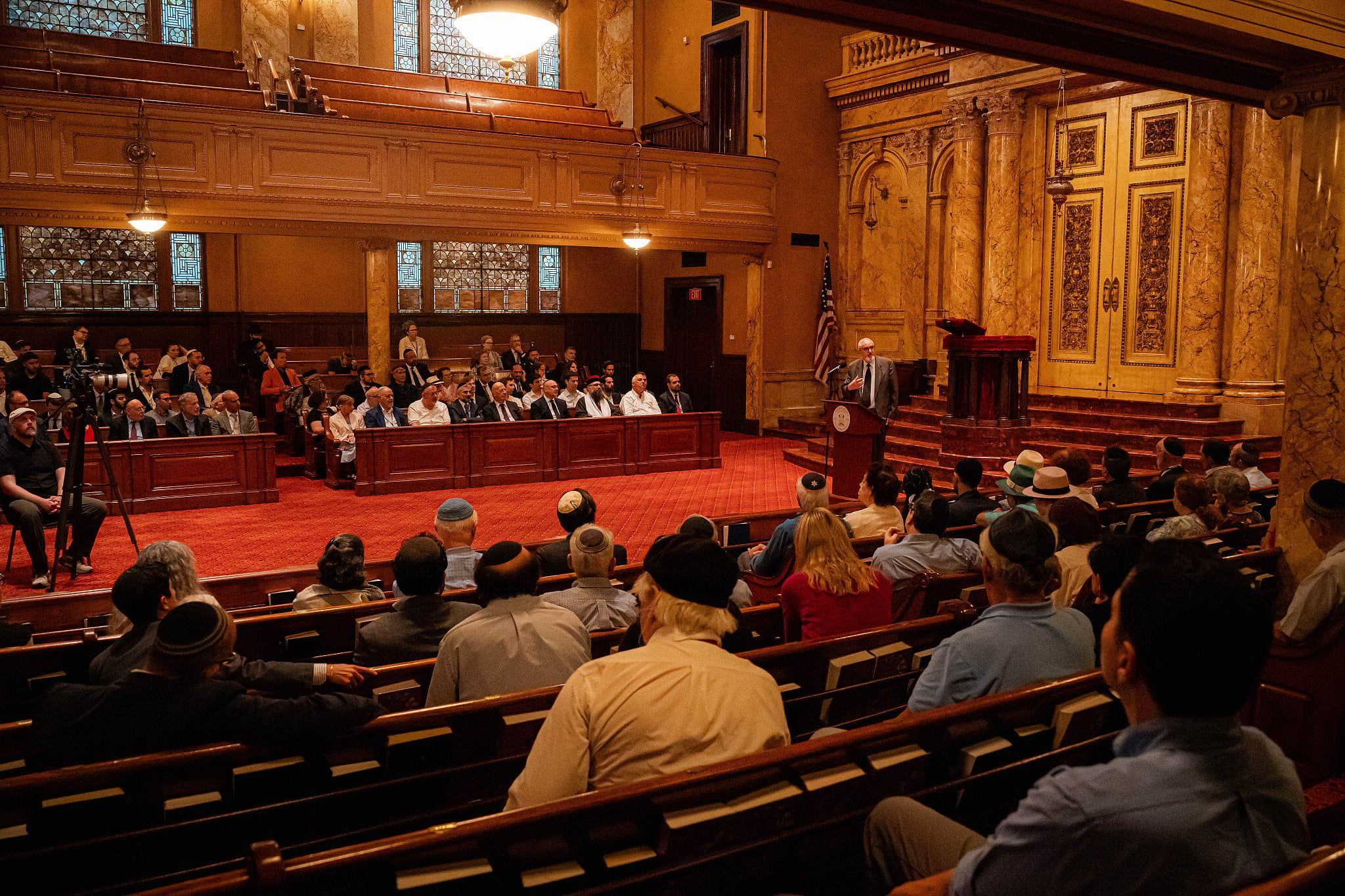
On Monday evening, we moved to the historic Congregation Shearith Israel for a community-wide evening of Torah, celebration, food and music. This is an integral part of the conference because this religious vision is not transmitted through ideas and intellectual conversations alone. This religious identity is also passed on through melody, memory, prayer, food and community. In this Sephardic vision, the cerebral and the emotional must be woven in together.
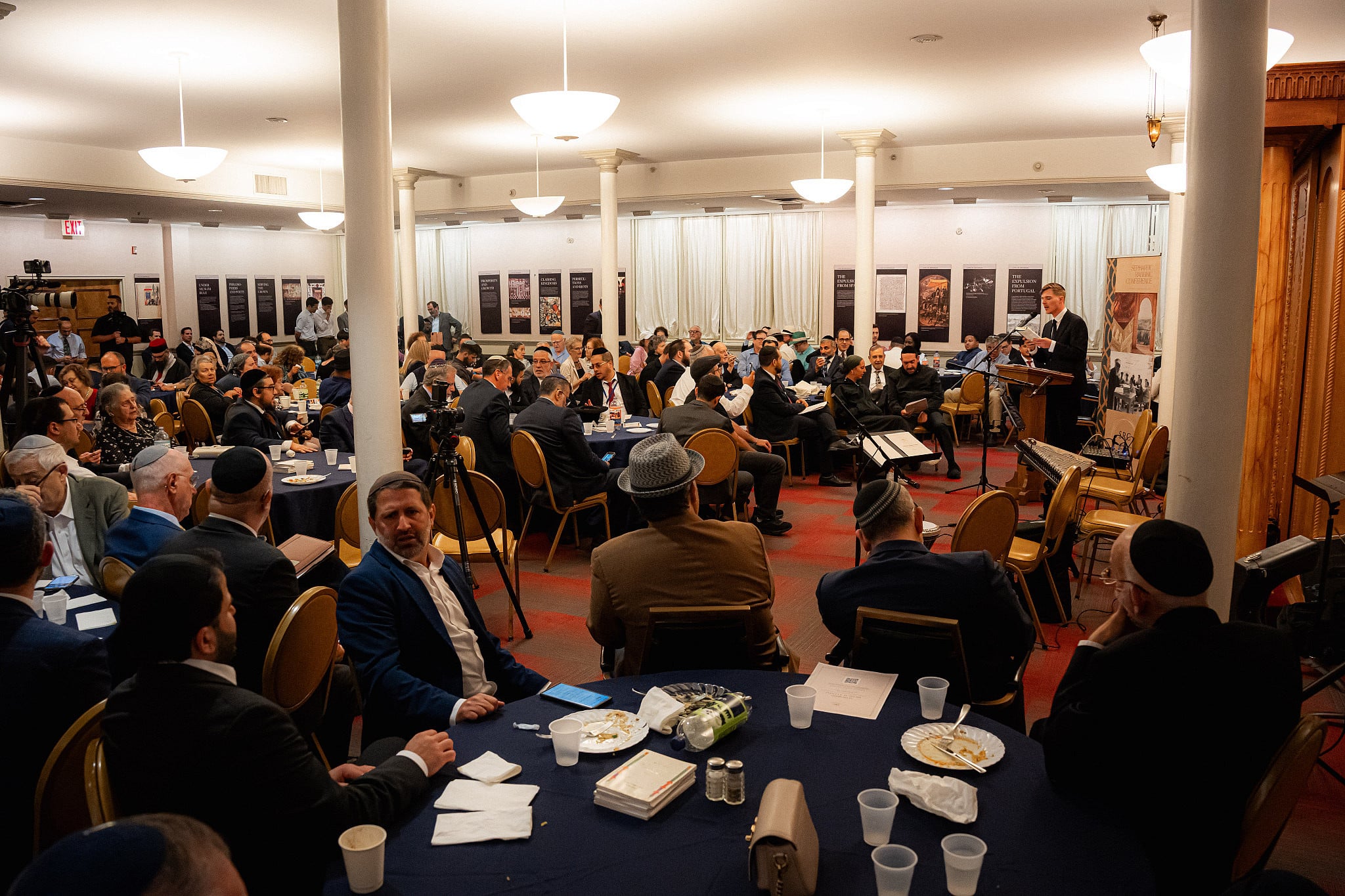
The problem is that too often Sephardic identity has been reduced to only its most visible cultural forms: food, music, pronunciation and custom. The SRC 2026 keynote speaker Rabbi Marc Angel – Emeritus Rabbi of Shearith Israel – beautifully explained though what we are ultimately trying to transmit runs deeper than any particular tune or minhag – as important as they are.
“You preserve fish, you preserve fruit, you preserve things that are dead. Something alive grows and evolves,” he continued. “We don’t want to ‘preserve’ a Sephardic heritage; we want it to live; we want to draw on our past and bring it to life in new ways, to breathe wisdom and spirituality that can continue to fill our lives and inspire our future generations.”
You do not need to trace your family to Spain to recognize the intellectual courage of Maimonides and the great Spanish philosophers. You do not need roots in Salonika or Izmir to admire the scholarship and statesmanship of the great Hakham Bashis and earlier Rishon Letzions. You do not have to have Sephardic food on your table to appreciate the values that once defined this tradition and neither do you need Sephardic DNA to believe that Judaism should be engaged with society, grounded in reality, and resistant to unnecessary division.
As Jews continue to marry one another and old ethnic boundaries and even cultural divides begin to blur, the most important question cannot simply be: Who is Sephardic? The more consequential question is: What should Sephardic Judaism stand for?
Sephardic Traditionalism: Bridge-Building
Several points raised during the conference suggested that this vision may offer more than a communal model; it may contain resources for wider Jewish and national life.
One is peoplehood without sectarianism. Israeli culture, in some respects, is starting to reflect some of this instinct: religious and secular singers often share musical stages (for instance, Meydad Tasa and Eden Hasson performing Kuli Tefila and Ben Shel Melech together at Jerusalem’s Sultan’s Pool) and the artistic output coming out of Israel tends to revolve around religious ideas, symbols, and rituals. While the Ashkenazi Haredi-Hiloni divide intensifies, there is a centripetal movement —a deeply Sephardic phenomenon— emphasising a sense of Jewish brotherhood and belonging in spite of the religious and political differences. The notion that we are one people and one family with space for all Jews, is taking hold.
A second is a very natural religious Zionism. For Sephardic religious leaders, Jewish sovereignty was never a theological problem. The fact the political movement was secular and many of its pioneers were anti-religious was not a dealbreaker. The return of the Jewish people to their ancestral homeland was something to celebrate, to say Hallel over, and to participate in. It was the answers to their prayers. From Rabbi Yehuda Alkalai (1798-1878), the proto-Zionist who envisioned the actual return, all the way to the office of the Rishon LeTsiyon, there was an understanding that Jewish sovereignty meant obligations: to work, to build, to serve, to fight, to compromise, and to share responsibility for the country and its future.
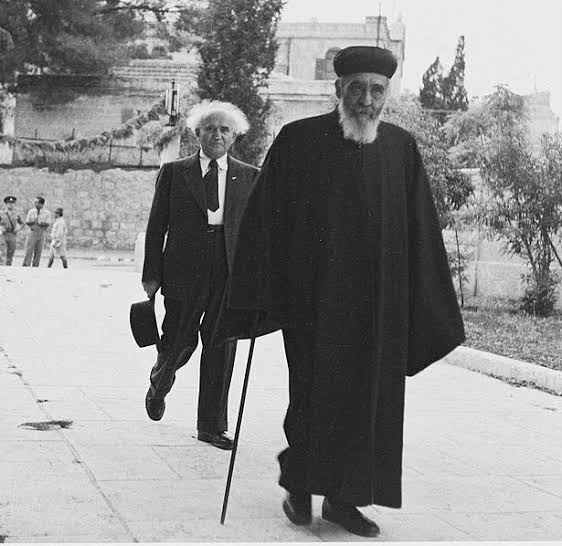
Few embodied this more clearly than Hakham Ben-Zion Meir Hai Uziel, the first Sephardic Chief Rabbi of the State of Israel. During the War of Independence, when yeshiva students approached him seeking exemptions from military service, he rejected their request. Were he younger and physically able, he told them, he would run to take up arms himself to defend the Jewish people and Zion.
A third is religious conviction as a bridge rather than a barrier. During a violent confrontation between Jews and Arabs in 1921, Hakham Uziel reportedly ordered the Jewish side to hold its fire, walked toward the Arab attackers and addressed them in Arabic, appealing to their shared descent from Abraham. The confrontation subsided. There is something important in that combination: firm Jewish conviction without abandoning pragmatism; unapologetic Zionism without surrendering the pursuit of peace. With the Oslo Accords, Maran Rabbi Ovadia Yosef demonstrated that Jewish conviction could itself demand flexibility in the pursuit of a credible peace.
 The Center Must Lead
The growth of religious insularity on the one hand and secularism on the other is no secret — nor, of course, is it uniquely a Jewish phenomenon. For too long, however, those who inhabit the religious centerground have assumed that the pendulum would eventually swing back, or have simply lost faith that moderation can prevail at all.
I see no evidence that it will self-calibrate. The loudest and most organized forces naturally fill vacuums. So, if we believe in this model, then it requires rabbis who can articulate this vision, leaders that embody it, books that can transmit it, schools that can teach it, and institutions courageous enough to champion it.
One of the most encouraging aspects of the conference was the breadth of the coalition around it: both Sephardic and Ashkenazi organizations that understand the need to strengthen this particular Sephardic voice for the sake of the Jewish people.
That, ultimately, is why the SRC matters. My hope is that, together with its very natural allies, it can become a home and a platform for those committed to a confident religious centrism, and become an engine for the ideas, leadership and institutions needed to sustain it.
At our closing session, Rabbi Joseph Dweck, former Senior Rabbi of the Spanish and Portuguese Community of the United Kingdom, suggested that next year’s conference might take as its theme:
“The center must hold.”
Yes, but if this conference convinced me of anything, it is that holding is not enough.
The center must lead.