


Mathematics Teaching Professor, Author
The Sherwin Miller Museum of Jewish Art: 5,000 Years of Jewish Art & History
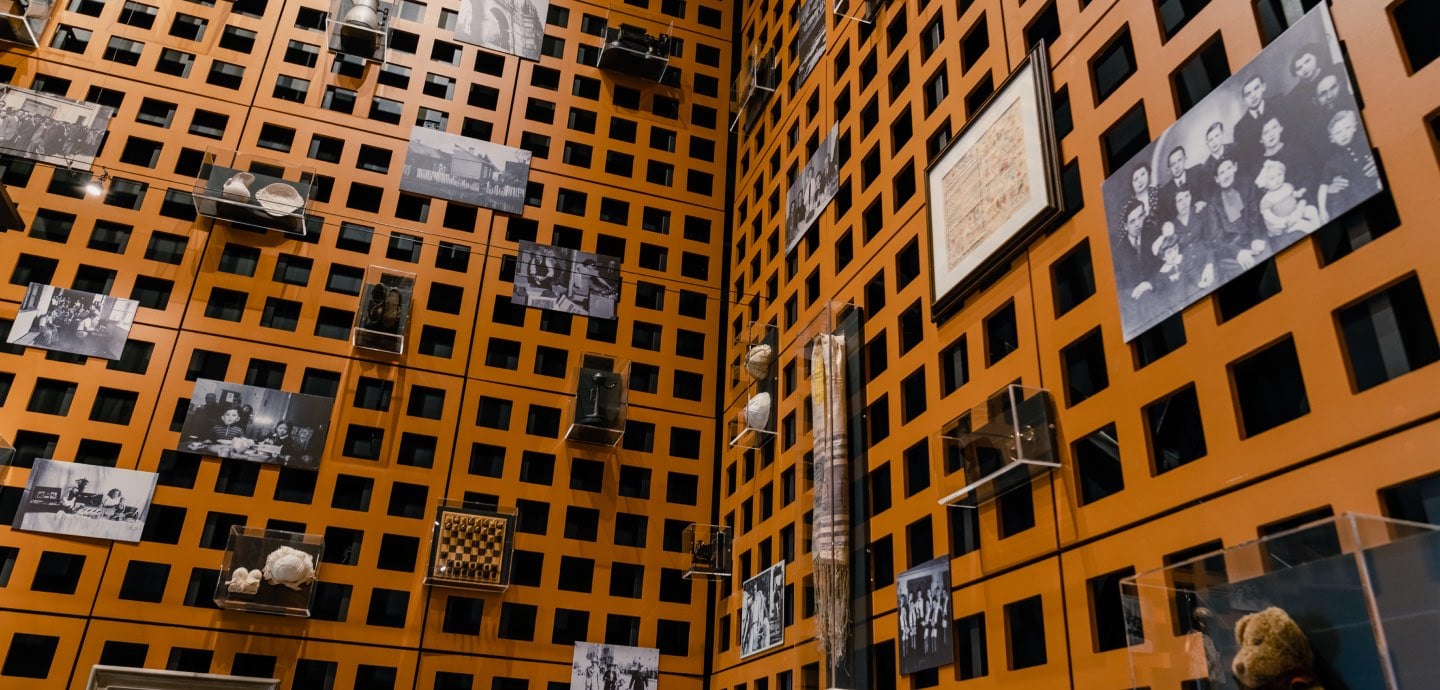
Sherwin Miller Museum of Jewish Art (Source: Sherwin Miller Museum of Jewish Art, Tulsa, OK)
The Sherwin Miller Museum of Jewish Art in Tulsa, Oklahoma, celebrates the rich artistic traditions of the Jewish people through a diverse collection of fine art, Judaica, artifacts and historic works spanning 5,000 years. The museum uses art as a way to tell stories of Jewish identity, faith, culture, resilience, and history, giving visitors of all backgrounds an opportunity to experience the beauty and creativity of the Jewish people through the ages.
I would like to thank the esteemed Tracey Herst-Woods, Chief Museum Officer, for her support and guidance.
Museum
The Sherwin Miller Museum of Jewish Art is a museum dedicated to preserving and teaching Jewish history, culture, and art. The museum has 13,700 square feet of exhibit space across two levels. The lower level features a permanent Holocaust exhibit with documents, photographs, and personal items connected to Holocaust survivors, victims, Jewish refugees, and Oklahoma veterans who helped liberate concentration camps.
The upper level displays Jewish art and artifacts covering history from the pre-Canaanite period through Jewish settlements in Oklahoma. The museum also contains a model synagogue used twice a week by children from the Mizel Jewish Community Day School. In November 2020, the museum opened a new Holocaust Center, created to educate visitors about the Holocaust.
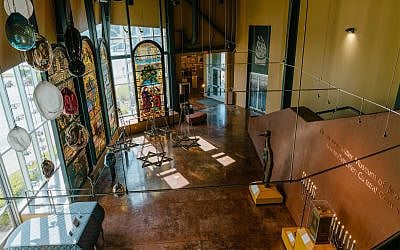
The museum’s four historic stained-glass windows were originally part of Temple Beth Israel in Houston, Texas, built in 1908, and were purchased by members of the Sanditen and Richards families in 1972. They are dedicated in memory of Scott A. Sanditen and depict important biblical stories. The collection includes The Sacrifice of Isaac, attributed to Louis Comfort Tiffany, Jacob Blessing the Sons of Joseph, Ruth, Naomi, and Orpah, and Ruth and Boaz. Together, the windows showcase beautiful glasswork while preserving stories and themes from Jewish religious tradition.
Current Exhibitions
The Sherwin Miller Museum of Jewish Art features a diverse collection of exhibits that explore Jewish history, culture, art, and the experiences of Jewish people throughout history, including a special focus on Holocaust remembrance and education.
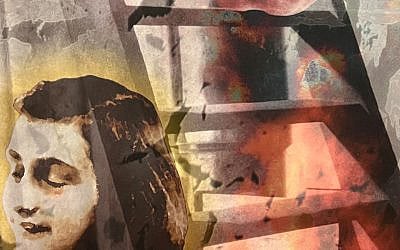
Michael Knigin: Remembrance 2000 & Anne Frank Series is an exhibition explores the Holocaust through the artwork of Michael Knigin. His pieces combine photographs, painting, drawing, collage, and digital techniques to create powerful images about memory and loss. The works honor Holocaust victims, survivors, and heroes while encouraging visitors to think about the dangers of prejudice and intolerance.
Yaakov Agam is a special installation honors Israeli artist Yaacov Agam and features works from the museum’s permanent collection, including Agamographs and Rainbow Rhythm (1980). His kinetic artwork changes in appearance as viewers move around it, creating an interactive experience. The exhibit celebrates Agam’s innovative use of color, movement, form, and perspective.
Totally Tumarkin features prints by Israeli artist Igael Tumarkin that were donated to the museum by Sam and Renee Sax. Tumarkin was known for his unconventional artwork, sculptures, and strong expressionist style. His work often used found objects and controversial imagery to explore themes of war, identity, and Israeli society.
The Sanditen/Kaiser Holocaust Center teaches visitors about the Holocaust through more than 250 artifacts, documents, and personal items from soldiers and survivors. The Center is honoring Mildred and Julius Sanditen, and Herman and Kate Kaiser. The exhibit also includes firsthand testimonies from five Holocaust survivors who later made Oklahoma their home. Together, these materials explain the impact of hatred and persecution and encourage visitors to remember the Holocaust and help prevent similar tragedies.
Kristallnacht Exhibit was by Oklahoma artists Rick and Tracey Bewley, commemorates the “Night of Broken Glass” in November 1938, when Nazis carried out widespread violence against Jewish people and destroyed synagogues and businesses. The installation contains 450 pieces of kiln-fired glass suspended two stories high, symbolizing the stained-glass windows of synagogues destroyed during the attacks.
Torah Scroll
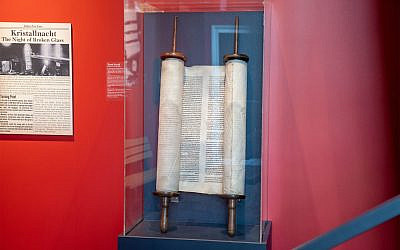
The Torah Scroll on display at the Sherwin Miller Museum of Jewish Art was rescued from Pribram, Czechoslovakia, during the Holocaust. In 1942, Jewish communities across Nazi-occupied Czechoslovakia sent their religious objects to Prague in an effort to protect them from destruction or theft. About 1,564 Torah scrolls were saved through this effort. After the war, the scrolls remained in storage until they were acquired in 1964 and preserved by the Memorial Scrolls Trust in London. The Torah displayed at the museum represents both the survival of Jewish religious heritage and the importance of remembering the communities affected by the Holocaust.
Collections
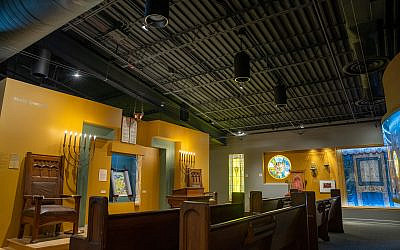
One important piece in the museum’s collection is the Model Synagogue from Temple Beth Ahaba in Muskogee, Oklahoma. Muskogee’s Jewish community dates back to the founding of the city in 1872. In 2011, the congregation worked with the Sherwin Miller Museum to preserve the temple’s history by moving its remaining archives and furnishings to the museum. The model synagogue includes original items such as pews, a lectern, bimah, chairs, menorah, and Ark cabinet, providing visitors with a glimpse into the history and traditions of Muskogee’s Jewish community.
Jewish History and Culture is a collection that presents approximately 5,000 years of Jewish history, from the pre-Canaanite era to Jewish communities in Tulsa and the American Southwest. It includes archaeological objects, religious items, costumes, synagogue textiles, documents, and artwork. The collection helps visitors understand how Jewish traditions, beliefs, identity, and daily life have developed across different places and generations.
Library
The Sherwin Miller Museum of Jewish Art Library contains more than 1,950 titles focused on topics such as the Holocaust, Jewish religious and family life, Oklahoma Jewish history, Jewish art, and genealogy. The museum’s archives preserve letters, photographs, newspaper articles, event materials, and other records from local Jewish families and businesses. A notable collection is the Fred Strauss Collection, which includes letters, postcards, and stamps documenting Jewish history and traditions and is also available through a searchable digital database.
Education and Art Contests
The Sherwin Miller Museum of Jewish Art offers educational programs and art contests that help students learn about the Holocaust, Jewish history, and culture. Through events such as the Kristallnacht Art Contest, White Rose Essay Contest, and Purim Mask Invitational, students connect history and creativity while exploring important themes such as tolerance, diversity, and resistance to discrimination.
The Sherwin Miller Museum of Jewish Art provides educational programs that connect students with Jewish art, culture, and Holocaust history. Through the Any Given Child program, eighth-grade students explore the museum’s exhibitions and the Kinder-Stone memorial. The museum also hosts the Purim Mask Invitational, White Rose Memorial Contest, and Kristallnacht Art Contest, encouraging students to learn through art, writing, creativity, and historical reflection.
Historical Backgrounds
Jewish settlers arrived in what is now Oklahoma as early as 1875, often working as peddlers and traders. By the 1880s, Jewish families established communities in places such as Muskogee and Ardmore. Jewish families began settling in Tulsa around 1902, opening businesses and becoming part of the city’s growing economy. Between 1900 and 1965, Tulsa’s Jewish community expanded significantly, establishing congregations, businesses, and charitable organizations that contributed to both Jewish life and the wider Tulsa community.
Which brings us to1965.
In 1965, the United States was experiencing major social and cultural changes, including the Vietnam War, important Civil Rights legislation, and the creation of Great Society programs. It was a time of significant change across the country.
In 1965, Tulsa was a growing city of about 260,000 people with a strong economy centered on the oil industry. Known as the “Oil Capital of the World,” Tulsa was expanding rapidly, especially into surrounding suburban areas.
Tulsa’s Jewish community was well established and active in the city’s business and civic life. With strong Eastern European, Orthodox, and Zionist roots, the community continued developing religious and cultural institutions to preserve Jewish traditions and pass them on to future generations.
It was in this year, 1965, that the origins of the Sherwin Miller Museum of Jewish Art began when Congregation B’nai Emunah brought a traveling exhibit, Traditional Ceremonial Art, from the Jewish Museum in New York to Tulsa. The exhibit sparked strong interest in Jewish art, culture, and heritage within the local community.
Rabbi Arthur Kahn, along with A.H. Eichenberg and Sherwin P. Miller, helped turn the idea of a permanent Jewish art collection into reality. Their efforts focused on preserving Jewish history and making Jewish culture accessible to the Tulsa community.
In 1966, the Gershon and Rebecca Fenster Gallery of Jewish Art opened to the public. Sherwin Miller, the gallery’s first curator, began actively collecting Jewish art and artifacts, laying the foundation for what would eventually become the Sherwin Miller Museum of Jewish Art.
In 2000, the museum was renamed the Sherwin Miller Museum of Jewish Art to honor its first curator, Sherwin P. Miller. In 2003, it moved to its current location on the Zarrow Campus. Today, the museum’s permanent collection explores 5,000 years of Jewish history, culture, traditions, ceremonies, and immigration, from the pre-Canaanite era to Jewish communities in Tulsa and the American Southwest.
The Museum also features The Sanditen/Kaiser Holocaust Center which has hundreds of artifacts from Oklahoma veterans, Jewish refugees, Holocaust victims, survivors, and their families. The two-floor exhibit shares their stories and experiences to educate visitors about the Holocaust and preserve the memory of those affected.
The Sherwin Miller Museum of Jewish Art offers visitors more than a collection of historic objects, it provides a meaningful journey through 5,000 years of Jewish art, culture, and history. From traditional Judaica and historic artifacts to contemporary artwork and Holocaust memorials, the museum demonstrates how art can preserve memory, express identity, and connect generations. Through its exhibitions and educational programs, the museum continues to celebrate Jewish creativity while encouraging visitors of all backgrounds to understand and appreciate the enduring power of art and culture.
Contact Information:
Sherwin Miller Museum of Jewish Art, 2021 E 71st St, Tulsa, OK 74136
Phone: 918-492-1818
Email: curator@jewishmuseum.net
Website: https://www.jewishmuseumtulsa.org/