The views expressed herein are solely mine.
The Silence of Empires Is a Negotiation
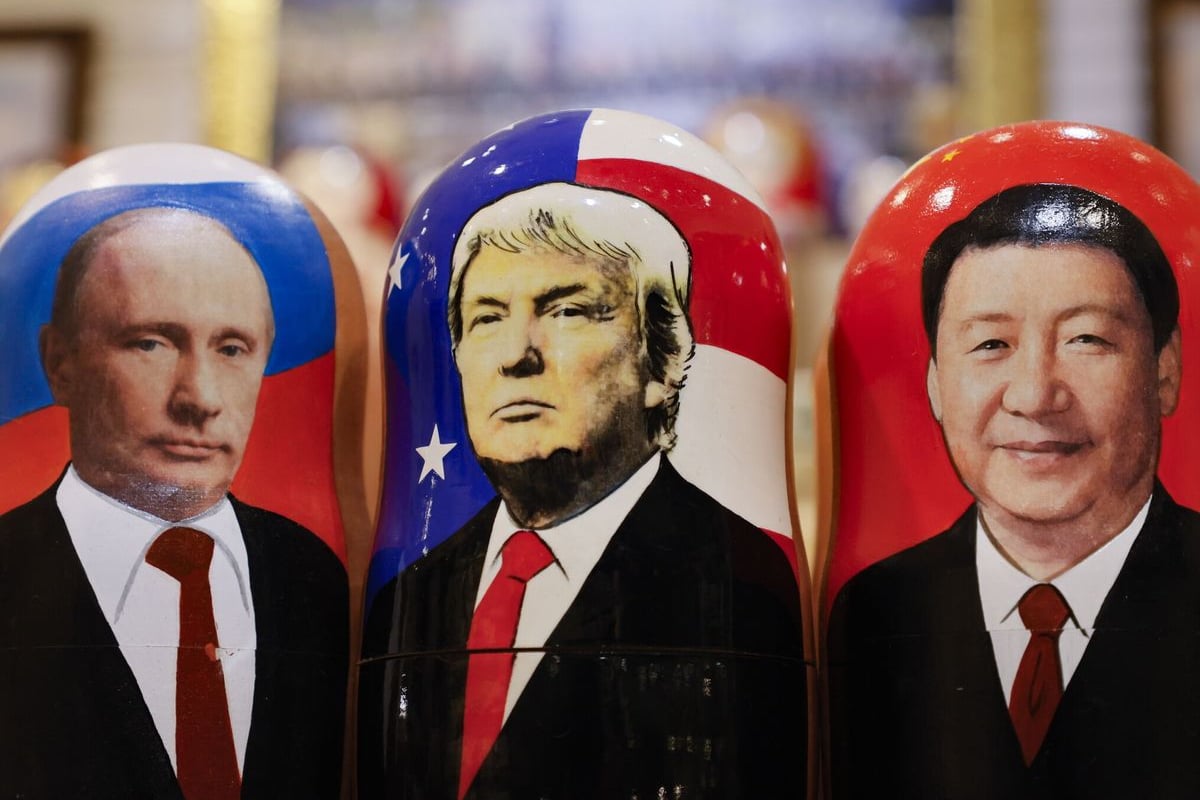
Vladimir Putin, Donald Trump and Xi Jinping could be on the verge of a negotiated new world order. Image: X Screengrab.
Putin and Xi are not quiet because they are weak. They are quiet because they are negotiating—with time, with space, and with American ambition. Silence, in great-power politics, is rarely absent. It is consent with conditions.
Washington’s recent freedom of movement is not accidental. It is being tolerated. In regions that once sat firmly inside Russian and Chinese spheres, the United States is suddenly acting with unusual confidence—testing pressure points, reshaping leverage, and pushing regimes toward internal collapse rather than external conquest. Nevertheless, that only happens when the other players are calculating what they get in return.
Unequivocally, Latin America is the clearest example. The so-called Trumproe doctrine—Monroe with teeth and fewer apologies—has been unleashed on Venezuela and indirectly on Cuba. The goal is not invasion but implosion: sanctions, elite fractures, economic suffocation, and information pressure designed to make regimes dissolve from within and re-emerge as democratic and capitalist by exhaustion.
Simultaneously, Russia loses military leverage in Caracas and China worries about billions in unpaid debt and disrupted intelligence and commercial networks. Yet neither blocks Washington decisively. That tells you everything.
Why? Because the bill is being settled elsewhere.
If the United States insists on strategic freedom in the Western Hemisphere, it will have to tolerate Russian freedom in Eastern Europe. That means de facto recognition of Crimea, permanent Russian control over Zaporizhzhia, leverage over Ukraine’s nuclear and energy infrastructure, and a widened Russian security perimeter that brushes the Baltics and revives imperial ambitions buried since the seventeenth and eighteenth centuries. This is not nostalgia—it is buffer logic.
China’s invoice is even clearer. Taiwan moves from red line to postponed inevitability. BRICS deepens. The Belt and Road hardens. Parallel financial and trade systems gain legitimacy. Beijing gets room to consolidate an Eurasian economic bloc while Washington looks the other way—because it must.
This is how multipolarity actually arrives: not through conferences or communiqués, but through mutual indulgence. Everyone breaks something. Everyone gains something. And at the end, everyone pretends not to notice.
Even Syria exposed the pattern. Russia accepted deals with Turkey and local actors that looked like abandonment in exchange for what mattered: permanent bases, Mediterranean access, and strategic continuity at lower cost. If Moscow can trade influence for infrastructure there, it can certainly do so in Venezuela—with Washington and Beijing in the room.
The same logic explains why China can build an embassy beside sensitive fiber-optic arteries in London and everyone laughs nervously instead of stopping it. Espionage adapts. Leverage migrates. Power never disappears—it reroutes.
Certainly, what we are watching is not chaos. It is cartel behavior among empires. The United States acts loudly, Russia and China act quietly, and all three understand the price of escalation versus accommodation. The American right will eventually admit what it has long resisted: the unipolar moment is over. Not because America declined, but because it chose to bargain.
This is the new order. Do what you want—but let us do what we want too.
Related Topics
Related Posts