The ‘Silver Platter’ is still being shaped
The growing weight of sacrifice — and the troubling tone of the national debate.
As the newly formed United Nations debated the future of the British Mandate of Palestine, Zionist leader Chaim Weizmann warned that a state would not be handed to the Jewish people on a “silver platter.” Poet Natan Alterman responded with a poem that has echoed through the generations. In it, at some future hour, a young man and woman step forward to confront the nation. Coming from a battlefield, they are silent and spent, they stand before their people, and the nation is told to behold them — for they are “the silver platter upon which the state was given.”
That was not metaphor. It was reality.
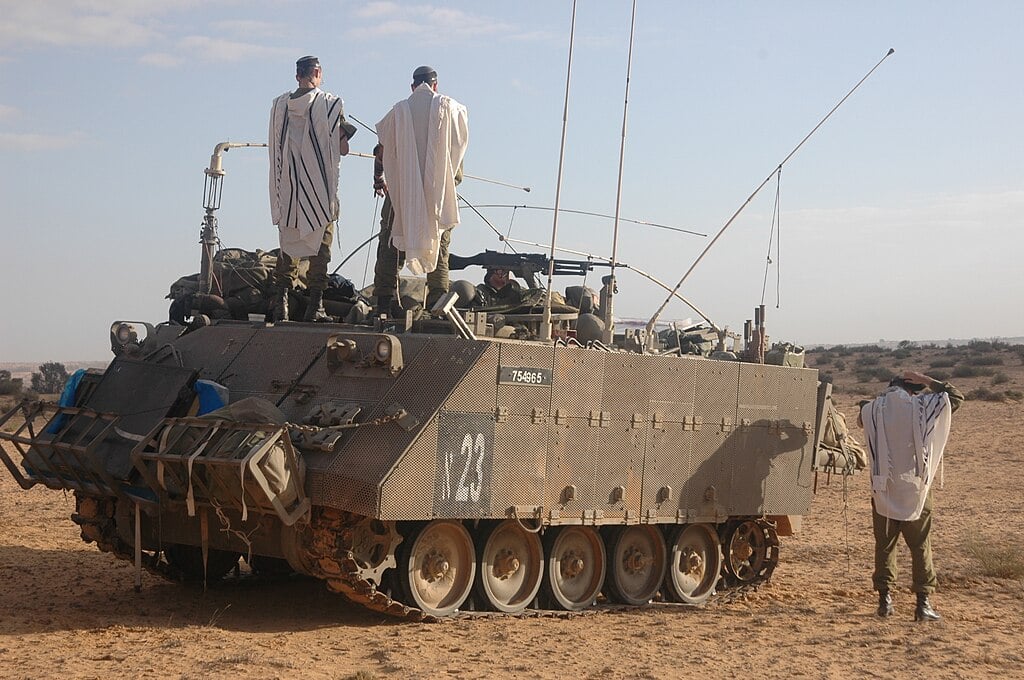
Young men and young women — some not so young — responded full-heartedly to the military call-ups after October 7. Yet although the religious Zionist community comprises roughly 20–22% of Israel’s population, its sons account for approximately one-third of the fallen in this war — far beyond their demographic share. Among reservists and junior officers, the proportion is even higher. In infantry, armored, and engineering units — the formations most heavily engaged in frontline combat — religious soldiers are strikingly overrepresented.
These are not statistics for political argument. They are fathers who have logged hundreds of reserve days. They are young men who alternate years of Torah study with active service and return repeatedly to combat duty. They are communities where nearly every synagogue carries a list of the deployed, the wounded, and the fallen.
The silver platter has not grown lighter with time. It has grown heavier.
For years, critics on parts of the secular left have warned of the “religionization” of the IDF — portraying the growing presence of religious Zionist soldiers in combat units and officer ranks as a threat to the army’s traditional ethos. Words such as “messianic” or “ideological capture” are casually deployed, as though conviction were a contaminant rather than a source of resilience.
From the opposite direction, elements within the haredi world now dismiss hesder service and religious women’s national service as “only” partial contributions — as if alternating years of Torah study with active combat duty, and returning again and again to reserve service, were somehow insufficient.
Different accusations. Same effect.
A community supplying a disproportionate share of frontline fighters and junior commanders is treated as suspect from one side and inadequate from the other.
This is not merely unfair. It is corrosive.
Policy debates over draft legislation are legitimate. Questions about coalition stability are part of political life. But there is a moral boundary that should not be crossed: those who shoulder the burden of defense must not be caricatured or diminished while they are still carrying it.
Gratitude does not require agreement. But it does require recognition.
The IDF has long been described as Israel’s great melting pot. It remains so. Yet when one sector increasingly fills combat units and junior officer ranks — not by coercion but by conviction — that reality shapes the character of the army. Not through ideology imposed from above, but through service offered from below.
Alterman’s poem, written before the War of Independence had even begun and uncertain of the outcome, looked forward:
“Then a nation in tears and amazement will ask:
‘Who are you?’
And they will answer quietly:
‘We are the silver platter on which the Jewish state was given.’
Thus they will say and fall back in shadows,
And the rest will be told
In the chronicles of Israel.”
The chronicles are still being written. They are written in reserve mobilization orders and casualty lists. They are written in rehabilitation wards and in homes that will never again be whole.
Weizmann was right: the state was never handed to us.
And the silver platter is not a slogan. It is a burden. And it deserves respect.