

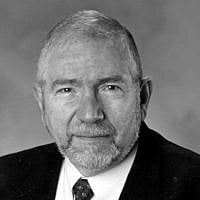
International Business Development Consultant
The Sin of Political Silence
Like any other kid growing up I made mistakes, errors in judgement and lord knows how many other lapses in conduct that got my parents upset. Reactions were different with each parent. My mother would give a loud yell “Goddamit” and I would run to the nearest corner of the apartment and try, unsuccessfully, to meld into the wallpaper. However, my father would be quietly but visibly upset. When I would ask him if he was angry with me, his answer was always the same. He would say “I’m not angry, I’m disappointed.” And that hurt…..a lot!!!
In thinking about our government in Israel today I realize that I am more disappointed than angry at the silence of those members of the governing coalition whom I am sure are not happy with decisions about the Gazan war being made by the Prime Minister and the security cabinet. Yet, they remain silent when they obviously, deep down in their psyches, most probably know that we are going in the wrong direction as a country.
Who are those in whom I, and no doubt many of my fellow citizens, are disappointed? Among the many I am particularly disappointed in are Yuli Edelstein, Nir Barakat, and Avi Dichter. They are all guilty of the sin of silence.
The disappointment stems from the high probability that they disagree with decisions being made by this government about this too long war, but are seemingly unwilling to stand up to the party leadership, bolt the coalition in order to bring down the government and, thereby, force new elections. We, the 70% of the population who disagrees with the way the war is being handled, have no capability to change the leadership before the scheduled elections slated for October, 2026. However, the coalition members who agree that a change in leadership is necessary for us to move on and not become a pariah nation, do have the ability to make change happen. Yet, sadly, they choose not to do so.
Nir Barkat is one example. The 66-year-old native Jerusalemite served as mayor from 2008 to 2018. He is also one of the pioneers of Israel’s high-tech industry. One of the founders of Check Point, the information security giant, he was also the company’s first chairperson. In the IDF he was a company commander in the paratroopers with the rank of major and was wounded in combat during Operation Movil in Southern Lebanon while charging at a terrorist. He is also the founder of the Snunit Center for the Advancement of Web Based Learning, which integrates technology into education, and the Israel Venture Network for nurturing social businesses. He carries out his public activity without pay, taking an annual salary of a single shekel. As early as January 2024 he was vocal in his criticism of the government when he accused “the cabinet of conception” of continuing to make decisions as if they “haven’t learned a thing from the Black Saturday” of October 7, taking swipes at the prime minister during a security assessment, several news outlets reported. Yet today he remains silent.
Yuli Yoel Edelstein, 67, was a refusenik in the former Soviet Union from 1979-1987 and spent three years in a Soviet forced-labor camp. He made Aliyah in 1987 with his family and settled in Gush Etzion. After arriving in Israel, Edelstein completed his education through the Mandel Jerusalem Fellows program at the prestigious Mandel Leadership Institute for the development of educational leadership, and worked in a number of educational institutions. A founder of Yisrael Ba’Aliyah, a party of new immigrants which won an unprecedented 7 seats in 1996 for the 14th Knesset. When the party later merged with Likud he joined Benjamin Netanyahu’s government, and was appointed Minister of Immigrant Absorption, a position he held until 1999. After holding a number of posts in multiple Knessets, he was elected in 2013 by a large majority to serve as Speaker of the 19th Knesset and held that position in the 20th, 21st, 22nd and 23rd Knessets as well.
He has been a constant critic of the government. Earlier this month speaking at the World Summit on Counter-Terrorism at Reichman University – not long after Netanyahu ousted him as the Defense Panel’s chairperson for pushing too hard to get haredim to serve in the military – Edelstein said that the debate surrounding integrating the haredi community into the army is “a very practical debate. It is not academic. After 500 days of service, soldiers expect others to stand shoulder to shoulder with them, giving them a break, yet this is not happening.”
“If we do not know how to increase IDF recruitment – and I do not mean a one-time thing with a few thousand people, but something continuous and permanent – then all of the slogans” about how the IDF is so strong might work only in cases surrounding quick, minute air force operations, he said. “If one does not have readily available healthy soldiers, one cannot achieve anything,” Edelstein noted. Given his regular statements against the government, somehow or other he remains silent as well.
Avi Dichter, 73, has been in the Knesset since 2006 and serves as Chairman of the Special Committee of the Fund for Israeli Citizens. From 2015–2019, he served as Chairman of the Foreign Affairs and Defense Committee. In addition, he previously served as Deputy Minister of Defense, Minister of Public Security, Minister of Home Front Defense, and the Director of Shin Bet—the Israel Security Agency. He holds a BA in Social Sciences from Bar-Ilan University, and an executive MBA from Tel Aviv University; he also served as a research fellow at the Brookings Institute in Washington, DC.
Although he is a member of the government, he has not been a long-term supporter of the Prime Minister. In an interview Israel’s Kan News in 2013, Dichter said: “When there will be primaries, I will run for the Likud leadership – even against Netanyahu,” Dichter added at the time that if he indeed does need to run head to head against Netanyahu, he would be able to easily prove himself a qualified candidate because of his past experience. “I’ve said a number of times my intention is to run in the primaries for Likud leadership, and from there for prime minister,” he added. “One day, you will have the honor of interviewing Prime Minister Avi Dichter.” Yet he too remains silent.
In all of this analysis I choose to point out the ages of these three moderates who disappoint me for good reason. At 66, 67 and 73 respectively, they have all had stellar careers. Even if they still have designs on future fame, with the risks that Israel is facing right now, we should be able to rely on Knesset members like these three (no doubt I could have listed others as well) to stand up to the Prime Minister and say “no.” If their voices are not heard they need to bolt the coalition and, with like minded colleagues, force new elections well before October, 2026.
We, the normal citizens of Israel, the 70% who believe that the directions we are taking in the Hamas war in Gaza are leading us astray, have a right to expect that people who are closer to the end of their careers than the beginning would be willing to take the risk and bolt the coalition.
By remaining silent they put the country at further risk of isolation, put the lives of the remaining living hostages in mortal danger and perhaps contribute, as well, to significant emigration from Israel by the very people who were responsible for making us the startup nation. We have a right to expect more from our elected representatives.
Albert Einstein said it best: “If I were to remain silent, I’d be guilty of complicity.”