


“The Sky is no limit”
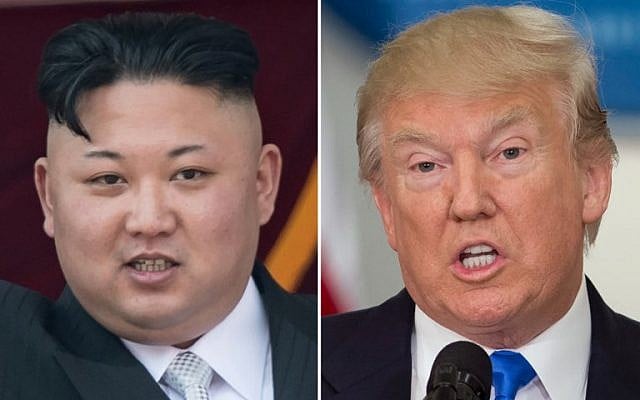
“North Korea’s Kim and Trump have chance to meet next week, South’s minister says.”
The potential meeting between Donald Trump and Kim Jong Un, mentioned during the ASEAN summit, needs careful consideration beyond simple media speculation. This suggests a deliberate reversion to a diplomatic approach that values personal charisma, the element of surprise, and the belief that the dynamics of the global negotiation process are influenced by extravagant displays. For Trump, this meeting would symbolize a masterful rebound: the man who has ‘pacified’ the Middle East now wants to reopen the most explosive file in Asia.
The former US president, crowned with the relative success of the ‘Hamas-Israel deal’ negotiated under his leadership, is cultivating momentum. In a few weeks, he managed to make the image of a dealmaker once again unavoidable. Where the chancelleries get bogged down, he claims the effectiveness of pragmatism: speak to everyone, including those who cannot be spoken to. Reviewing Kim Jong Un, five years after the diplomacy of Singapore and Hanoi, would be like reviving an interrupted narrative—that of a Trump capable of shaking up diplomatic grammar by the sheer force of his staging.
The sequence has everything of a controlled scenario. After the Middle East, Asia; after Hamas, Pyongyang. The guiding thread: to show that the United States, through it, can simultaneously ease hotbeds of tension and restore lost authority. The image of Trump shaking hands with Kim again would have an immense symbolic significance. She would say that American diplomacy is no longer reduced to traditional alliances but that it is embodied in a personality, an audacity, and an assumed nerve.
It is also a message addressed to China. By reopening the path of direct dialogue with Pyongyang, Trump would deprive Beijing of its role as a privileged mediator and would reaffirm the ability of the United States to speak on an equal footing with authoritarian powers. To Russia, it would send another signal: that of a president capable of engaging in dialogue with everyone, without exclusion or rigid alignment. As for Seoul and Tokyo, they would see a “confusing” but “proactive partner” return, determined to take back control of regional stability.
In this approach, “the sky is no limit” is not a formula but a doctrine. Donald Trump cultivates the idea that no political, moral, or ideological border can hinder negotiation. It is the return of ‘personalized diplomacy,’ where contact between two leaders is worth more than years of protocols and multilateral summits. One can see in it a rehabilitation of voluntarism but also a symptom of the erosion of international institutions: when power is achieved through the staging of face-to-face encounters, it is the diplomatic order itself that finds itself redefined.
The businessman who has become president applies market rules to geopolitics: it is necessary to create the event, occupy the media space, and then transform each meeting into a political asset. It doesn’t matter if the agreements made last in the long term; what matters is the story of success. President Trump understood that perception precedes reality: being considered a mediator is sometimes enough to pose as a peacemaker.
But the bet is risky. North Korea has not given in to nuclear testing, and Pyongyang has resumed ballistic testing. Offering a new platform to Kim Jong Un without any tangible counterpart would surely expose President Trump to criticism of complacency. Yet he knows that in the era of instant communication, the political yield of an image often exceeds that of a treaty.
This possible meeting is part of an electoral as well as diplomatic logic. As a pivotal year approaches for his return to the American domestic scene, the American president is relying on geopolitics to reaffirm his stature as a strong man and marginalize his competitors. He never believed in the diplomacy of alliances; he believes in the diplomacy of egos. And his implicit message is clear: only a leader without fear of taboos can restore America to its greatness.
If the photo of Donald Trump and Kim Jong-un were to circulate, it would tell the world that America’s direct negotiation is back and that diplomacy is reinventing itself in the image of its architect: “unpredictable,” “transactional,” and , for its supporters, extremely “effective.” After all, in the Trumpian universe, foreign policy is not a matter of patience but of spectacle. And in this planetary spectacle, the main protagonist is not the state, but the man.
According to Donald Trump, this means that diplomacy is once again showing itself as a stage for personal power, where every handshake is seen as an act of conquest. He weaves the thread of a single goal from Pyongyang to Jerusalem: to become the center of the world again. And as long as he manages to impose this narrative, the sky, decidedly, sets no limits for him.