
The Star of David and the Intolerable Intolerance of Modern Britain
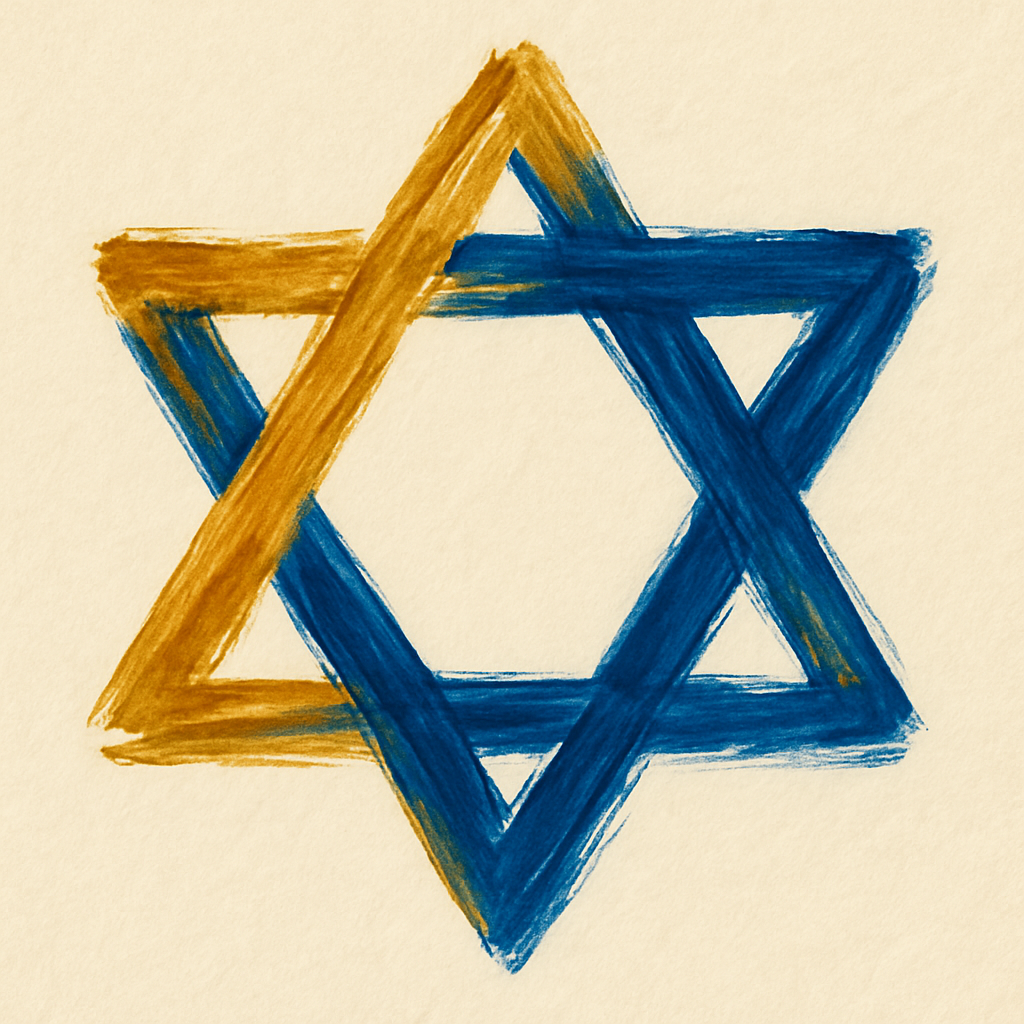
There are few symbols more deceptively simple than the Star of David. Two interlocking triangles. Six points. A geometry lesson’s worth of angles. And yet, nestled within its symmetry is the unbroken continuity of a people — a civilisation, a covenant, a centuries-long dialogue between survival and identity.
So why is it, in the thoroughly modern and supposedly enlightened Britain of today, that this modest six-pointed star is being treated with suspicion, if not outright hostility?
Let us not faff about. The Star of David is under attack in our country — not metaphorically, not as part of a spirited cultural debate, but as the literal object of vandalism, exclusion, and suppression. It has been scratched from statues, banned from events, shouted down in student unions, and, in some cases, politely — though no less disturbingly — asked to disappear for fear it might offend. As if Jewish identity were some regrettable faux pas to be quietly hidden away.
A forthcoming advisory report, which I have prepared on behalf of We Believe in Israel, addresses this trend head-on. Titled Recognising Attacks on the Star of David as Acts of Racial Hatred under UK Law, it lays out a compelling case — legal, sociological, and historical — for recognising attacks on this symbol not as expressions of political protest, but as racialised assaults on Jewish peoplehood.
Now, let us be clear: the report does not seek to muzzle debate about Israel’s policies. Robust criticism of governments is the lifeblood of a free society. What it challenges is the growing tendency to use the Star of David — a religious and ethnic emblem of Judaism — as a proxy for such grievances. The star is not a policy. It is not a war. It is not a tweet from a government minister. It is, quite simply, us.
And therein lies the rub. The Star of David predates the modern State of Israel by centuries. It has adorned synagogues, tombstones, wedding rings and Torah scrolls from Baghdad to Berlin. It is, to Jews across the world, a sacred affirmation of continuity and presence. When it is scrawled with swastikas, scratched off murals, or treated as provocation, the message is not nuanced political dissent — it is an attack on the very being of Jewish identity.
The report gathers troubling examples: Jewish students taunted for wearing a Star of David pendant; community displays defaced; individuals removed from events simply for displaying their symbol. It shows how anti-Zionist rhetoric often slips, with troubling ease, into traditional antisemitic tropes — the blood libel in modern dress, the conspiracy repackaged in the language of liberation.
And yes, the far right has had its share of desecration, too. Neo-Nazi groups, conspiracy theorists, those who would paint our star as satanic — they all share the same impulse: to turn the Jewish symbol into a target. Whether from the left or the right, Islamist or fascist, the common denominator is the attempt to define Jewishness as dangerous, subversive, or unwelcome.
But the Star of David, our star, belongs wherever we are. Be that Stamford Hill or Salford, Belfast or Bournemouth, Glasgow or Golders Green. It belongs not because it claims territory, but because it represents identity — not dominance, but dignity.
The policy recommendations in the report are measured and urgent. They call for police and local authorities to recognise attacks on the star as hate crimes. They urge public education on the star’s significance. They advocate support for Jewish communities to display their symbols openly and safely — just as any other minority community might. The recommendations are not radical; they are overdue.
Symbols matter. The cross, the crescent, the turban — these do not provoke. They signify. They express. The Star of David should be treated no differently. If anything, it demands greater care, given the historical weight it carries — from the yellow badges of Nazi Germany to the blue and white flags fluttering above British synagogues.
Let me end with this. If we, as a society, allow the Jewish star to be erased from public life — whether through fear, indifference, or cowardice — then we are not just permitting an attack on a people. We are complicit in their erasure. That is not the Britain I believe in. Nor, I suspect, is it the Britain most Britons want to live in.
The Star of David is not just a symbol of Jewishness — it is a declaration: We are here. And where we are, our star belongs.