
Intersection of Science and Policy
The Storm Called “Proportionality”
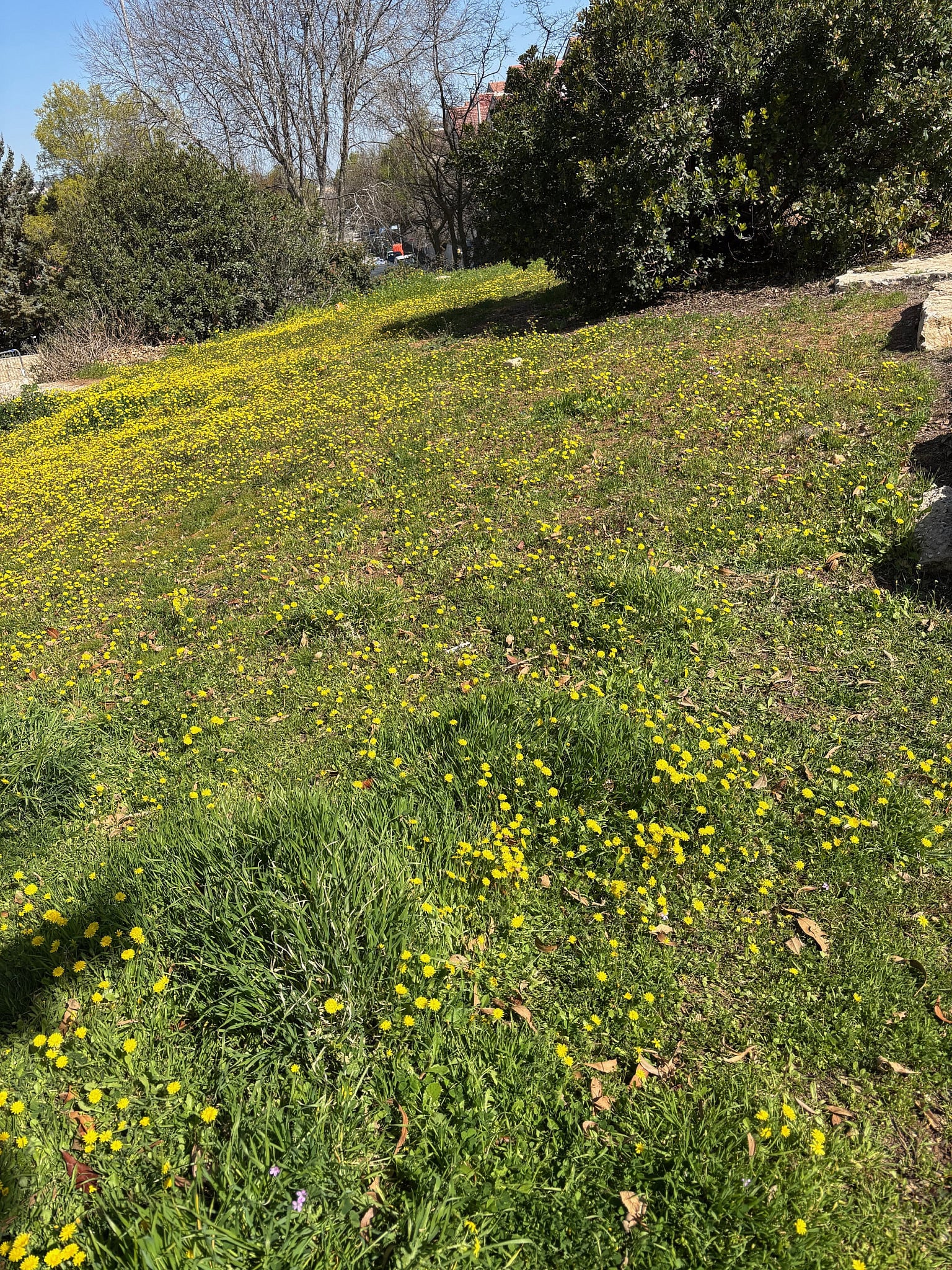
Dandelions shine, but winter shall soon return (Barry Lynn)
Where I come from, there were winter storm watches, flood watches, and tornado watches. There were no missile watches. However, since moving here, one might as well predict: cloudy with a 30% chance of missiles.
One has to ask: how did this go on for so long? As someone from Sderot once put it: “It was only Sderot… until it became the whole country.”
The answer is simple: the concept of “proportionality” — the idea that force should be limited to what is necessary to achieve a military objective while minimizing civilian harm.
For example, if the goal was to stop a few missile launches, then just destroy those launchers.
In fact, government leaders abroad repeatedly insisted that Israel respond “proportionally,” while also warning that a stronger military response could ignite a broader regional conflict. But on October 7th that feared wider war effectively arrived anyway, with the initial Hamas invasion from Gaza, and subsequent attacks from Iranian proxies in Lebanon, Yemen, Iraq, and even Iran itself.
Israel’s leadership then faced the reality that only a wider war could end the threat posed by the Iranian proxies — if not Iran itself — and the concept of “proportionality” was finally thrown into the dust bin where it belongs.
The good news, though, for those worried about our current drought is that our weather may be about to change.
For a while we spoke about colder air arriving from the north and combining with a southern-stream storm to bring unusually cold weather and possibly snow (that was always a small possibility). That didn’t happen, although there was frost on the cars this morning. Moreover, while it won’t be so cold, it will be stormy.
As meteorologist Yaakov Cantor noted, a small, tightly wound and powerful storm system is expected to move northeast from Egypt toward Israel on Shabbat. Moving in from the south should bring a spring-like “warm rain” from late Saturday night through Shabbat afternoon, with locally heavy rain and thunderstorms, especially in southern and eastern Israel. There is a risk of flash flooding as well as strong wind gusts.
On Sunday, as the storm broadens and shifts north of Israel, moist air is expected to stream in from the Mediterranean, bringing more widespread rainfall from the northern Negev northward. This should result from the interaction of a northern-stream shortwave originating over France and Italy with the remnants of an upper (cold) low over Turkey.
Perhaps another extended period of rain will arrive by mid-next week and continue through next Shabbat.
Stay safe! We can only hope that when this war is over, the only storm watches we will need to worry about will be the weather ones.
Related Topics
Related Posts