
The Story Guns tell about Israel and America
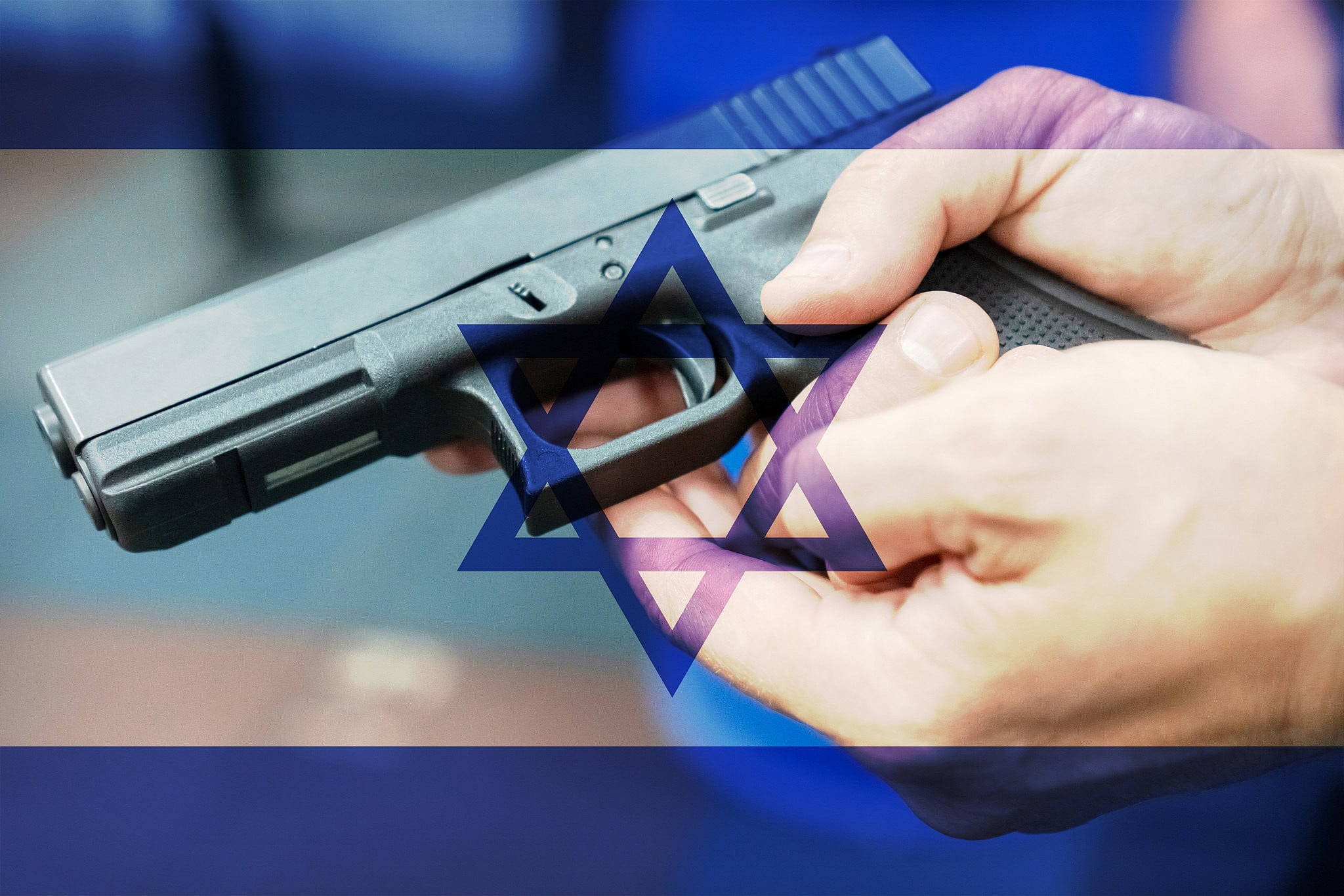
Guns are all over the place in the promised land. From my living room window, I watch a father pushing a stroller, his IDF assault rifle slung across his back. The gabbai (prayer service director) at a shul I visited packs a pistol while giving out Aliyahs (the honor of reciting the Torah blessing). Seated across from me on a Jerusalem bus is a woman, late 20s, with a holstered SIG Sauer P365 semi-automatic pistol tucked into her jeans as if a fashion accessory. I’m in a market on Emek Refa’im in Jerusalem and see a man packing an Emtan Ramon 9mm semi-automatic pistol, feeling up tomatoes, while a young, skinny, bearded man with an IDF assault rifle strapped across his back, his tzitzit hanging out, waits in line to pay for winter-season strawberries. None of these gun scenes disturb me.
On the other hand, if I walk into a 7-Eleven in Oakland, California, and see someone packing a 9mm semi-automatic pistol and another with an assault rifle, I’m gonna have some concerns. Same weapons, different story. In Israel, I’m reassured and getting me some of those winter-season strawberries. In California, I’m dropping to the ground, hiding behind the candy bar display, and calling 911. To understand these different stories, I took a gunsight view by asking the obvious to Israelis and Americans: Why carry a gun? Their answers revealed simple truths about each country. But with Israel, the story is one that many Americans—Jew and non-Jew alike—have either failed or refused to grasp, even if it is the simple truth.
The Second Amendment Pleasures of American Individualism
Bob, a CPA and good friend of mine from Texas, carries a 9 mm Glock. Texas Bob has had a permit for about twenty-one years, even though Texas doesn’t require one, which means he’s been trained to handle a gun. So, why do you carry? I asked. For protection, he deadpanned. From what? Texas Bob looked at me as if I were the straight man in a vaudeville act, asking the dumb setup question. Criminals. Texas Bob was not about to let himself get robbed. He offered this: A mugger in Texas is going to think twice because he doesn’t know if the mugger is carrying. But there’s also gun culture, Texas Bob explained, not made up of crazies but rather sane individuals who just like guns and have a fondness for the Second Amendment. Texas Bob’s reason for carrying is consistent with studies that show a significant majority carry guns for protection and are not fanatics.
Why carry? I asked a Jewish brother from New Jersey who has a permit. For security. Okay. Security from what? His answer: Antisemitism. He explained that his community borders an area with a large Palestinian population that has demonstrated overt antisemitism and threatening behavior, so he thought it important to be prepared.
Ron from Florida by way of Queens, New York, started shooting for sport while in the Boy Scouts. Ron owns over two dozen guns and describes himself as a gun enthusiast. He often carries a 9 mm Glock 26. While Ron noted he’d never thought he’d see this much antisemitism in his lifetime, he’d carry for protection regardless and has been doing so for the last twenty years. Carrying a gun comes with serious responsibility, Ron explained, which includes the importance of regular practice and situational awareness training. Both Ron and Texas Bob told me that carrying causes them to act more conservatively because they never want to fire their gun.
A landsman from New York who carries, told me that he grew up in a West Coast state with gun culture and had been shooting at an early age. Now he lives in a frum community and, with his rabbi’s permission, carries a gun to shul. Gun culture, defense, and security are the reasons he carries a sidearm. While there’s hardly any antisemitism in his county, he thinks it’s important to be prepared. Guns haven’t been viewed favorably in the frum community, but he sees attitudes shifting. He’s not alone.
Since October 7th, interest in guns by Jews has increased, along with Jewish ownership of guns. Even the mainstream Hadassah Magazine recently published an article entitled “The Era of the Jewish Gun Club,” in which the author documents increased concern for security within Jewish communities throughout the US stemming from crime and Jew hatred. In fact, a recent Jewish Telegraph Agency article, citing surveys by the Anti-Defamation League and Jewish Federations of North America, reported that 9% of those surveyed have purchased a gun since October 7th.
What’s significant about this small but growing number of Jewish Americans arming themselves out of concern—actually, fear—about Jew hatred is that they are sharing a psychological landscape with their Israeli brothers and sisters.
Everything you need to know about guns in Israel but refused to ask
In Israel, with 7.72% of the Jewish adult population holding permits, Jews packing pistols and soldiers toting assault rifles are even more common than shuls and falafel stands. Why are so many Jews in Israel carrying guns? To Jews in Israel, this is a stupid question. Everyone knows why. But many Americans—Jews included—don’t get it or refuse to face it, and the state of Israel has done a poor job of explaining it, even though it tells a simple truth about Israel. So, I’ll let Israeli Jews do the talking.
 Moshe Konykov, a bearded, observant Jew, is part of the 7.72% who carry Why? “I have to be ready to protect Jewish lives.” Moshe is also a nationally recognized instructor in Krav Maga, firearms, and counter-terrorism tactics. Why? “Because we don’t have any other choice. We have to train Jews.”
Moshe is not alone. Max just finished his fourth Miluim—reserve duty call-up. He carries a Smith & Wesson 9C pistol because “it’s the responsible thing to do for someone who is able and could help.” While many were motivated by the events of October 7, Max’s sense of duty pre-dated that terrorist attack. He received his gun permit two months earlier. As Max put it, “I have a responsibility to the Jewish people. How could I not participate? I’m here for a purpose.”
Max’s stance was shared by a soldier I spoke with, who was about to be discharged from his fourth reserve duty call-up. Will you apply for a gun permit? I asked. I think I will. I wanted to understand why. Because it’s my duty to stop a terrorist attack.
On a Shabbat afternoon in Carmei Gat, a growing community of young families about 30 miles from Gaza, I spoke with two fathers who were watching over their little ones at a playground. I couldn’t help noticing their holstered sidearms. Why do you carry? I asked. Protection. Terrorism is real. Both were former IDF. I wish I didn’t have to, one of the dads added, referring to the realities of life Israelis face.
Mareen Amitai is a research fellow at the Argaman Institute for Advanced Studies and spokesperson for Armed Women of Israel. Her organization’s objective, Mareen explained, is to empower Israeli women through proficiency in self-defense, which necessarily includes handgun training. This empowerment goal links to the belief held by Armed Women of Israel that a well-trained and armed civilian defense force, which must include women, is essential for deterring terrorism on the home front. “People feel safer when you see a gun because terrorists [in Israel] can attack you anywhere. Terrorists target civilians.” This stance aligns with a national policy of sorts that Prime Minister Benjamin Netanyahu announced during his address to the nation shortly after October 7, where he said, “We’re encouraging citizens, and helping citizens, to arm themselves with personal weapons for defense.”
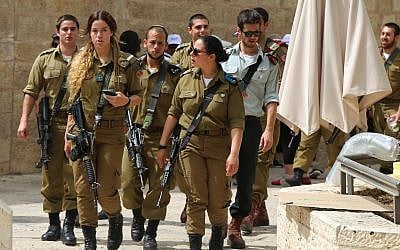 To be a part of a national defense, women must have the opportunity to arm themselves. But Israel’s regulations, which make it harder to obtain a gun permit than in any US State, pose additional obstacles for women. With a few exceptions, an applicant must have served in the Israeli military and received a rifleman 07 or 08 certification (the highest classification). Because women do not have the same opportunities as men to obtain the 07 or 08 IDF status, these regulations often preclude women from obtaining a handgun. This makes no sense, Mareen explained, because most soldiers only receive rifle training in the army. Handgun training comes as part of the gun permit process.
But Israel is full of contradictions that make the Jewish State so special. Since October 7, it’s been easier to obtain a carry permit without meeting some of the stricter requirements if you live in an area especially vulnerable to terrorist attacks. In fact, since October 7, over 220,000 carry permits have been issued.
What stood out most to me from my conversations with the many Israelis who carry guns is their shared sense of responsibility to protect others and defend the Jewish State. This contrasts with the US, where the culture, driven by Second Amendment values, emphasizes the right to individual protection.
Nava, a 26-year-old Jerusalemite who carries a Sig Sauer P365, explained this sense of duty best when I asked her why she carries and discussed the psychological burden that comes with bearing arms. “I don’t want to be in a situation where I’m not able to help,” was her initial response. Noting that most terrorist attacks are stopped by civilians like herself who are on the scene before police arrive, Nava continued: “I want to be able to stop the terrorist from hurting others.” But what about the psychological burdens that come with such a responsibility when you carry? You must always be alert and aware of your surroundings. When you sit in a restaurant, you face the door to watch who walks in. She pushed back. “It’s not a burden; it’s an honor for me to carry and protect Am Yisroel.” I got emotional. I had to stop and collect myself. I’m new here. This stuff gets to me. But you’re always on, I insisted, as a gun carrier, you must always be aware. “I don’t think you will find one Israeli who doesn’t feel this awareness. You have to know what’s going on around you. We don’t have the privilege not to.”
I thought about what Nava said and realized that while I’ve only been living in Israel for 6 months, I’ve indeed adopted a different approach to scanning my environment than I had in Oakland, where crime was the concern. There, it’s more about how I carried myself. In Israel, the threat runs deeper. It’s genocidal.
One American commentator explained the cultural distinctions between gun carrying in Israel and the US this way: “The daily open carry of firearms isn’t about exercising anything like [the US Constitution’s] Second Amendment, and it absolutely isn’t about personal or home defense. It is about the national defense of Israel.” As Nava suggested, there is a history of many instances in which an armed civilian interceded in a terrorist attack and neutralized the terrorist. As Times of Israel journalist Haviv Rettig Gur observed, five years before October 7, “when it comes to guns, Israelis want a well-armed society…. In other words, Israelis are armed not against the state, but by the state against external threats like terror attacks.”(Italics in original)
To understand guns in Israel—to understand Israel—is to apprehend the prevalence of deep-rooted, genocidal hatred its enemies harbor. From its inception, Israel’s enemies have repeatedly demonstrated this hatred through their words, rejections of peace, and acts of terrorism. It is this hatred—not Israeli right-wing ideology or government propaganda—that forces Israelis to carry guns because, if I have learned anything in these first months of my Aliyah, it is that Jews in Israel don’t cower in the face of hate. Rather, Jews carry guns. And they must, because this hatred is not about a land dispute, occupation, or statehood for displaced people. Peaceful co-existence is not on the terrorist agenda. Rather, it is about an ideological hatred rooted in the belief that Israel should not exist at all, and nothing short of wiping the Jewish state and its Jews off the face of the map will do. The proof of this is that Jews in Israel must carry guns.
I hear the grinding noise of anti-Israel brains in a state of cognitive dissonance as they indignantly protest, How can you attribute such a hateful, genocidal ideology to an entire population of people? In my best righteously indignant voice, I asked Garry Alon Rogoff this question because he’s a rabbi, licensed tour guide, and interior designer. He also carries a gun on his tours because “terrorism is real,” and he must ensure his clients’ safety and security. “Where are the Peace Now organizations on the other side? Where are the peace activists protesting in the streets as you see in Israel? Name me one organization on the Palestinian side that is seeking peace,” was Gary’s answer. “What more proof do you want?” he added.
I wanted more proof, so I examined Palestinian think-tank surveys to assess whether it was fair to generalize. Among West Bank Palestinians, a November 2024 poll showed that 60% support (29%) or somewhat support (31%) the escalation of militant actions in the northern West Bank. An October 2025 survey by the Palestinian Center for Policy and Survey Research found that 59% of West Bank Palestinians agree that Hamas’s decision to attack Israel on October 7 was correct. When asked whether Hamas committed the October 7 atrocities shown in international media videos — of Hamas fighters systematically killing Israeli civilians, including women and children in their homes — an overwhelming 86% claim Hamas did not commit such acts, while only 10% say it did.
A September 2025 survey by the Institute of National Security Studies at Tel Aviv University shows that “a majority of Palestinians in the West Bank, at 56% (mainly young people) believe that the State of Israel has no right to exist; an overwhelming majority of 70% think Israel will not endure over time; and 50% believe Israel can be destroyed following the events of October 7.” Additionally, a majority of the Palestinian public in the West Bank (71%) views normalization measures between Israel and Arab states as a betrayal of the Palestinian people. Seems to me, Gary has a point.
Here’s my point. Let’s say I live in the mixed Jewish neighborhood of Crown Heights, Brooklyn. Next to my neighborhood is Prospect Heights, where an overwhelming majority of Prospectstinians live. These Prospectstinians support escalating militant actions against Crown Heights, harbor delusions, and believe that raping women, murdering 1,200 civilians—including babies and young children—and kidnapping 251 civilians, as Hamas did to my neighborhood, is okay. These Prospectstinian’s believe that Crown Heights, as a Jewish neighborhood, should not exist and have repeatedly rejected living in their own neighborhood side by side with mine in peace. Instead, they have engaged in terrorism, have a long history of terrorist activity, and at least fifteen terrorist groups from their neighborhood have been responsible for attacks in my neighborhood over the last three years. That is, by their words and deeds, the Prospectstinians have demonstrated that they’re out to rid my neighborhood of the likes of me, move in, and rename it Prospectstinian Heights. If I live in Crown Heights, I’m packing me a pistol because my Prospectstinian neighbors have made it clear that they’re not interested in singing Kumbaya around the campfire with me. They’re interested in throwing me into the campfire, which is the simple truth that many Americans have failed or refuse to grasp.
Back to the Emtan Ramon 9 mm-packing tomato squeezer at the Jerusalem market and to the young, skinny, bearded man shouldering his IDF-issued assault rifle, waiting to pay for strawberries. The simple truth behind why I felt reassured by their presence is that they are my brothers, just as Nava and Mareen are my sisters, and they’ve got my back, which is the story of why Jews in Israel carry guns.