


The Strait of Hormuz: America’s War Strategy
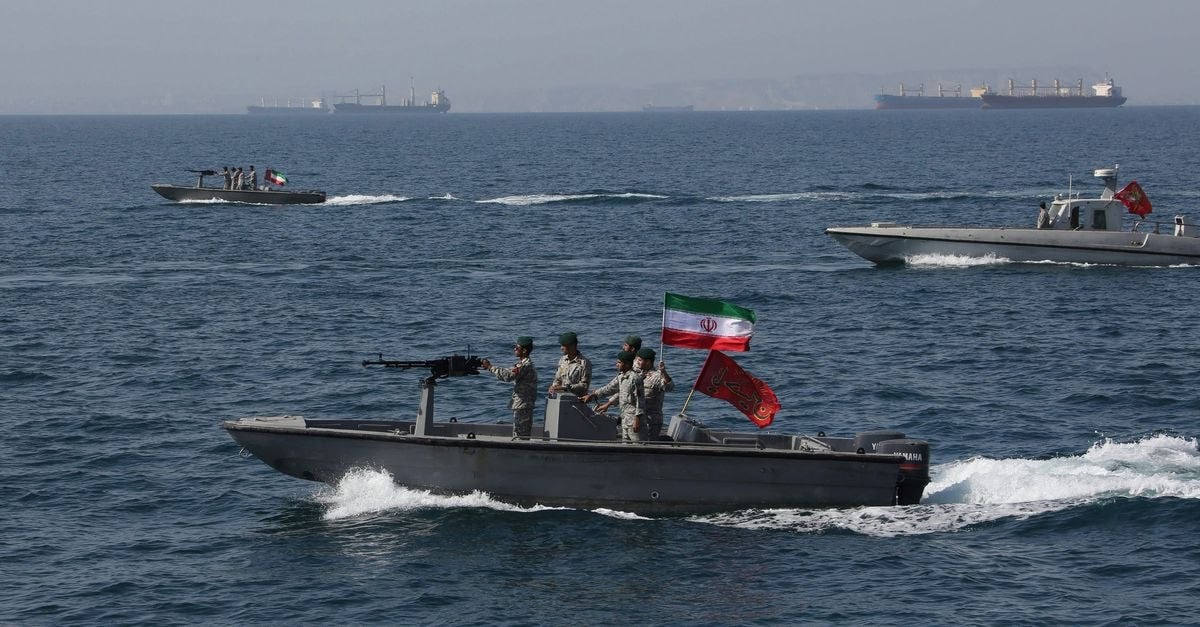
For some time now, the Strait of Hormuz has dominated global headlines. Oil tankers have been left stranded, energy prices are fluctuating, and international analysts continually speak of the possibility of prolonged disruption to this vital artery. The question raised more than any other is this: Why has the United States, despite its unrivalled military power in the region and the extensive presence of its fleets, not reopened the strait? The simple and superficial answer is that it “cannot” or “does not want to get involved.” But a deeper analysis shows that America can open the strait, yet deliberately chooses not to. This choice is part of a larger, multi-layered strategy that has transformed an old threat into an exceptional opportunity.
The Strait of Hormuz is a narrow waterway through which approximately one-fifth of the world’s oil passes. Any disruption to it not only unsettles energy markets but also places economies dependent on oil imports under severe pressure. On the surface, keeping this strait open serves global stability and the short-term interests of major energy consumers. But America’s current strategy goes beyond this appearance. By maintaining the present situation, namely, serious restrictions on the free and safe movement of oil tankers—America has effectively placed its hand on the world’s energy artery. This control provides a powerful tool for deterrence in more distant parts of the world, especially against China.
China depends on energy imports from the Middle East more than any other power. A significant portion of the oil this country needs is supplied via the Persian Gulf and the Strait of Hormuz. If Beijing decides to launch a military attack on Taiwan, it must calculate that America could severely restrict or even cut off the flow of oil. Such an action would embroil China in a war of economic and energy attrition, a war that, without the direct firing of a single bullet, would gradually wear down its industrial and military capacity. Deterrence of this kind is cheaper and less risky than a direct military confrontation in the Pacific Ocean. For this reason, America prefers to keep the situation in the strait in a “semi-closed” state or under tight control, so as to send a clear message to Beijing: any adventurism in Taiwan will carry a heavy energy cost.
This strategy is not directed solely at China. The possibility of oil exports by the Islamic Republic has also been severely limited. For years, the Iranian regime threatened to close the Strait of Hormuz and regarded it as a pressure card against the West. Now that same card has been turned against the regime itself. With disruption to oil exports, the regime’s foreign-currency revenues have decreased and domestic economic pressure has intensified. This pressure has placed the regime in a serious predicament and increased the possibility of its collapse or at least severe weakening. In circumstances where popular protests, structural corruption, and economic inefficiency already existed, the cutting off or restriction of oil revenues could be the breaking point.
At the same time, Moscow’s hands have also been tied. Russia, itself a major energy exporter and dependent on oil and gas revenues in the war in Ukraine, benefits from prolonged instability in the Strait of Hormuz and rising prices. But when control of this artery is in America’s hands and the flow of oil is restricted to the disadvantage of rivals, Moscow likewise cannot use this instability as a sustainable lever. By managing the situation, America simultaneously deters China, keeps the Iranian regime under pressure, and narrows Russia’s room for manoeuvre.
The key point here is that this situation is the result of a precise calculation. The Islamic Republic regime for years threatened to close the strait and considered this threat part of its deterrence doctrine. Now that same threat has been turned into an exceptional opportunity for America. If Trump or any other president had wanted, under some other pretext for example, economic competition or direct pressure on China to restrict the flow of oil from Hormuz, they would have faced severe domestic and international criticism and the legitimacy of the action would have been questioned. But the Iranian regime’s own actions and threats handed America this pretext. Now Washington can say that it is responding to a threat to the security of shipping, while in practice it is using this position to advance broader strategic goals.
This connection itself is evidence that the Islamic Republic regime is on the path to collapse. When a global power ties the continuation of restrictions on an energy artery to the survival of a particular regime, it means that its calculations are based on the weakening or change of that regime. The economic pressure resulting from reduced oil exports, combined with diplomatic isolation and domestic discontent, is a combination that in contemporary history has repeatedly led to regime change. America’s strategy in the Strait of Hormuz is not a short-term tactical reaction but part of a long-term game that has transformed the old threat of the Islamic regime in Iran into a pressure lever against three main rivals: Beijing, Tehran, and Moscow.
The next question that arises is this: When will the Strait of Hormuz be reopened or its security restored? The analytical answer is clear. This will only happen with the overthrow of the Islamic Republic regime. As long as this regime remains in power and its previous threats remain available as a pretext, America’s incentive to fully and unconditionally reopen the strait diminishes. The current situation both preserves deterrence against China, continues maximum pressure on Tehran, and imposes a relatively manageable cost on Western allies. Therefore, the sustainable and complete reopening of the strait is tied to fundamental change in Tehran.
Crown Prince Reza Pahlavi, speaking about the importance of the Strait of Hormuz at the “Black Sea Security” conference in Odessa, Ukraine, stated: The Islamic Republic uses this international waterway as a tool of threat, blackmail, and pressure on the global economy; with the fall of this regime, the Strait of Hormuz will be used to facilitate global trade.
The democratic leader of the Iranian opposition also, in his speech at the CPAC conference in Texas, emphasized the destructive role of the Islamic Republic: Reaching the vision of a free Iran is the only way out of the deadlock that, because of the existence of the Islamic Republic, has held not only Iran but the world captive.
He further believes: The normal openness of the Strait of Hormuz without blackmailing the global economy, the absence of nuclear threats, the end of hostage-taking, and the dismantling of borderless systematic terrorism are the first effects of the day after the fall of the Islamic Republic.
Ultimately, what is happening in the Strait of Hormuz goes beyond a local shipping crisis. This is a page from the book of America’s grand strategy, in which control of energy, regional deterrence, and pressure on global rivals are interwoven. The Iranian regime, through its repeated threats, unwittingly opened this page for America. Now it is paying the price, and the world is waiting to see how far this strategy will go.