

The Struggle for Modern Education in British Somaliland
Before the end of the Second World War, British Somaliland was exceptional among Britain’s African dependencies: it had no functioning state-funded secular school system. The delay reflected Somali fears that colonial schooling threatened Islam and Britain’s preference for inexpensive, minimally intrusive rule. Religious suspicion, pastoral conditions, public resistance, and colonial neglect therefore prevented modern education from taking root.
Why Secular Education Was Delayed
Religious Suspicion and Social Resistance
The strongest obstacle was the belief that Western schooling concealed Christian missionary aims. In the 1890s, French Capuchin missionaries opened a school in Berbera, educated orphans, and converted some of them. The episode convinced many Muslims that European education sought to separate Somali children from their faith. During the Dervish movement of 1899–1920, Sayyid Muhammad ‘Abdille Hassan reinforced this fear by presenting colonial rule as a threat to both land and religion.
Indigenous Education and Pastoral Life
Somalis already maintained Quranic schools that taught Arabic literacy and Islamic jurisprudence. Many religious leaders feared that English instruction or a standardized Somali script would weaken Islamic learning and their authority. A nomadic pastoral population also had limited use for fixed, year-round schools.
Failed Reforms and Colonial Retrenchment
British initiatives repeatedly collapsed under protest. In 1920–1921, Governor Geoffrey Archer proposed schools funded by a livestock tax, but widespread opposition forced the plan’s abandonment. In 1938–1939, education director Randall Ellison attempted to open a school and promote a written Somali script. Opponents denounced him as a missionary, and protests in Burao escalated into riots in which three people were killed.
Britain’s “Care and Maintenance” Policy
British Somaliland mattered as a livestock supplier for Aden and a strategic position on imperial sea routes. It was governed under a restrictive “care and maintenance” budget that prioritized order and trade while investing little in health, infrastructure, or education. After the costly Dervish war, officials avoided reforms likely to provoke religious authorities and restricted missionary activity in the interior.
Consequences and the Postwar Shift
The delay left the protectorate short of teachers, technicians, doctors, and administrators. Authorities relied on personnel from India, Aden, and Sudan, while the economy remained centred on pastoralism and livestock exports. As independence approached in 1960, the north had fewer trained professionals and weaker institutions than many neighbouring territories.
War and Changing Attitudes
World War II changed public attitudes. After Britain recaptured Somaliland in 1941, Somali soldiers saw educated East Africans operating radios, organizing logistics, driving vehicles, and holding skilled positions. Education increasingly appeared essential to economic opportunity and self-government. Civic organizations demanded schools, and in 1944 the British opened permanent primary and boarding institutions at Sheikh and Hargeisa, employing Islamic leaders to reassure families.
Legacy at Independence
When British Somaliland united with Italian Somaliland in 1960, the north entered the Somali Republic with a narrower educational base. Italian Somaliland, though also underdeveloped, had a broader network of elementary and vocational schools. This imbalance contributed to administrative and political tension between northern and southern elites.
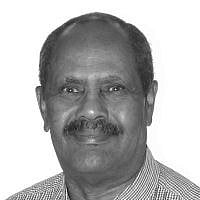
Mohamoud Ahmed Ali and the Birth of Modern Schooling
Mohamoud Ahmed Ali, remembered as the “Father of Education in Somaliland,” became the leading Somali advocate for secular schooling. After studying in Sudan and Britain, he returned convinced that literacy, technical knowledge, and administrative training were essential to national development. He organized informal lessons, petitioned the colonial administration, and argued that secular subjects could complement rather than replace Quranic education.
In 1936, the authorities approved a boys’ school in Berbera. Protests and wartime disruption delayed its launch, and Mohamoud faced accusations that he intended to Christianize children. At a tense meeting in Burao, a crowd attacked he and the British education director. Nevertheless, he continued meeting elders and religious scholars to build support.
After the war, Mohamoud helped secure larger education grants and expand boarding schools at Sheikh and Hargeisa. He also supported early efforts to educate girls despite strong resistance. Graduates later entered Somaliland’s civil service and political leadership. His lasting achievement was showing that academic and technical learning could coexist with Islamic identity and Somali culture. After union in 1960, he served as Director-General of Education and helped guide national school development.
Conclusion
Modern education in British Somaliland was delayed by genuine religious and cultural fears, practical barriers, violent resistance, and a colonial government unwilling to invest or negotiate sustained reform. The postwar expansion of schooling came only when Somalis increasingly connected education with self-rule and advancement. Mohamoud Ahmed Ali’s persistence helped bridge tradition and modernity, laying the foundation for a local professional class while preserving the principle that secular learning need not require cultural or religious surrender.