CEO of Time to Stand Up for Israel
The Tale of Two Cities
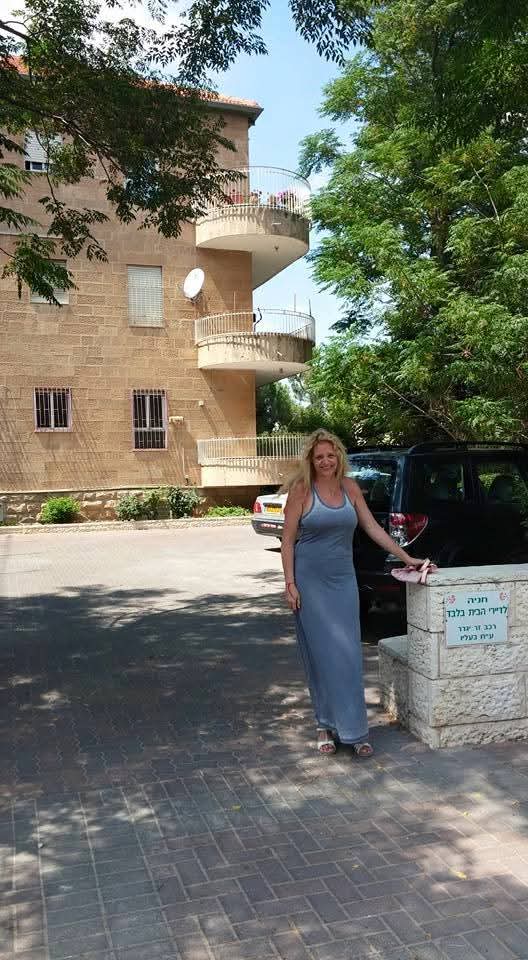
Photo Credits: Sabine Sterk, 2022,
A Tale of Two Cities: My Jerusalem Childhood
I was only eleven years old, but I remember it like yesterday. The golden light of Jerusalem brushing the rooftops of Rehov Mordechai Kaspi, where we lived. Our small apartment overlooked the old vibrant, ancient city, with the Dome Of The Rock, prominent in the middle of this view. My father worked with the United Nations Truce Supervision Organization (UNTSO), and that’s how we came to live in Israel, in the heart of the Jewish homeland.
Jerusalem was alive in a way no other place could ever be. I had many friends from all over, some from Israeli families, some from international backgrounds. We’d walk to the nearby park with our backpacks bouncing, our laughter echoing through the streets. It wasn’t just the people, it was the soul of the city that made you feel part of something so much bigger than yourself.
Every day after I finished with school, I’d stop by the corner where a family of stray cats lived. Some were timid, others bold, but I made it my mission to feed them and make sure they were safe. I gave them names, Bobo, Kesem, and Lev. In a way, they were a part of my little world, just like the shuk in Mahane Yehuda was, bustling with colors, smells, and shouting merchants.
My favorite place was the Old City. We’d go through Jaffa Gate, and I’d marvel at the way history wrapped around you like a blanket. The Western Wall always made me pause, even as a child, I could feel something sacred there, something eternal. Sometimes we’d visit the Church of the Holy Sepulchre or walk along the ancient Via Dolorosa. The Dome of the Rock gleamed in the sunlight, a reminder of the many layers of faith and story embedded in this land.
Jerusalem was a mosaic, where Hebrew, Arabic, and English swirled in the air like music. People might argue, yes, but they lived together, side by side. Christians, Muslims, and Jews, each walking their own paths yet breathing the same dry, sweet air of the Judean hills. There was a sense of freedom. I could talk about anything. I could say “Israel” out loud. I could speak of my hopes, my faith, my identity, and no one would threaten me for it.
That wasn’t the case in Damascus.
We lived there briefly because of my father’s UN posting. The contrast was stark and unsettling, even for a child. The streets were different. The looks people gave you were different. The fear lingered like a fog, even on sunny days. You couldn’t speak freely. You couldn’t say “Israel.” You couldn’t even hint at having lived there. It was dangerous.
I missed my cats. I missed walking freely, laughing loudly. I missed the scent of falafel mixed with za’atar on the streets of Jerusalem, the sound of the shofar on Rosh Hashanah, the bells of churches on Sunday mornings, the call to prayer echoing from minarets, existing like a symphony, not a battlefield.
In Damascus, everything about Israel was whispered, denied, or condemned. At school, there were textbooks that demonized Jews, that rewrote history. The word “Zionist” was spat like poison. I kept my memories of Jerusalem locked deep in my heart like a secret diary. I learned to nod silently when teachers spoke lies, but inside I knew the truth, I had seen it with my own eyes. I had lived it.
Israel wasn’t perfect, but it was home. A place of diversity and life, of honesty and struggle, of compassion and freedom. In Jerusalem, I saw Arab doctors working in hospitals, Jewish and Muslim children playing in the same playgrounds, Christians walking safely to their churches. That didn’t happen in Syria. There, you feared your neighbors. You feared your government. And you feared that even a slip of the tongue could cost you everything.
Today, as I remember those years, I hold tight to the truth. Jerusalem, with all its beauty and complexity, gave me something Damascus never could: the freedom to be who I am.
I was only a girl then, but I already knew what it meant to live in a place that values life and truth. And for that, I will always carry Jerusalem in my heart as a beacon of hope, and as my forever home.
Related Topics
Related Posts