The Tenth Man
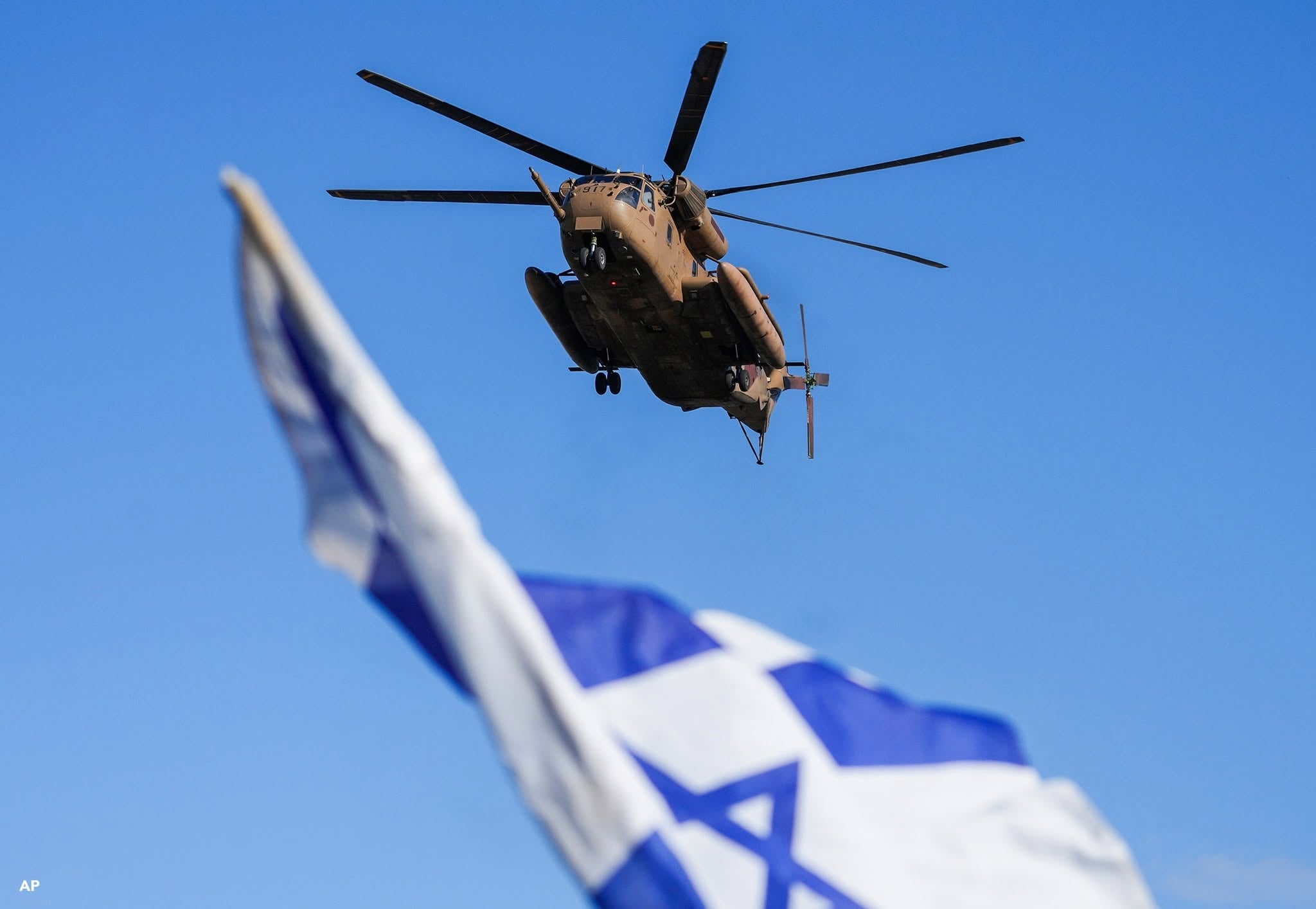
The helicopter comes in low over the pad, and before it’s fully down the doors are open and they’re running. Two soldiers. One has lost both legs — the tourniquets are already on, someone in the field did that right, and it’s the only reason he’s alive to be wheeled in screaming. The other has obvious shrapnel injuries. He’s conscious, talking, but in pain. He’s put on the overflow side of the trauma bay. Nothing about those first moments tells you which of the two is closer to dying.
We immediately perform a trauma ultrasound and the picture changes completely. The soldier who still has both legs has internal bleeding we can’t see, blood pressure dropping in ways that don’t match his face. He’s still lucid enough to know something is wrong. Lucid enough, in the last clear minute he has, to ask not about himself but about the soldier on the next stretcher. He asks with a weakening voice:
Eich Ha’Ach Sheli?
How is my brother?
Despite the heroic team effort, he doesn’t survive long after his multiple emergency surgeries. The soldier who lost both legs survives.
I don’t have a way to make that make sense. I only have the fact of it: a man’s last coherent thought, as his own life was slipping away, belonged to someone else.
Medicine can usually tell you where the bleeding is from, why the pressure is falling, why an injury is not survivable. It can explain why one body survives while another doesn’t. Usually. This, it cannot explain.
I live in a world that has a name for things like that, even if medicine doesn’t. I grew up in a home and in a yeshiva where faith wasn’t one part of life among others—it was the frame everything else hung on. Emunah wasn’t a subject we studied so much as the air we breathed. Then I entered classrooms, hospitals, and emergency departments where that certainty wasn’t the default. I didn’t leave that world behind; I spent years learning how to carry it into rooms that didn’t share its assumptions. I still strive to be that yeshiva guy. For a long time, I was simply the only one in the room who saw the world that way.
I practiced medicine on the East Coast first, in emergency rooms where a yarmulke was a fact about me that occasionally needed a sentence of explanation, and faith was something you kept in a separate pocket from the job. The medicine there was excellent. It was also, in a way I couldn’t have named at the time, simple in a particular way — nobody in that trauma bay was going to ask me to stand in for anything but the doctor.
Israel, when we finally made aliyah, was supposed to be more of the same, just closer to home. Mostly, that’s true. But I didn’t expect medicine here to keep handing me moments where the kippah and the white coat didn’t just coexist — they collided, and something other than my training had to answer. That soldier’s last words were my first real evidence of it, before I had language for what I was seeing. I was beginning to understand what it means to belong to a nation and not just live in one.
Calling a time of death is a small, precise act. You look at the monitor, you look at the clock, you say the words out loud so the room and the chart agree on when. It is, in its way, the most clinical thing I do — the last purely medical act in a story that has just stopped being about medicine.
After one of these calls, the family — still in the hallway, still in the first raw minutes — asked if I would come stand with them. They needed ten. A minyan, to say a prayer for the dead. They didn’t ask if I was observant. They looked at my head and already knew. The kippah that once needed explaining in a college classroom needed no explanation here at all — it was simply read, correctly, as an answer to a question they hadn’t had to ask out loud. I stood where the doctor stands, and then, a few feet and a few minutes later, I stood where the tenth man stands, and the difference between those two positions is one I still haven’t fully gotten used to.
I didn’t plan to come to Israel to be needed that way. But the ER keeps handing me these thresholds — moments where the medicine has finished its work, one way or the other, and something else is asked of me instead. And each time, instead of stepping back to let the family have their sacred moment in private, I’ve found myself pulled a little further into it. Not tolerated at the edge of their grief. Counted inside it.
Not every lesson this country has taught me has come in the middle of tragedy. Some have come in moments so ordinary they would have been forgettable anywhere else. A teenager came in with a cut just under the bridge of his glasses. I meant to ask him, in Hebrew, to take off his mishkafayim. What came out was michnasayim. Pants.
He looked at me for a second, then started laughing — the kind of laugh that comes easier when you’re young and mostly fine and someone has just accidentally asked you to take your trousers off over a cut on the bridge of your nose. It’s a small thing. But I think about it more than its size deserves, because it’s the most honest marker I have of where I actually stand here. Four years in. Trusted enough to be pulled into a family’s grief, expected without question to make the tenth for a minyan after pronouncing death — and still capable of mixing up a teenager’s glasses with his pants. Belonging here hasn’t come from fluency. It’s come from something else, and my Hebrew is still catching up to it.
The next patient came in after a fall — a syncopal episode, the medical term for a sudden loss of consciousness. Ninety-something years old, and by the time I saw him he was entirely stable, no complaints, sharp as anyone half his age. His EKG told a different story: complete heart block. His heart’s electrical system had, in effect, stopped agreeing with itself. It could stop entirely, without warning, at any moment. He needed a pacemaker, and he needed it urgently.
He said no.
I explained it as plainly as I could — that this wasn’t a chronic risk to manage over years, it was a possibility that could arrive at any time, but this time his heart could stop permanently. He understood before I finished the sentence. Then he showed me his phone. Photographs — children, grandchildren, a family rebuilt from nothing after the Holocaust. He said he had lived a complete life. He wasn’t trying to convince me to agree with him. He was simply telling the story of his life to someone he assumed would understand why it mattered. He wanted me to know that his answer wasn’t fear talking, or grief. It was a conclusion, considered and arrived at.
I recognized it immediately. Bitachon. From the hell of the concentration camps to a large, beautiful family rebuilt in Israel — he knew what he was talking about. I sat with him longer than the chart required. I was still writing his informed refusal, still turning that conversation over, when I looked up at the monitor and saw the reality of what we had just discussed moments ago.
He had suddenly died right there in the ER while I was writing down the words “your family is lucky to have you as their Saba.”
I don’t know what to do with the timing of that except to notice it. He told me his life was complete — and then, minutes later, so it was. I have stood in rooms where death arrives like an intrusion, uninvited and violent. This was not that. This felt, impossibly, like permission being granted and then taken up. Medicine doesn’t have language for what I watched happen in that room. The language for it lives in the same place the minyan does.
Another moment keeps coming back to me. It began in the trauma bay, weeks earlier. A soldier came in with a bullet through his spine. He would probably not walk again. We stabilized him, admitted him, and he began the long, slow work of recovering into a body that would never work the same.
Weeks later, mid-shift, someone told me to come down to the lobby. They didn’t say why. When I got there, his entire unit was standing there waiting — the same men he’d gone in with and the same ones who’d carried him out. And along with them was the ED team that had taken him in that first day. Me included.
They wheeled him into the middle of the lobby, still in his hospital bed. He didn’t know we’d be there. When he saw us — the same faces from the worst hour of his life, standing next to the men he led — he had tears in his eyes. Religious and secular, old reservists and boys barely out of their teens, his unit gathered around the stretcher and said the Shema together. Then Tehillim. Men who might not agree on much of anything else, standing shoulder to shoulder around a man who would likely never stand again, praying the same words together before many of them went back into the danger that had put him there.
I stood at the edge of that lobby the way I’d once stood at the edge of a family’s grief before they pulled me in. Except I wasn’t only at the edge this time — I was part of what he was crying at the sight of. I understood every word being sung. Not because the Hebrew was familiar, but because there was nothing left to translate. That is faith and brotherhood meshed together — not private conviction held quietly, but something reached for together, by soldiers and doctors both, because it’s the only thing sturdy enough to hold a moment like that.
I spent years learning to carry two worlds into rooms that only expected one — the yeshiva guy explaining himself in a college classroom, the black velvet yarmulka with the blue medical scrubs. I assumed that in Israel, the translating would finally stop, that faith and medicine would just sit next to each other quietly, each doing its own job.
What I didn’t expect was how often the medicine would run out before the moment did — how often I would be asked to answer to something older than my training: a people, a history, a unity I hadn’t fully understood. Each time, I could have stayed where the doctor stands — watching, useful, but apart. Instead, again and again, I’ve been pulled in. Not because I stopped being the physician, but because here, being one has never meant standing only at the edge.
Back on the East Coast, I tried to be a good doctor in rooms that never asked me to be anything else. Here, I’m still a doctor first—but the room keeps asking questions medicine alone can’t answer. Four years in, I still mix up my Hebrew. But nobody asks me to explain the kippah anymore, and I’ve stopped being surprised when someone expects me to be counted among them. Because I am one of them.
That is what it has actually meant to come home.