

Writing Where Intelligence Meets Strategy
The Thin Line Between Consulting and Espionage
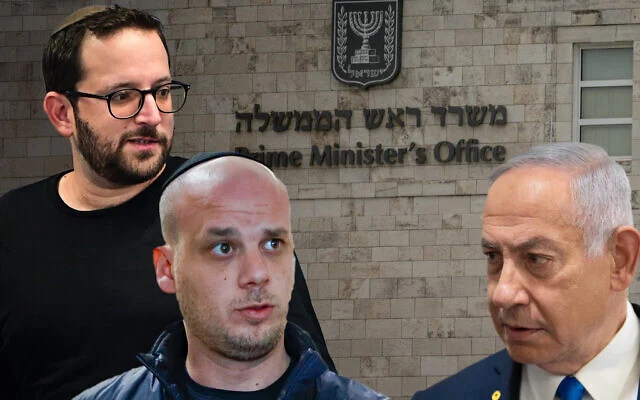
From left: Jonatan Urich, Eli Feldstein, Prime Minister Benjamin Netanyahu (Composite: Flash90)
As aides allegedly compromised state secrets and worked to rehabilitate Doha’s image during wartime, questions arise over whether these covert ties explain Netanyahu’s refusal to designate Qatar an enemy state.
While IDF soldiers were fighting and falling in the Gaza Strip, as millions of Israelis rushed to bomb shelters under relentless rocket fire, and as families of the hostages endured unspeakable agony, a grave threat to national security was unfolding at the very heart of the Israeli Prime Minister’s Office.
Prime Minister Benjamin Netanyahu’s closest and most trusted confidants, Jonatan Urich, Israel (Srulik) Einhorn, and Eli Feldstein, allegedly crossed the line from political strategy into state-level betrayal, acting as covert operatives for the Qatari regime while maintaining ongoing, clandestine contacts with representatives in Doha.
This was no innocent consulting work or standard PR campaign. Evidence points to an espionage-style influence ring that involved secret European rendezvous and the compromise of top-secret military intelligence, all in service of a foreign state that actively finances and harbors the leadership of Hamas during an existential war.
A Hostile Power Unchecked
The scandal, dubbed “Qatargate, ” casts a harsh light on a glaring contradiction in Israel’s war policy: despite Qatar’s direct financial and ideological support for Hamas, Netanyahu’s government consistently refrained from formally declaring the Gulf emirate an enemy state.
Now, investigative findings suggest a chilling possibility , that this strategic leniency may have been directly tied to the clandestine pipeline operating out of the Prime Minister’s Office. While sending his top advisors to secret meetings with Qatari officials, Netanyahu kept the diplomatic and legal status of Doha untouched, raising fierce questions over whether national defense policy was shaped to protect these covert channels.
At the center of this broker network stands American-Jewish lobbyist Jay Footlik, a former White House aide turned official agent for Doha. Footlik served as the primary bridge between Qatari authorities and Netanyahu’s inner circle, directly coordinating with Feldstein and other senior staff.
As the joint investigation by the Israel Police and the Shin Bet intensified, Footlik repeatedly evaded questioning. Following the cancellation of his DOJ interrogation in the U.S., Israeli police issued an international arrest warrant, turning him into a wanted fugitive. Meanwhile, Einhorn, Urich’s strategic partner at the campaign firm Perception, remains in hiding in Serbia while Israeli authorities pursue Interpol and extradition mechanisms to bring him to justice.
Foreign Prompts and Leaked Intelligence
While Israeli combat troops advanced through Gaza, Urich was making repeated trips to luxury hotels across European capitals for secret meetings with Ali Al-Thawadi, a high-ranking associate of the Emir of Qatar. Confronted by police investigators, Urich brazenly claimed he “barely remembered” the substance of these discussions.
However, forensic analysis revealed a concrete digital trail. Investigators presented Urich with prompts he submitted to ChatGPT as late as September 2024, explicitly asking the AI for strategies on how to “launder” Qatar’s image and make the pro-Hamas regime palatable to the Israeli public.
This image-rehabilitation effort ran parallel to a catastrophic security breach: the theft and manipulation of raw, top-secret intelligence from the IDF Military Intelligence Directorate (Aman). Highly sensitive raw material was leaked exclusively to the German publication Bild to manipulate public sentiment surrounding hostage negotiations and shield the political leadership from mounting domestic pressure.
Blind Eye or Full Endorsement?
Inside a Prime Minister’s Office operating under total wartime security, where every itinerary, travel authorization, and meeting of senior staff is rigidly monitored by the Shin Bet, the claim that Netanyahu was unaware of his closest aides “disappearing” to Europe to meet Qatari operatives strains all credibility.
The most damning evidence of complicity, however, remains Netanyahu’s persistent refusal to fire Jonathan Urich. Even after the exposed Qatari ties led to severe interrogations under warning for top security offenses, Netanyahu has steadfastly kept Urich in his political fold.
This unwavering protection points toward an unavoidable conclusion: the prime minister was aware of the operation, endorsed its objectives, and was willing to tolerate illicit ties with a state funding Hamas, prioritizing media narrative control and political survival over state security.
When top-secret military intelligence and state security become bargaining chips in a wartime PR strategy, the boundary between political consulting and espionage dissolves completely. Those involved now face a historic and legal reckoning for crossing every red line in defense of a foreign benefactor.