


The Third Story
The Third Story: A Noble Idea, A Dangerous Distraction
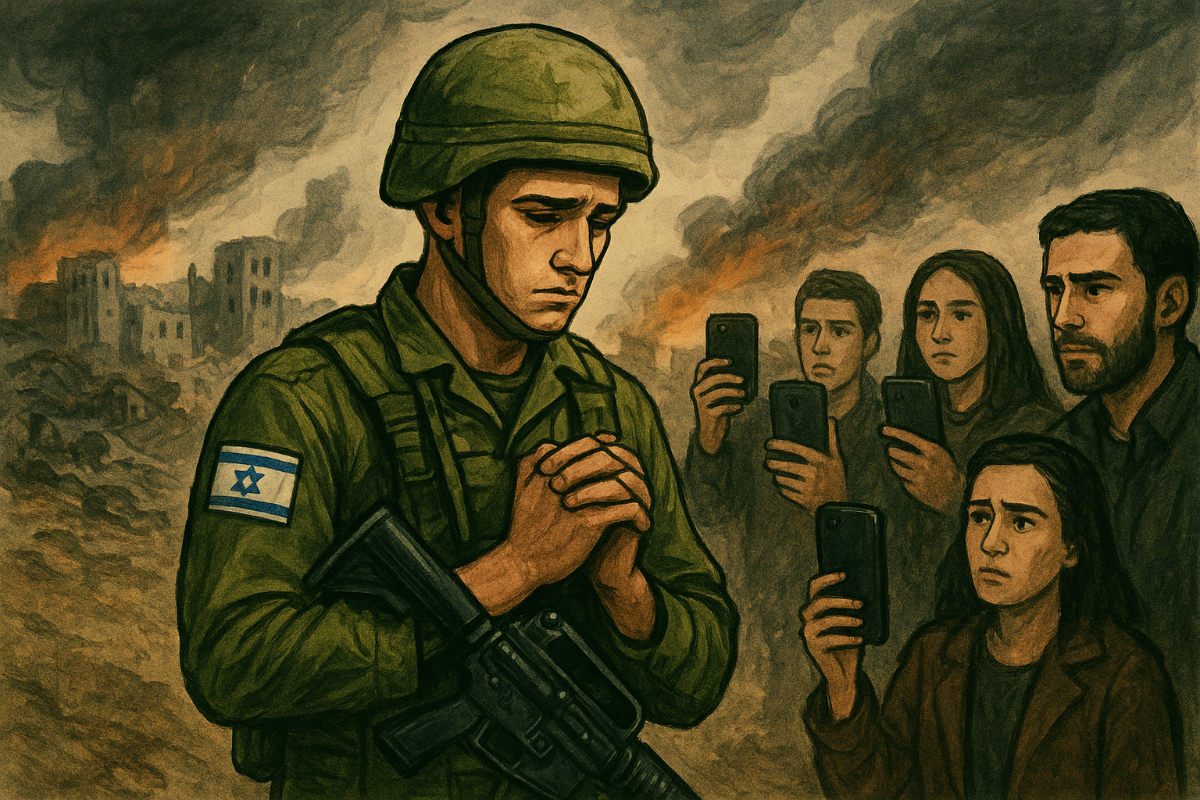
Created by Gemini AI, 6.23.25
At times spinning a “third story” is not the most noble idea.
In her new book, As a Jew: Reclaiming Our Story from Those Who Blame, Shame, and Try to Erase Us, Sarah Hurwitz explores how centuries of antisemitism have conditioned Jews to apologize for their identity and internalize the external forces that seek to undermine us. It’s a chilling but essential thesis—that our very self-perception as a people has been shaped by the hatred of others. This insight is more relevant than ever as we witness the global response to the war in Gaza.
In recent years, a well-meaning “third story” has emerged in the context of the Israeli-Palestinian conflict. It is a compelling idea—that we should seek a more complex narrative that acknowledges the trauma and pain of both peoples, moving beyond the binary of Israeli versus Palestinian victimhood.
In theory, this is a path toward empathy and reconciliation. But during wartime, this valuable concept has become a dangerous distraction.
The relentless focus on Israel’s alleged moral failings and pitfalls—every tactical decision, every casualty, every unfortunate but necessary consequence of war—is not a genuine attempt at building a shared, empathetic story. It is a form of what Hurwitz might call the insidious, modern-day effort to shame and blame us. The loudest Jewish voices, often citing the need for this “third story,” are not concerned with presenting a truthful, nuanced account. They are driven by a zero-sum narrative of Israeli perfidy, demanding that we be perfect even as we fight an enemy that does not value life or morality and seeks our total destruction.
This demand for moral perfection, framed as intellectual honesty and the advocacy for this “third story” is a dangerous distraction. It does nothing to address the issues on the ground; in fact, it only serves to paralyze and demoralize. By amplifying every alleged Israeli shortcoming, a self-defeating form of the “third story” is weaponized to provide fodder for those who wish to undermine our just cause. It feeds a narrative that suggests our very existence and self-defense are somehow illegitimate, enabling a growing global culture of condemnation that threatens Israel’s safety and survival.
We must remember the mission at hand: to uproot a contemporary evil and global threat to humanity. This is not a war of choice, but one of necessity. Israel, once again, finds itself in the tragic and unfortunate role of having to fight for its very existence. That being the case, we cannot afford to be distracted by demands for apologies for taking on a role that no one else will. It’s time to reclaim our story and live as Jews without resorting at every turn to apologetics for what we must do. We must remain focused on the core mission and refuse to be shamed by those who misunderstand it and refuse to acknowledge the profound justice of this cause. And we must be ready to forgive ourselves for not being perfect in the process of prioritizing our existential objectives.