President and Rosh HaYeshiva, Ohr Torah Stone
The Torah Our Children Are Teaching Us: Reflections for Tisha B’Av
Walk the streets of Israel today, and you’ll see them—small, powerful stickers pasted onto bus stops, train stations, street lights, electricity boxes, and public benches. At first glance, they may seem like just another layer of city life. But look closer, and there is something sacred: messages of love, strength, and moral clarity from those we’ve lost.
Since October 7th, these tribute stickers honoring fallen soldiers, murdered hostages, and others killed that day have quietly multiplied across the country. Each one bears a short quote capturing the spirit, life and values of a fallen soul. For me, these fragments of memory have become a kind of living Torah, scattered throughout our cities. Just as Pirkei Avot, the Ethics of our Fathers, guides us in how to live and treat others by wisdom passed down from earlier generations, these stickers form what I’ve come to think of as Pirkei Banim: the Ethics of Our Children.
What’s striking is how many of these messages carry the same theme: ahavat chinam—unconditional love for one’s fellow Jew. Again and again, we see a commitment to kindness, generosity, empathy, and a focus on values greater than oneself. Even after death, the words and actions of our beloved children continue to guide us, calling us to live with greater compassion and responsibility.
With Tisha B’Av approaching—a day that mourns the destruction brought about by sinat chinam, baseless hatred, and lives of self focus—these messages are a powerful reminder that living even short lives of deep purpose creates an immortal existence and helps to create a redemptive reality for our people.
It’s easy to find conflict and become bogged down in our own petty worries and concerns. But if we look around and pay attention to our surroundings, the message is already written on the walls: love your fellow Jew and help transform our reality. This is how we begin to rebuild.
In the spirit of Pirkei Banim, what follows is a glimpse—just twelve of the many voices that now line our streets—each one offering a lesson on ahavat chinam and lives of eternal purpose.
Almog Sarusi
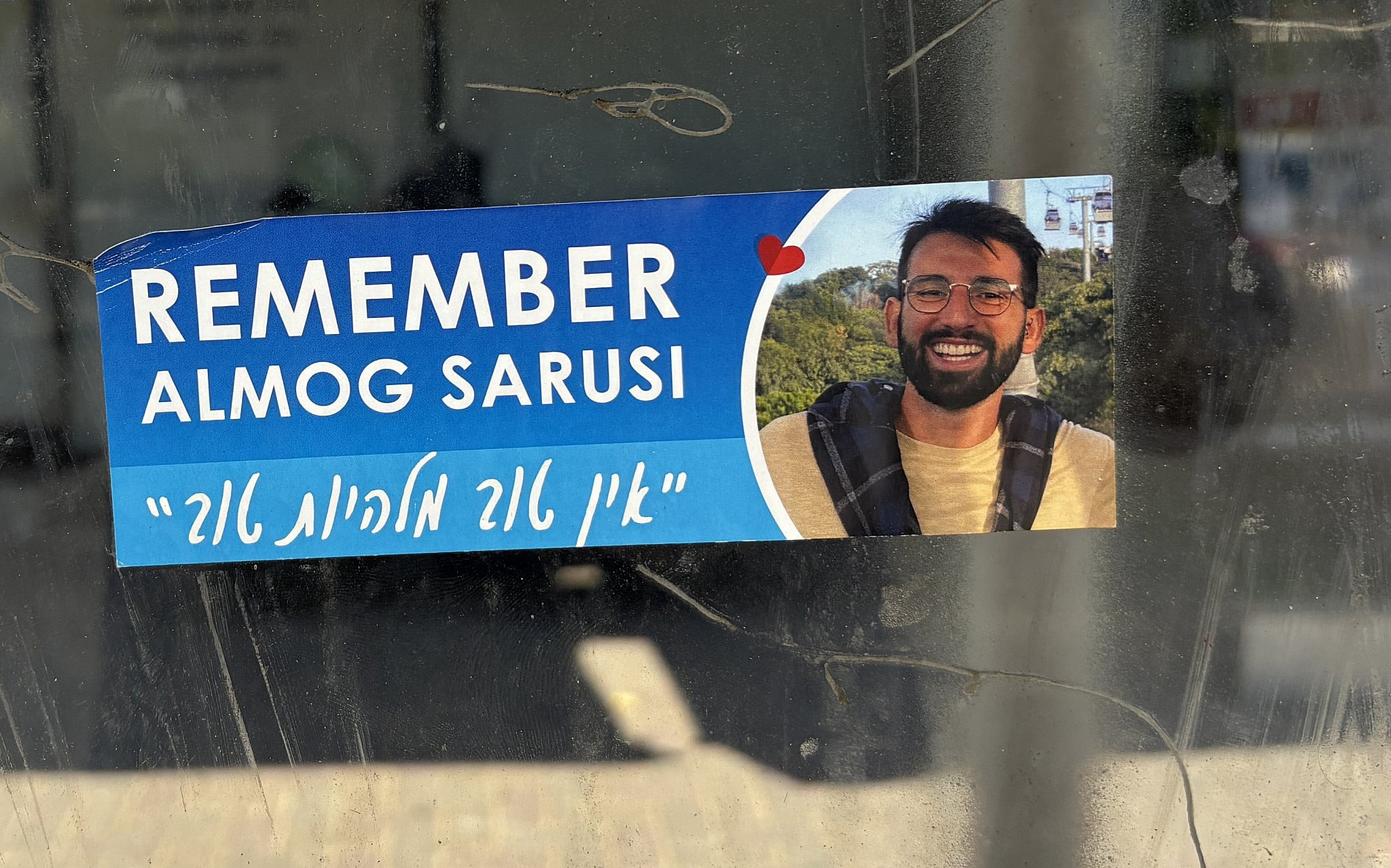
Almog Sarusi TZ”L’s motto was “There is nothing better than being good.” Affectionately known as “Abba Sarusi” for his kindness, he gave free math lessons and opened his home to anyone in need of a warm, festive holiday meal. His dream was to develop Israel’s periphery areas and open a center for at-risk youth. Almog was kidnapped at the Nova Festival while staying by the side of his wounded love, Shachar. His life reminds us that goodness knows no bounds. To honor Almog’s memory,ask yourself: What good will you choose to do today?’
Elchanan Kalmanson
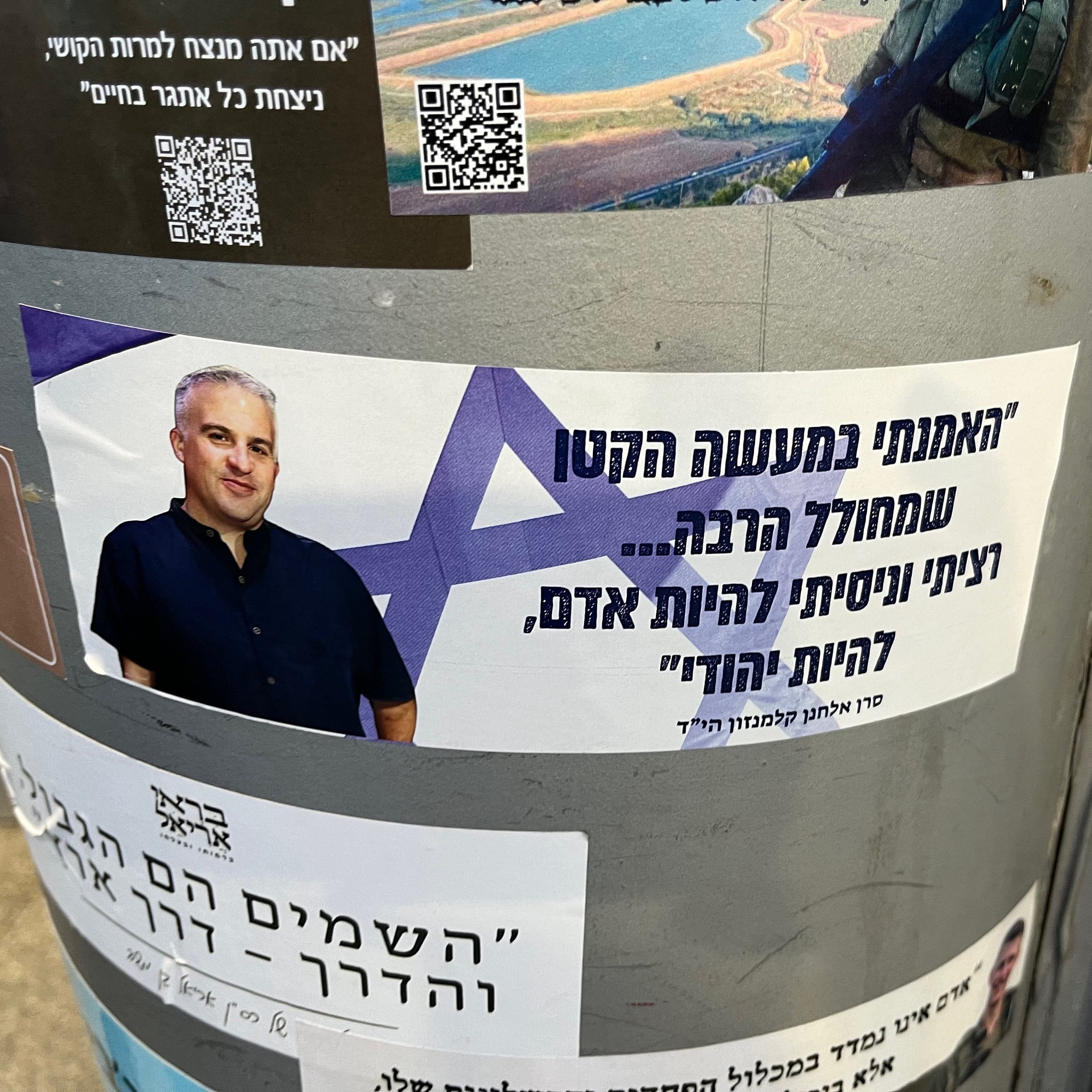
Elchanan Kalmanson TZ”L believed that small acts could make a big difference. “I wanted and tried to be a human being—and to be a Jew,” he once said. A graduate of OTS’s Neveh Shmuel Yeshiva High School, Elchanan dedicated his life to serving the Jewish people—as a soldier, a member of the Mossad, a reservist, and a protector of Otniel, the small community near Hebron where he lived and raised his family. On October 7, Elchanan spent 16 hours rescuing civilians in Kibbutz Be’eri. His life is a reminder that even the smallest acts, done with courage and conviction, can shape a better world. To honor his memory, ask yourself: What difference will you choose to make today?
Rinat Zagdon
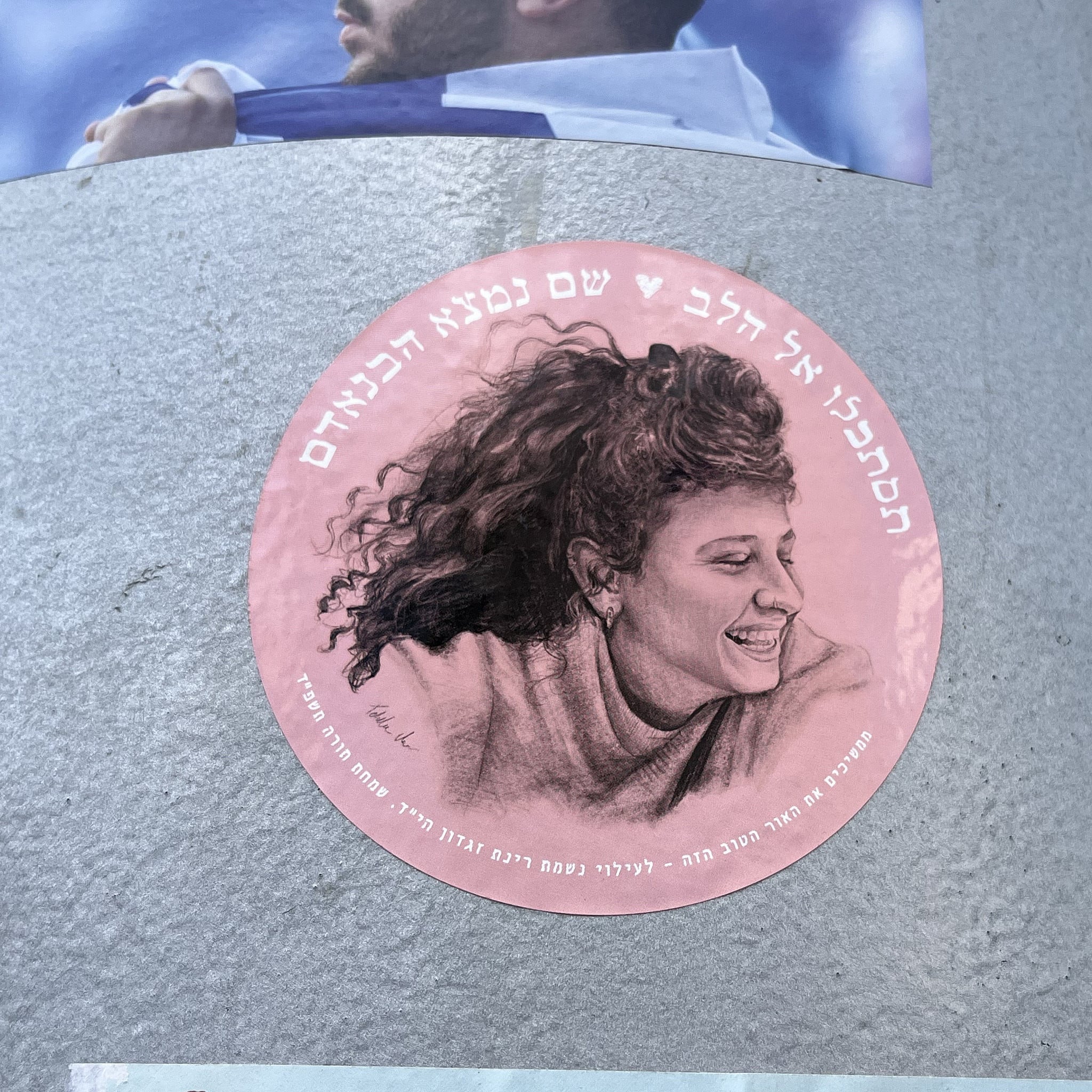
Rinat Zagdon Z”L often said, “Look at the heart, not how a person looks, for that is where you’ll find who they really are.” The daughter of Mechola Zagdon, guidance counselor and social worker at OTS’s Katz Oriyah High School for Girls, Rinat was known for her warm smile, beautiful voice, and the way she made space for everyone. She connected deeply, without judgement, and always saw people for who they were inside. To carry her legacy forward, ask yourself: How can I look beyond appearances and truly connect—with empathy, not judgment?
Shahar Ben Nun
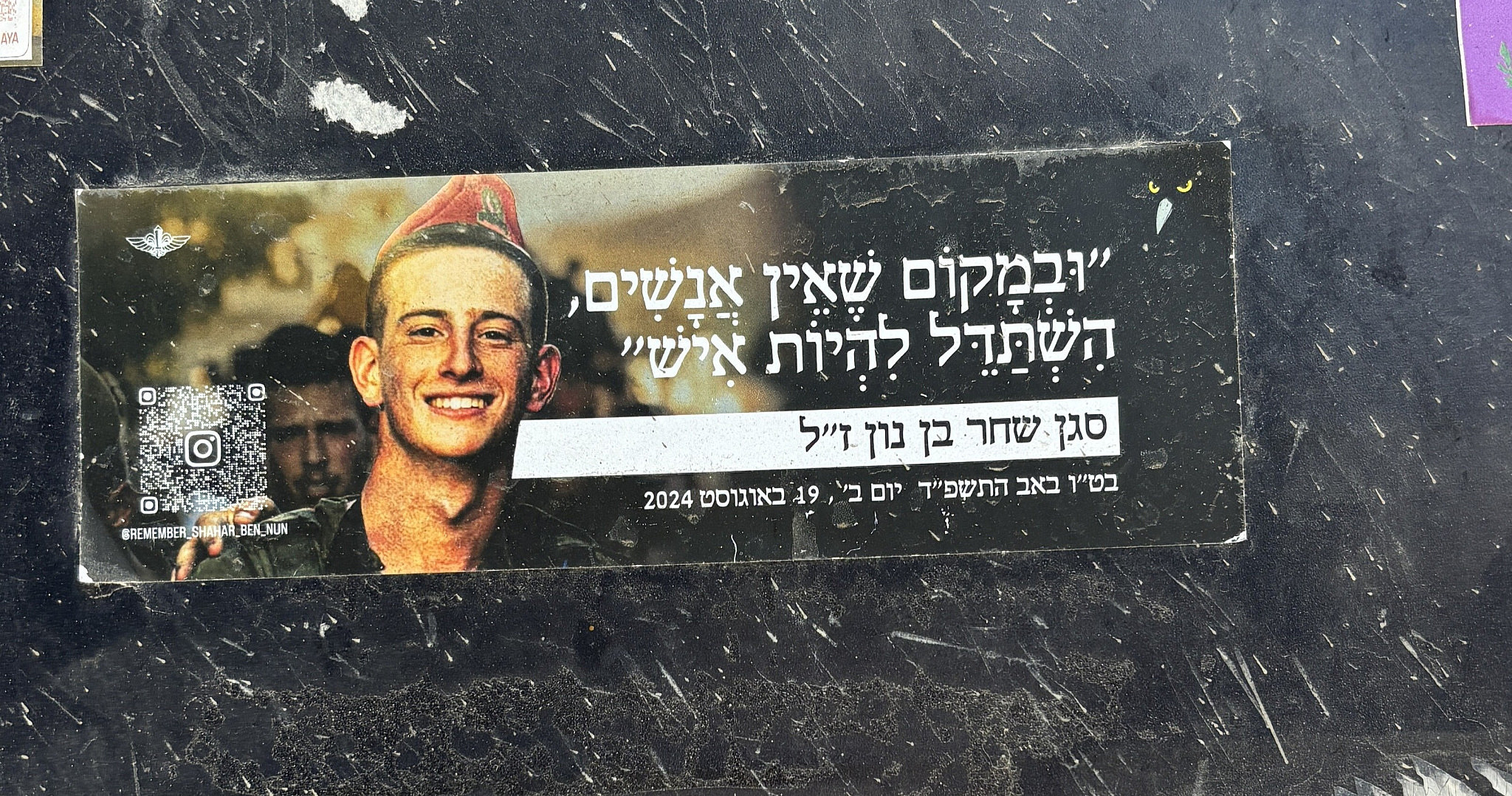
Shachar Ben Nun Z”L lived by the teaching, “Where there are no humans, strive to be a mensch.” A devoted educator, he inspired his chanichim (students) to live with integrity and moral courage, just as he did. Today, his memory lives on through a podcast that explores the values he held dear. To honor Shachar’s legacy, ask yourself: How can I always act with moral clarity, no matter the environment?
Shir Hana Georgy
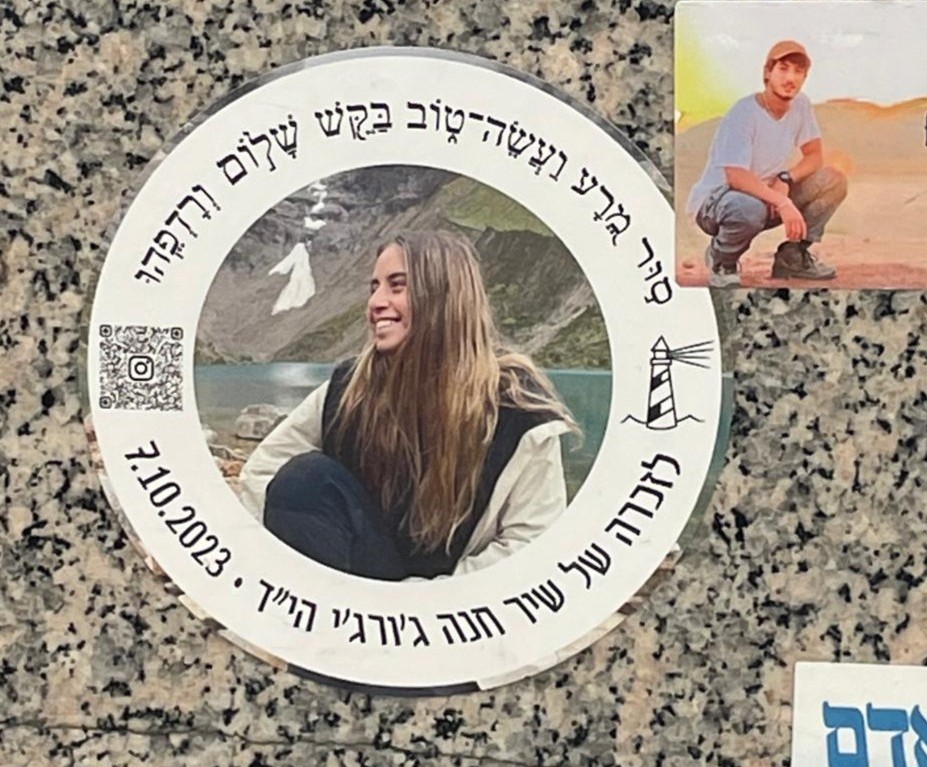
Shir Hana Georgy Z”L lived by the words, “Turn away from evil and do good. Seek peace and pursue it.” She carried this mission with her—literally—with tattoos of a sun and lighthouse to remind herself to spread light wherever she went. To honor Shir Hana’s legacy, ask yourself: How can I bring more light and goodness into someone’s life today?
Yossi Hershkovitz and Rabbi Avi Goldberg
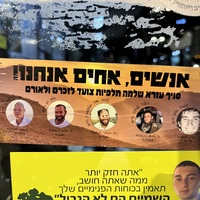
I recognize two faces on this sticker: Yossi Hershkovitz Z”L, father of a student at OTS’s Neveh Shmuel Yeshiva High School, and Rabbi Avi Goldberg Z”L, a dear friend, graduate of the Straus-Amiel Rabbinical Emissary Institute, and father of two Neveh Shmuel students. Yossi and Avi were both known for their deep love for every Jew. They spent their lives as devoted educators, music lovers, and passionate shlichim to Jewish communities in the US — Riverdale and Memphis. To honor their memory, ask yourself: How can I engage lovingly with a fellow Jew today, no matter their spiritual orbit or perspective?
Yehonatan Samo
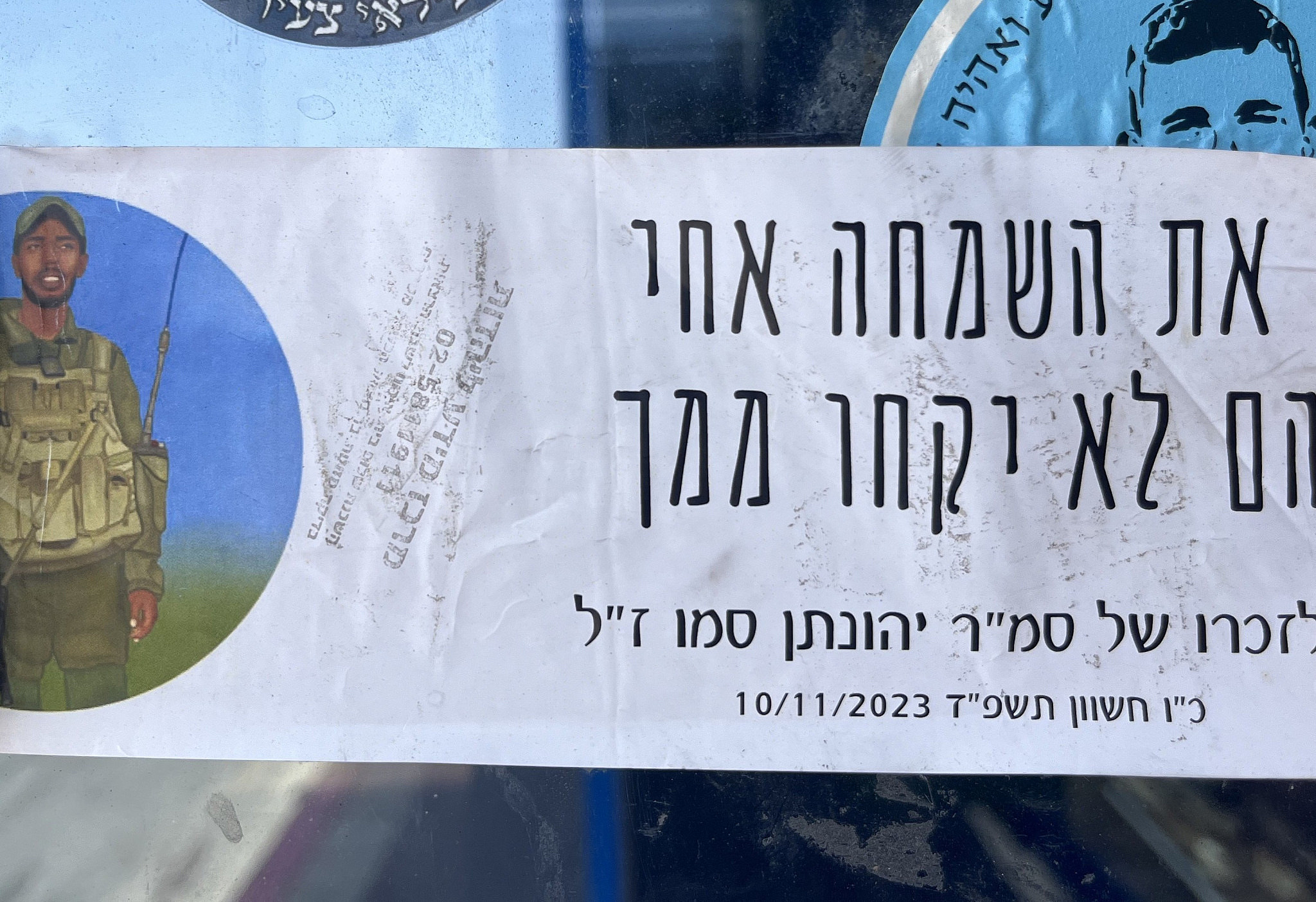
“Your happiness, my brother, they cannot take away from you.” Yehonatan Samo Z”L, a graduate of OTS’s Neveh Shmuel Yeshiva High School, was known for his deep desire to help others—and for doing so with a constant smile. After his death, his family said “there was no hesitation” to donate his organs, which gave new life to six patients throughout Beilinson Hospital. Helping others was simply who Yehonatan was. To honor his legacy, ask yourself: How can I help bring joy to someone else today?
Eden Gaz
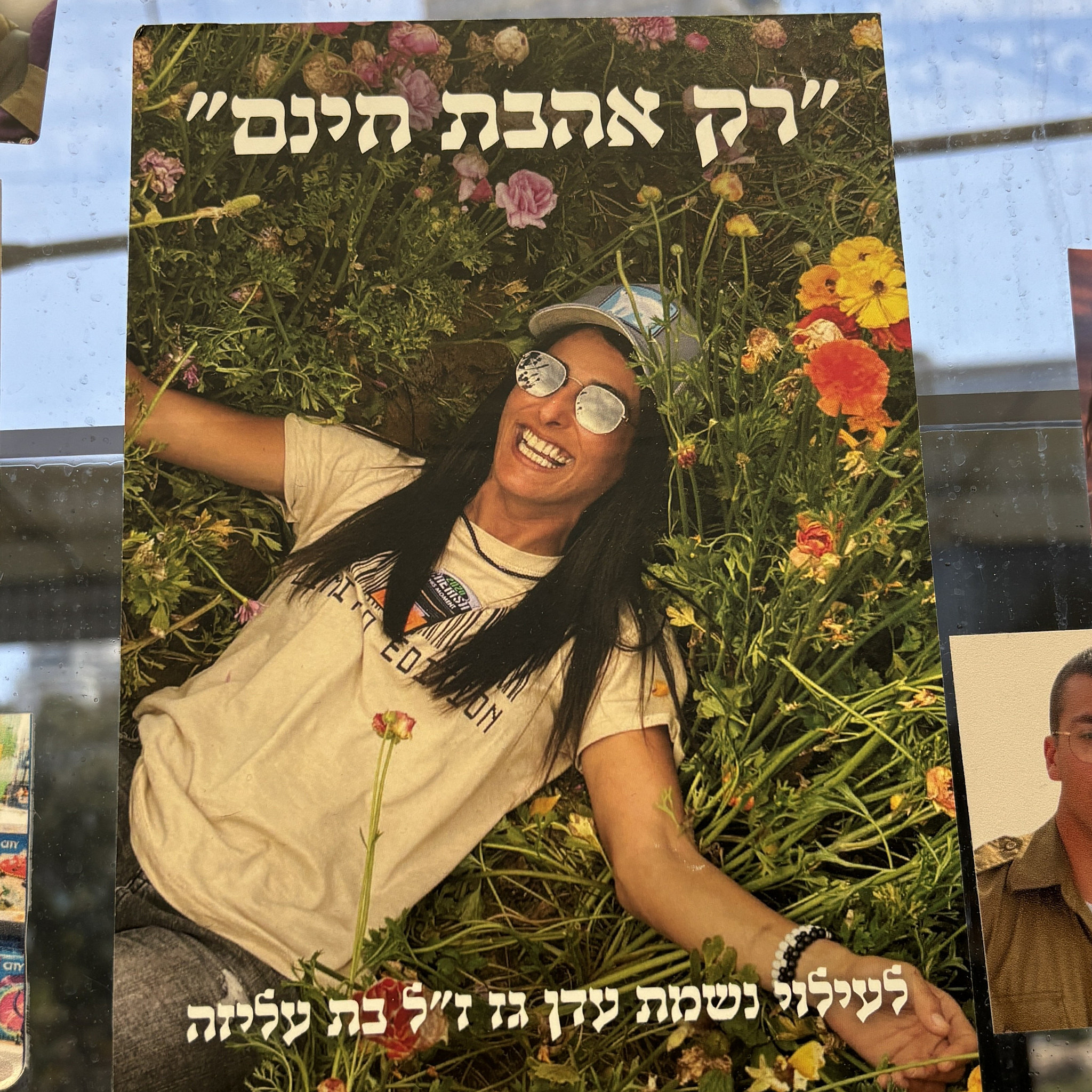
“Only baseless love.” Our sages teach that the Beit Hamikdash was destroyed because of baseless hatred. Eden Gaz Z”L lived as its antidote—quietly helping others, giving generously, and showing love without limits. As her sister said, “She loved life the way humans must breathe. She is the symbol of unconditional love.” To honor Eden’s memory, ask yourself: What act of kindness can I offer today, expecting nothing in return?
Daniel Hemo
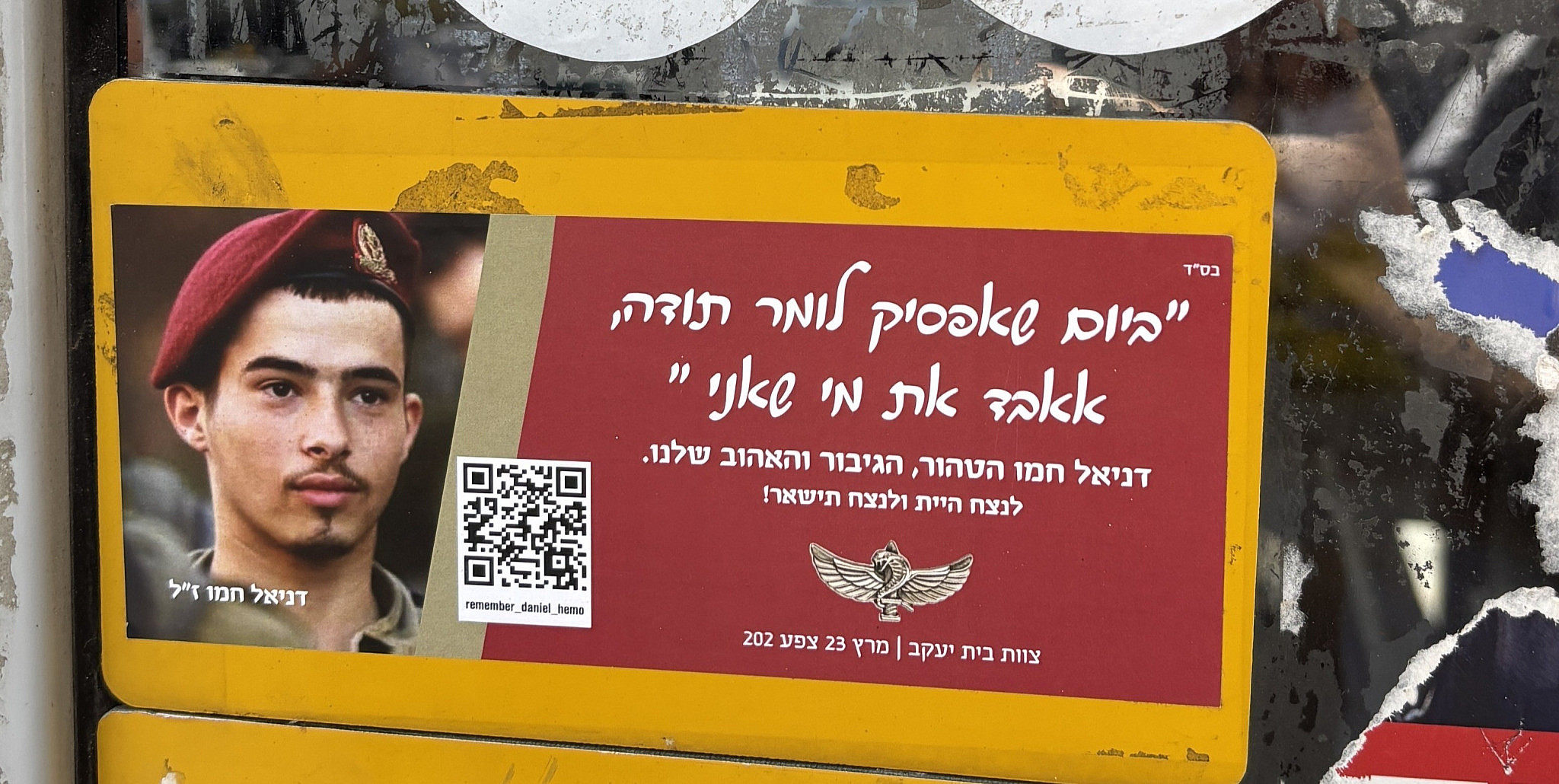
“The moment I stop saying thank you, I lose the person that I am.” Gratitude isn’t just about what we have—it’s about acknowledging those who help shape us. Daniel Hemo Z”L understood that. He fought to defend Israel after October 7th and still found time to organize food for lone soldiers. To honor Daniel’s legacy, ask yourself: Who do I need to thank today—and how can I show it?
Roy Miller
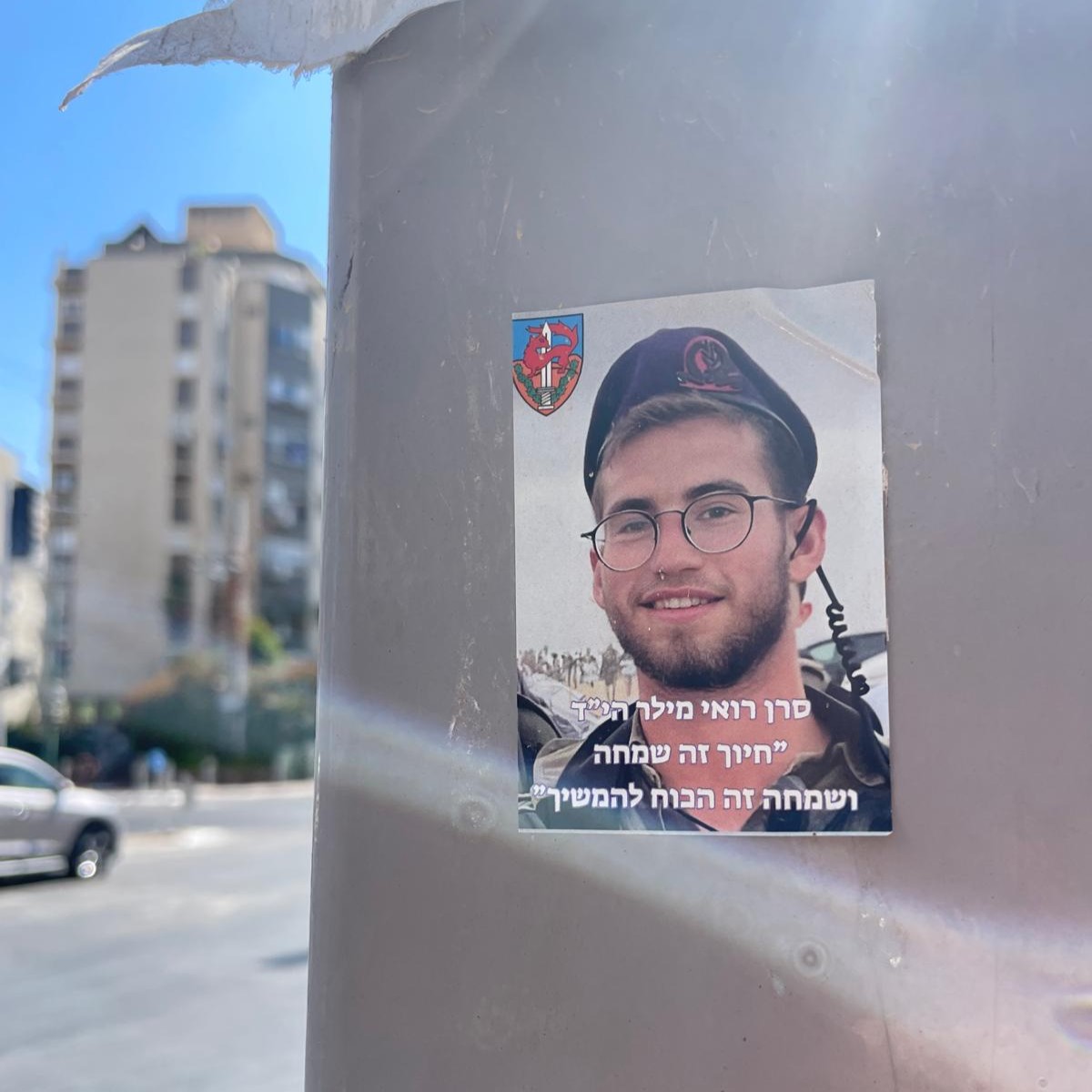
“A smile is happiness, and happiness is the strength to continue on.” Roy Miller Z”L was known for his infectious smile and unwavering positivity. He excelled academically, physically, and spiritually—and uplifted everyone around him. Roi reminds us that spreading light and joy isn’t just a gift to others—it’s a source of strength. To honor his legacy, ask yourself: How can I lead with positivity today?
Ido Ben Zvi
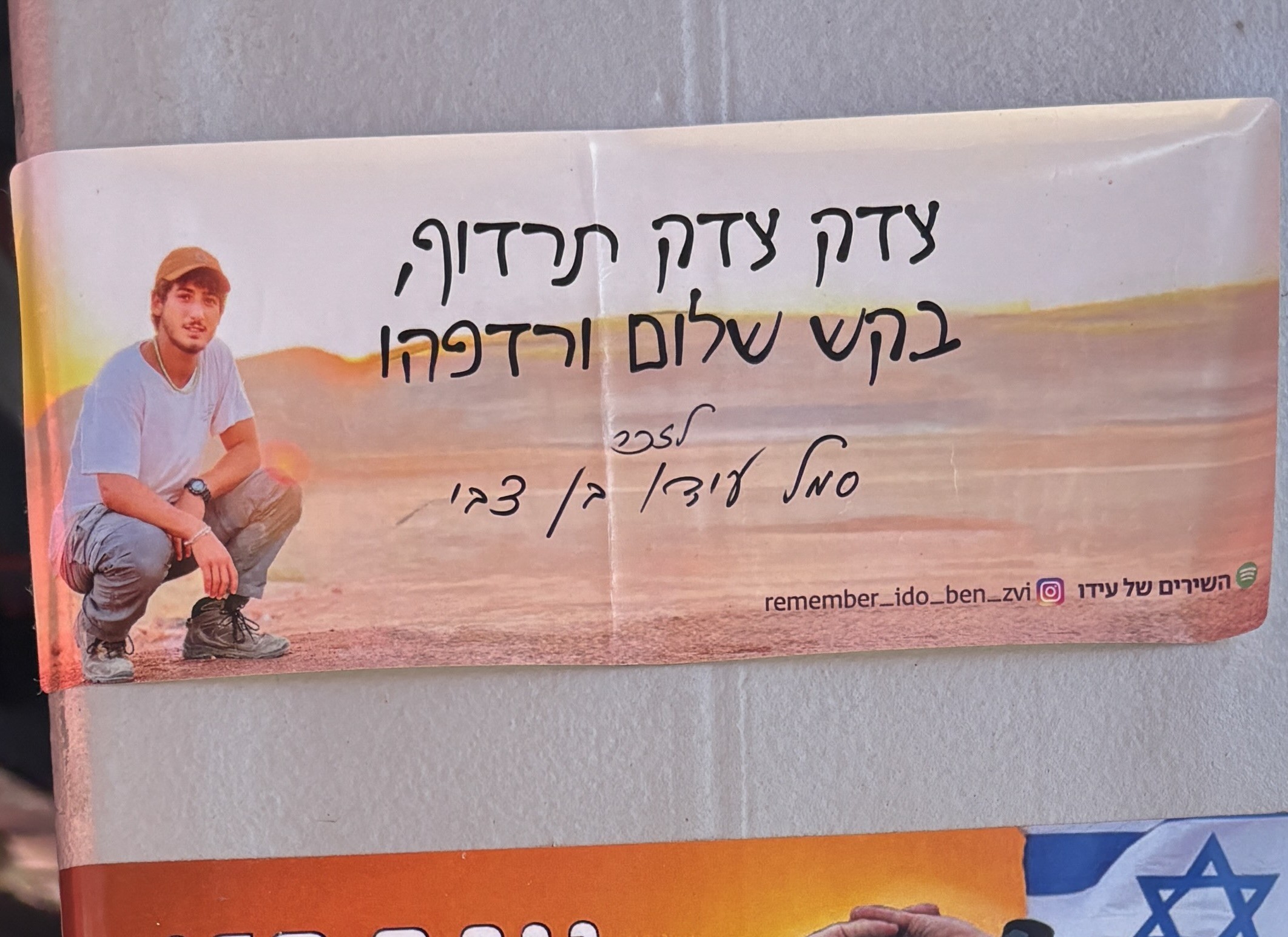
“Justice, justice pursue. Ask for peace and pursue it.” Ido Ben Zvi Z”L lived these words fully—as an activist, youth leader, and National Service volunteer at an educational youth village in the Negev. He approached the world with an open mind and an open heart, and slept with a note by his bedside that read: “Be a better person, in every way.” To honor Ido’s legacy, ask yourself: What can I do today to make the world a better place?
Eitan Rosenzweig
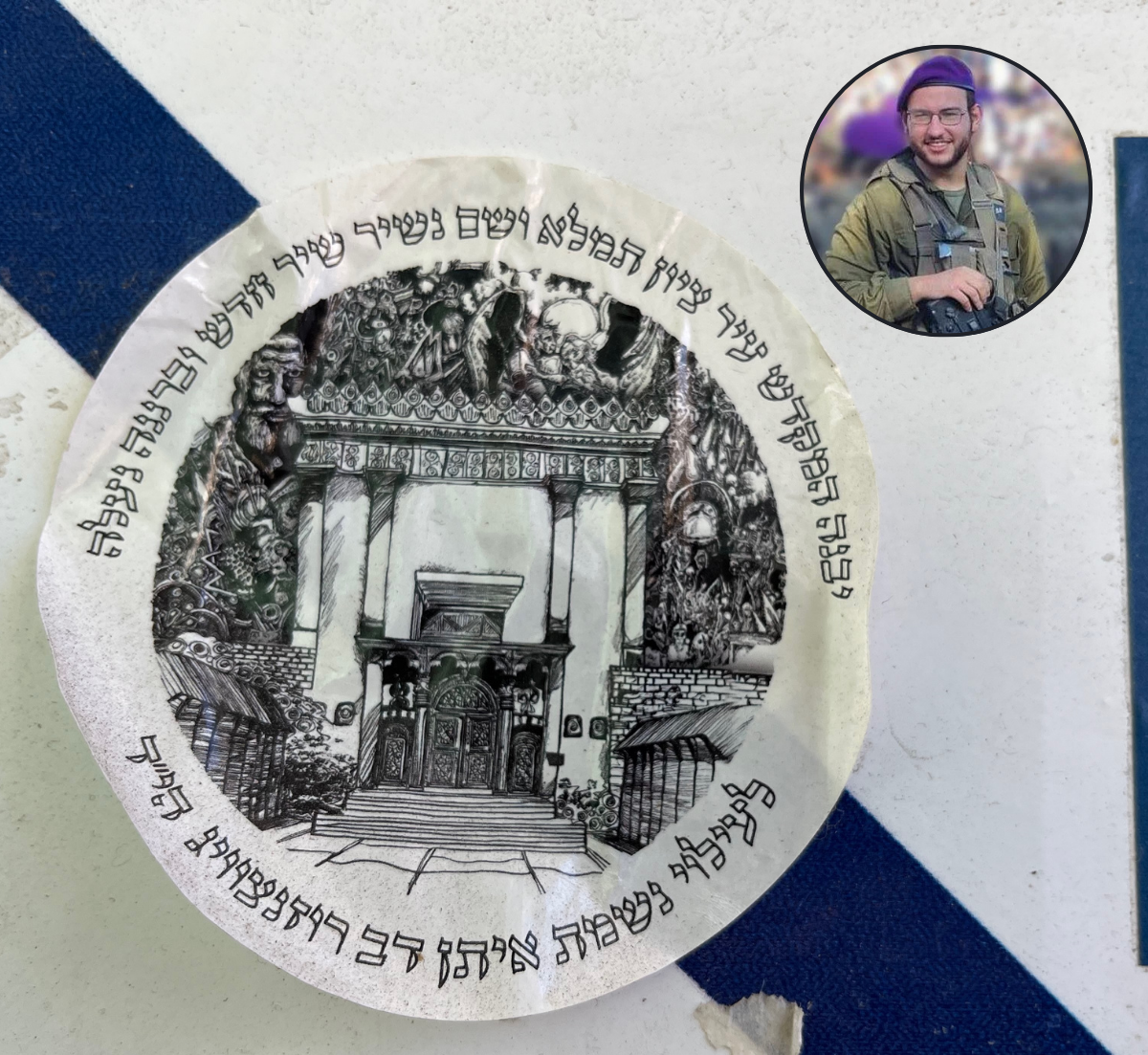
“Let the Temple be built, the city of Zion refilled, that we may come up singing a new song.” Eitan Rosenzweig Z”L, a graduate of OTS’s Neveh Shmuel Yeshiva High School, was a gifted artist with a deep love for Jewish history. As a student, he created the “Scroll of Jewish Fate”—a 3.6-meter-long visual journey tracing the Jewish story from Avraham in “Lech Lecha” to the final redemption. His sticker may not speak directly of ahavat chinam, but his work calls us to remember both the destruction our people have endured and the hope we carry for Zion’s renewal. To honor Eitan’s legacy, ask yourself: What will you do to help shape the next chapter of our story?
Related Topics
Related Posts