


The Train to a Palestinian State is Moving. Will Israel Come Aboard?
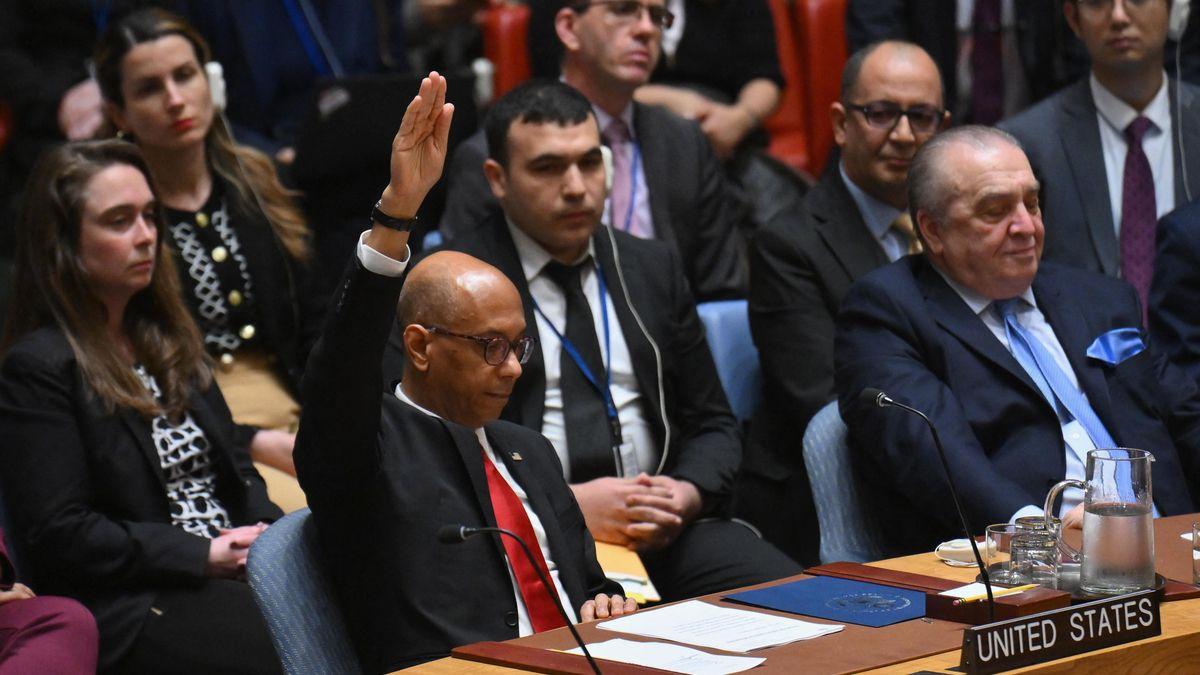
Despite growing recognition of a Palestinian state around the world, the United States remains the main obstacle to Palestine’s admission as a full member of the United Nations, thanks to its veto power in the UN Security Council. But the political reality in Washington is about to change. In January 2027, when the new Congress convenes, President Donald Trump will face a Democratic-controlled House of Representatives and Senate, with limited ability to advance his domestic agenda. It is precisely then that an opportunity may open up for him to pursue a historic diplomatic initiative: American recognition of a Palestinian state, anchored in a Security Council resolution and translating symbolic recognition into political reality.
If such a move does not take place during Trump’s presidency, it will certainly happen in January 2029, when a new president enters the White House, given the emerging new consensus in the United States, particularly within the Democratic Party, which has internalized the mistakes of past Democratic administrations that failed to advance the peace agenda with sufficient determination in the face of Israeli rejectionism.
With the conclusion of the elections in Israel and the midterm elections in the United States, both of which ended with overwhelming majorities for those seeking to change national priorities, it is worth returning to clause 19 of Trump’s 20-point plan to end the war in Gaza. This clause, which has largely been pushed out of the public discourse, states that the reconstruction of Gaza and reforms within the Palestinian Authority could create the conditions for a credible pathway to Palestinian self-determination and statehood, which the plan defines as the aspiration of the Palestinian people.
Following the fiasco of the war in Iran, and in a situation where he has no possibility whatsoever of advancing a domestic agenda with a hostile Congress, Trump may well return to the 20-point plan, which brought an end to the intensive fighting in Gaza and brought our hostages home, as his main international achievement, one that also received the support of the Security Council. This could be Trump’s path to creating a legacy and perhaps even winning the Nobel Peace Prize he so desperately desires.
During Israel’s election campaign, the words “Palestinian state” became a red flag. The parties competed to see who could most successfully attach that label to their rivals. Yet there is one fact that the political debate tends to obscure: Netanyahu himself expressed support for the American plan, which includes a horizon for the establishment of a Palestinian state, and the Knesset also voted in its favor.
The irony is particularly striking. Netanyahu, who chose the slogan “Right or Palestine” (in Hebrew it rhymes) for his election campaign, has done more through his actions recently than anyone else to advance international recognition of a Palestinian state. His policies – and above all, the absence of a diplomatic policy – his avoidance of any initiative toward an agreement, the expansion of settlements, and his disregard for settler violence have deepened Israel’s international isolation and strengthened the argument that continued control over the Palestinians makes an agreed solution impossible. The man who sought to remove the Palestinian issue from the international agenda has brought it back to its center. And the man who opposed a Palestinian state found himself supporting an American plan that presents it as a diplomatic horizon.
The next government, headed by Gadi Eisenkot, will have to decide whether to learn from this failure. If it continues to entrench itself in sweeping opposition to any recognition of a Palestinian state, it may discover that the diplomatic train is moving on without it. The world is no longer waiting for Israeli consent to discuss the future of the Palestinians. Absolute refusal does not stop the process; it merely prevents Israel from influencing its direction and terms.
On the other hand, if Eisenkot and his potential partners in leading the next government understand that a diplomatic horizon is not a concession of Israeli interests but a prerequisite for safeguarding them, they can turn the challenge into an opportunity. A new Israeli government could build on the opening created by Trump’s plan and turn it into a proactive policy: one that combines a Palestinian state with binding security arrangements, reforms within the Palestinian Authority, the prevention of terrorism, and mutual recognition, as part of a regional architecture in which Israel normalizes its relations with Arab countries and other Muslim countries awaiting a green light from Saudi Arabia.
Such a move would combine an Israeli-Palestinian agreement with a regional alliance between Israel, moderate Arab states, and the United States in the face of the Iranian threat and its proxies. Regional cooperation is not merely an economic and diplomatic opportunity; it is also a strategic and security asset.
Trump has an opportunity to leave behind a legacy of peace, not only by ending wars but also by creating the conditions for lasting agreements. If he chooses to advance American recognition of a Palestinian state and anchor it within an international framework, he could transform the 20-point plan from a document intended to end the war into the beginning of a broader diplomatic process. American recognition of a Palestinian state would change public opinion in Israel, and a new Israeli government could ensure that Israel becomes a partner in shaping reality, rather than merely being forced to react to it.
For Eisenkot, who sees himself as following in Ben-Gurion’s footsteps, this is an opportunity to complete a Zionist undertaking that remains unfulfilled. The first Israeli prime minister led the establishment of a sovereign Jewish state; the challenge facing Israeli leadership today is to secure its future as the democratic nation-state of the Jewish people, with recognized borders, living in peace alongside a Palestinian state.
As long as millions of Palestinians live under Israeli control without a diplomatic horizon, Israel risks a violent binational reality that will erode its security, identity, and democracy.
Zionism was not intended to perpetuate control over another people but to enable the Jewish people to be free in their own land. To realize this vision, Israel needs not only military strength and deterrence but also recognized borders and a diplomatic agreement. The question is whether the next Israeli leadership will choose to shape this future itself – or leave it to others to decide on its behalf. In any case, with or without Israeli cooperation and American recognition of a Palestinian state is an unequivocally pro-Israel move.